



7.5.1 Assistance to Low-Carbon Innovation
Enabling Innovation for a Low-Carbon Energy Transition
Teerthanker Mahaveer University (TMU) is strengthening its contribution to Affordable and Clean Energy by promoting energy-efficient technologies, practical engineering solutions, and institutional initiatives that support the transition towards a low-carbon future. Our approach recognises that decarbonisation requires not only the adoption of cleaner energy sources but also continuous innovation in energy generation, distribution, consumption, and management.
TMU’s institutional efforts focus on identifying opportunities to reduce energy losses, improve equipment efficiency, optimise electricity consumption, and encourage the adoption of technologies that can lower the carbon intensity of campus operations. By connecting infrastructure improvement with technical expertise, energy monitoring, and sustainability-oriented practices, the University seeks to translate low-carbon innovation into practical and measurable operational improvements.
Key Initiatives Supporting Low-Carbon Innovation Framework
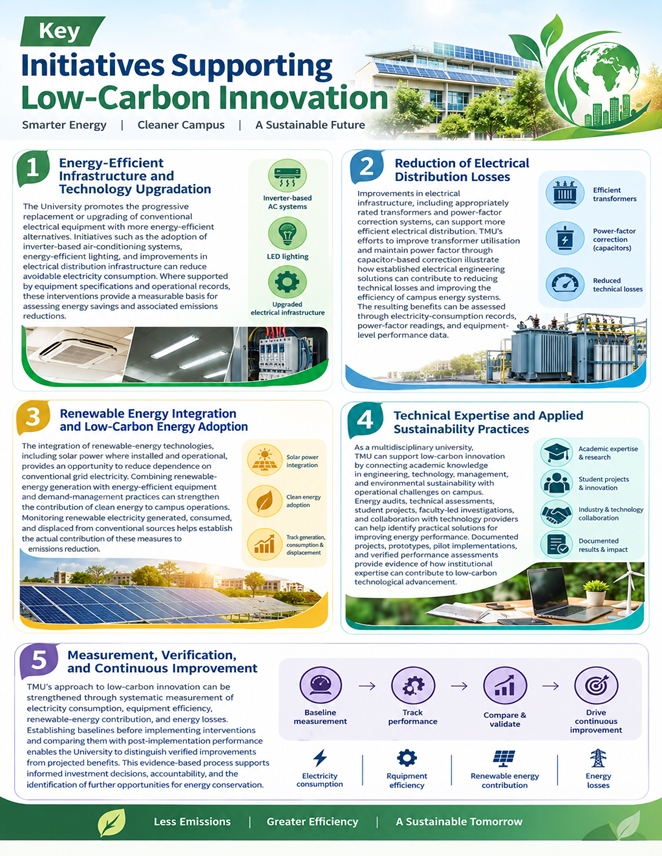
Smarter Energy | Cleaner Campus | A Sustainable Future — Highlighting the 5 strategic pathways to campus decarbonisation.
Key Initiatives Supporting Low-Carbon Innovation
Energy-Efficient Infrastructure and Technology Upgradation
We promote the progressive replacement or upgrading of conventional electrical equipment with more energy-efficient alternatives. Initiatives such as the adoption of inverter-based air-conditioning systems, energy-efficient lighting, and improvements in electrical distribution infrastructure can reduce avoidable electricity consumption. Where supported by equipment specifications and operational records, these interventions provide a measurable basis for assessing energy savings and associated emissions reductions.
Reduction of Electrical Distribution Losses
Improvements in electrical infrastructure, including appropriately rated transformers and power-factor correction systems, can support more efficient electricity distribution. TMU’s efforts to improve transformer utilisation and maintain power factor through capacitor-based correction illustrate how established electrical engineering solutions can contribute to reducing technical losses and improving the efficiency of campus energy systems. The resulting benefits can be assessed through electricity-consumption records, power-factor readings, and equipment-level performance data.
Renewable Energy Integration and Low-Carbon Energy Adoption
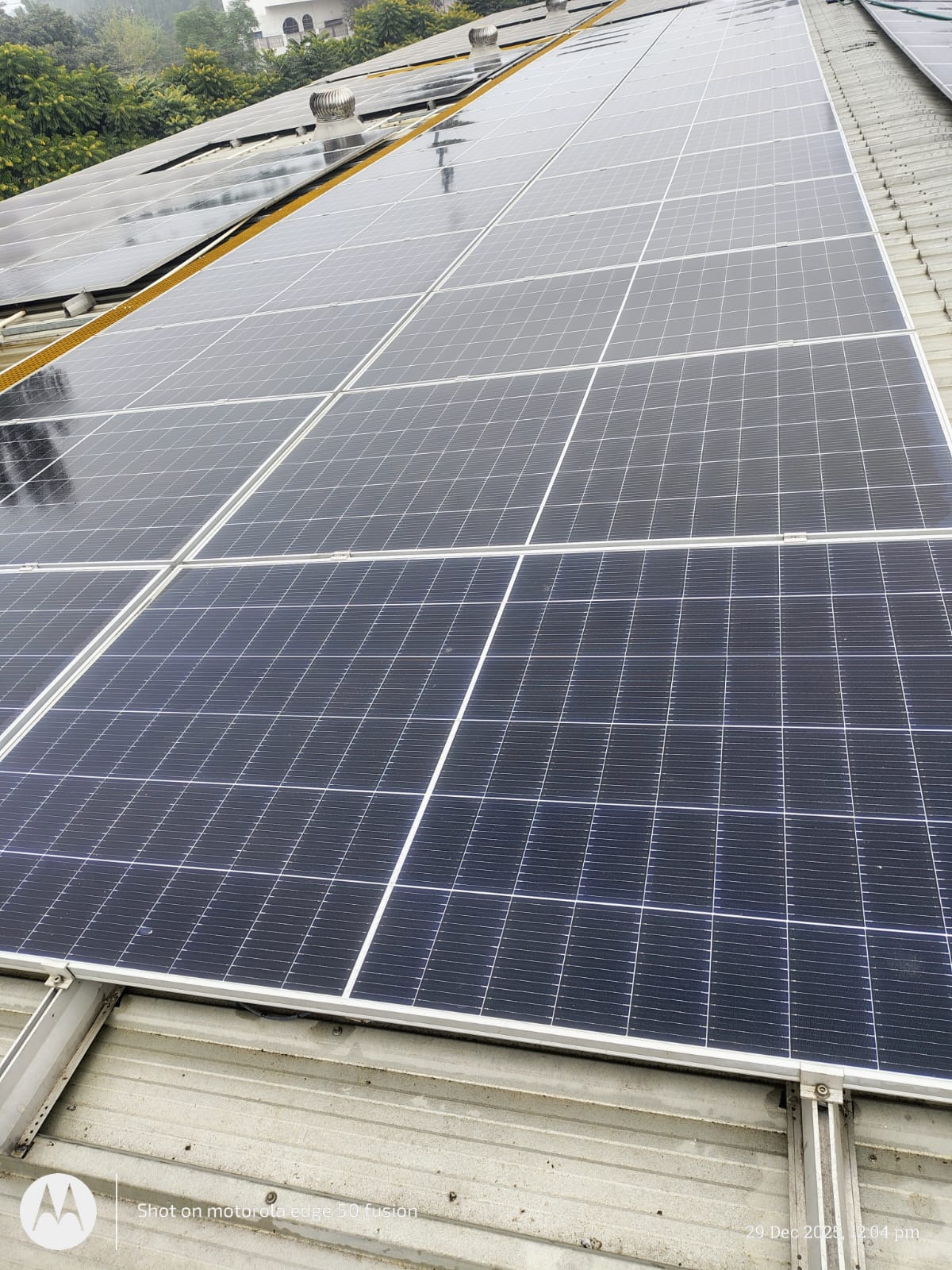
The integration of renewable-energy technologies, including solar power where installed and operational, provides an opportunity to reduce dependence on conventional grid electricity. Combining renewable-energy generation with energy-efficient equipment and demand-management practices can strengthen the contribution of clean energy to campus operations. Monitoring renewable electricity generated, consumed, and displaced from conventional sources helps establish the actual contribution of these measures to emissions reduction.
Technical Expertise and Applied Sustainability Practices
As a multidisciplinary university, TMU supports low-carbon innovation by connecting academic knowledge in engineering, technology, management, and environmental sustainability with operational challenges on campus. Energy audits, technical assessments, student projects, faculty-led investigations, and collaboration with technology providers can help identify practical solutions for improving energy performance. Documented projects, prototypes, pilot implementations, and verified performance assessments provide evidence of how institutional expertise can contribute to low-carbon technological advancement.
Measurement, Verification, and Continuous Improvement
TMU’s approach to low-carbon innovation can be strengthened through systematic measurement of electricity consumption, equipment efficiency, renewable-energy contribution, and energy losses. Establishing baselines before implementing interventions and comparing them with post-implementation performance enables the University to distinguish verified improvements from projected benefits. This evidence-based process supports informed investment decisions, accountability, and the identification of further opportunities for energy conservation.
Institutional Commitment to Less Emissions & Greater Efficiency
By combining energy efficiency, grid-loss reduction, solar integration, applied academic expertise, and continuous measurement, Teerthanker Mahaveer University reinforces its institutional roadmap towards a low-carbon, resource-efficient future in alignment with SDG 7.