



7.2.4 Plan to Reduce Energy Consumption
From Equipment Replacement to System-Level Efficiency
Our energy-reduction strategy extends beyond individual equipment replacement. The upgrade of the electrical distribution infrastructure, combined with energy-efficient cooling, BLDC fans and LED smart lighting, addresses multiple sources of electricity demand across the campus.
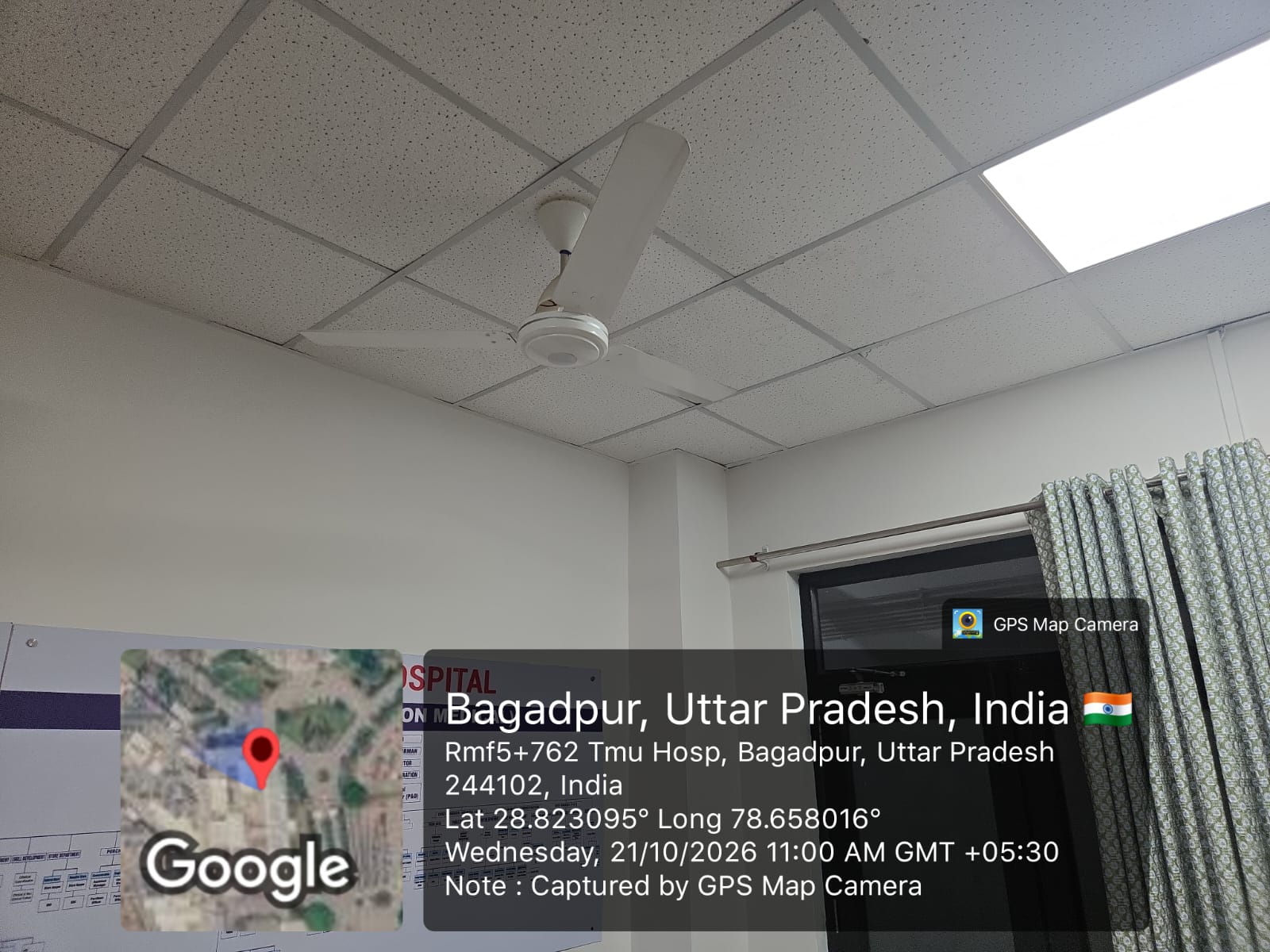
The replacement of conventional window ACs with inverter technology has generated more than 40% energy savings in comparison with the replaced units, while the transition of approximately 90% of conventional fans to BLDC inverter technology represents a significant reduction opportunity across frequently occupied spaces. The replacement of CFL lighting with LED smart lighting further reduces electricity demand associated with routine illumination.
Energy-Reduction Initiatives & Action Framework
The infographic below captures TMU's comprehensive plan to reduce energy consumption: connecting electrical distribution upgrades, equipment efficiency, behavioural conservation, and measurable impact pathways:
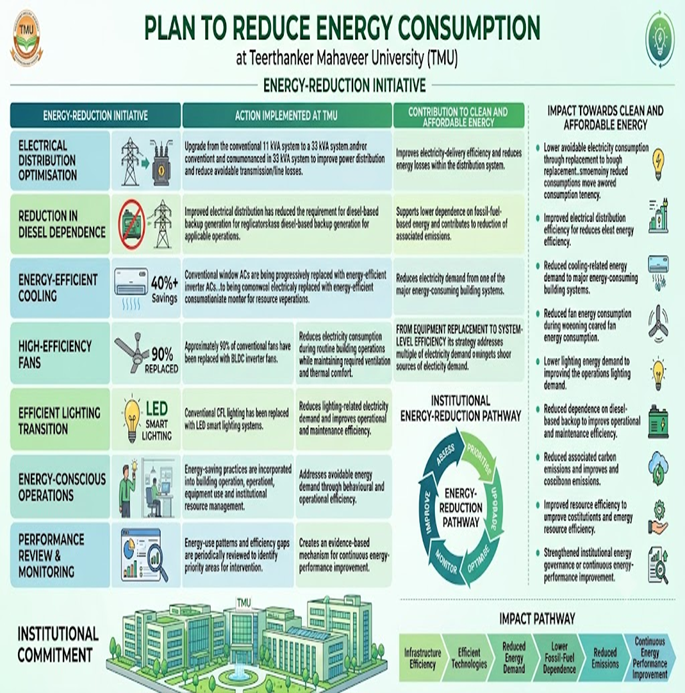
Figure: Plan to Reduce Energy Consumption at Teerthanker Mahaveer University (TMU)
Energy-Reduction Initiatives Implemented at TMU
The structured matrix below outlines the major demand-side and distribution-level energy reduction actions implemented across the university, detailing their specific operational interventions and their strategic contribution to clean and affordable energy:
| Energy-Reduction Initiative | Action Implemented at TMU | Contribution to Clean & Affordable Energy |
|---|---|---|
| Electrical Distribution Optimisation | Upgrade from the conventional 11 kVA system to a 33 kVA system to improve power distribution and reduce avoidable transmission/line losses. | Improves electricity-delivery efficiency and reduces energy losses within the distribution system. |
| Reduction in Diesel Dependence | Improved electrical distribution has reduced the requirement for diesel-based backup generation for applicable operations. | Supports lower dependence on fossil-fuel-based energy and contributes to reduction of associated emissions. |
| Energy-Efficient Cooling | Conventional window ACs are being progressively replaced with energy-efficient inverter ACs, achieving more than 40% energy savings compared with the replaced units. | Reduces electricity demand from one of the major energy-consuming building systems. |
| High-Efficiency Fans | Approximately 90% of conventional fans have been replaced with BLDC inverter fans. | Reduces electricity consumption during routine building operations while maintaining required ventilation and thermal comfort. |
| Efficient Lighting Transition | Conventional CFL lighting has been replaced with LED smart lighting systems. | Reduces lighting-related electricity demand and improves operational and maintenance efficiency. |
| Energy-Conscious Operations | Energy-saving practices are incorporated into building operation, equipment use and institutional resource management. | Addresses avoidable energy demand through behavioural and operational efficiency. |
| Performance Review & Monitoring | Energy-use patterns and efficiency gaps are periodically reviewed to identify priority areas for intervention. | Creates an evidence-based mechanism for continuous energy-performance improvement. |
Institutional Energy-Reduction Pathway
TMU’s institutional pathway follows a rigorous 6-stage continuous enhancement cycle, ensuring that energy conservation measures are systematically evaluated, executed, and sustained:
Assess
Baseline energy auditing & demand review
Prioritise
Technical feasibility & efficiency impact ranking
Upgrade
Technology replacement with BLDC, Inverters & LEDs
Optimise
Infrastructure balancing & distribution losses
Monitor
Continuous energy metering & performance data
Improve
Refining benchmarks for sustained long-term gains
Impact Towards Clean and Affordable Energy
The plan directly supports reducing avoidable electricity demand through technology replacement, system optimisation and improved operational practices. Key institutional impact areas include:
TMU’s Commitment to Reduce Energy Consumption
“TMU's Plan to Reduce Energy Consumption demonstrates a progressive demand-side energy-management approach in which electrical infrastructure optimisation and technology substitution are used to reduce avoidable energy demand.”