



7.2.1 Energy-Efficient Renovation and Building
Teerthanker Mahaveer University integrates energy efficiency into the planning, development, renovation, and operation of its campus infrastructure. Rather than treating energy efficiency as an isolated technology intervention, the University follows a whole-building approach that combines responsible material sourcing, passive design considerations, efficient lighting and appliances, improved building services, and progressive replacement of energy-intensive equipment.
⚡ Our Energy-Efficiency Approach
Energy-Conscious Planning
Energy-conscious planning, effective daylight utilisation, compliant building design, and energy-efficient building services from initial conception.
Regional Sourcing
Preference for locally and regionally available construction materials wherever technically feasible, supporting resource efficiency and reduced transport impacts.
Asset Modernisation
Progressive replacement of older, energy-intensive equipment with energy-efficient alternatives to continuously improve operational performance.
Smart Building Systems
Adoption of LED lighting, sensor-based controls, energy-efficient fans, inverter ACs, and improved electrical distribution to minimise losses.
Energy Efficiency by Design
Energy considerations are incorporated at the planning and development stage of campus infrastructure. Building plans and campus development proposals are prepared by qualified professionals in accordance with applicable statutory requirements and building regulations.
- Natural Daylight Availability: Maximised to reduce dependence on daytime artificial lighting.
- Building Orientation & Spatial Planning: Configured for comfortable and energy-efficient use of indoor spaces.
- Open Spaces & Setbacks: Integrated as part of compliant and ventilated campus planning.
- Efficient Lighting Layouts: Engineered to avoid unnecessary electrical lighting loads.
- Energy-Efficient Building-Service Equipment: Mandated during construction, renovation, and equipment replacement.
- Efficient Circulation: Thoughtful campus planning supporting functional and energy-wise use of developed areas.
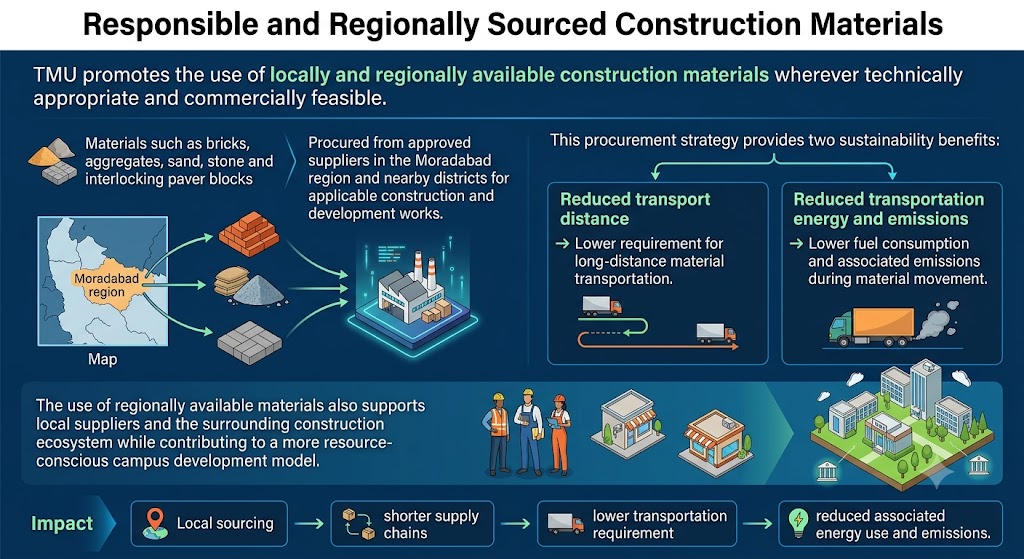
Responsible & Regionally Sourced Materials
TMU promotes the use of locally and regionally available construction materials wherever technically appropriate and commercially feasible. Materials such as bricks, aggregates, sand, stone, and interlocking paver blocks are procured from approved suppliers in the Moradabad region and nearby districts for campus development.
Key Sustainability Benefits:
- Reduced Transport Distance: Substantially lower requirement for long-distance freight movement.
- Lower Embodied Transportation Emissions: Drastically decreased fuel consumption and associated greenhouse gas emissions.
The use of regionally available materials also actively supports local suppliers and the surrounding construction ecosystem while contributing to a resource-conscious campus development model.
Daylight as a Passive Energy-Efficiency Measure
TMU incorporates daylight utilisation as an important passive strategy wherever building configuration and functional requirements permit.
Effective use of available natural light reduces both the duration and intensity of artificial lighting required during peak daylight hours. This approach is complemented by the progressive use of LED lighting and efficient lighting controls across campus facilities.
Guiding Operational Principle:
“Use natural energy where available; use electrical energy efficiently when required.”
 Click to Zoom
Daylight-Optimised Campus Architecture
Passive architectural integration for reduced daytime electrical load
 Click to Zoom
Renovation & Infrastructure Framework
Systematic pathways for asset modernisation and operational efficiency
Energy-Efficient Renovation and Electrical Systems
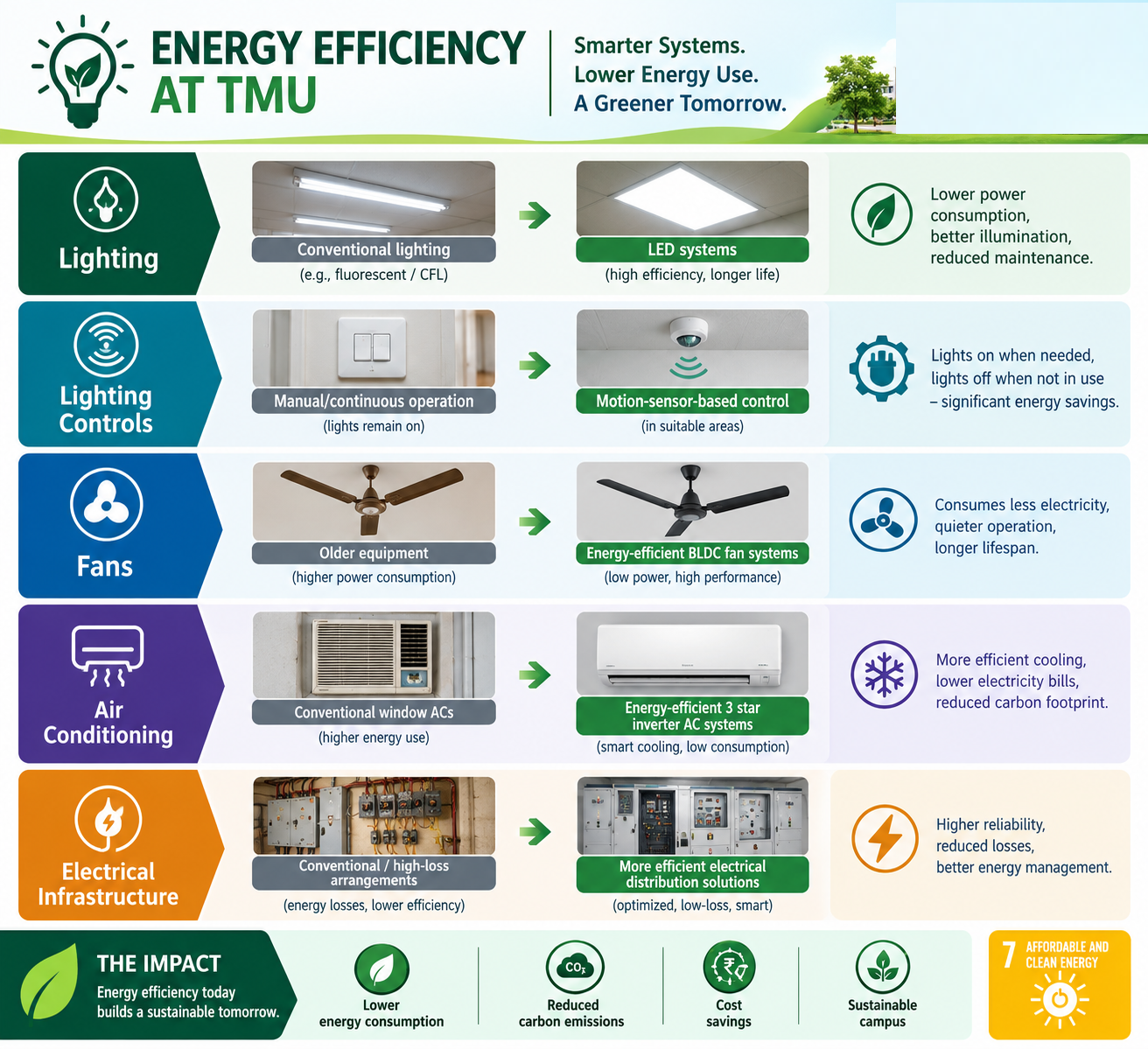
A major component of TMU's energy-efficiency strategy is the progressive adoption of energy-efficient electrical systems and appliances. Rather than relying exclusively on new construction, TMU progressively improves the performance of existing facilities by replacing older, less-efficient equipment with newer energy-efficient alternatives.
Priority Implementation Areas:
- LED Lighting Systems: Progressive conversion across academic, hospital, and residential blocks.
- Motion-Sensor Lighting: Installed in suitable low-occupancy restrooms, corridors, and utility spaces.
- Energy-Efficient Fans: High-efficiency BLDC and Star-rated fan installations.
- Inverter AC Upgrades: Replacement of conventional cooling systems with high-efficiency inverter units.
- Distribution System Upgrades: Reduction of electrical transmission and transformer losses.
Key Energy-Efficiency Initiatives & SDG 7 Impact
| S.No. | TMU Initiative | Energy-Efficiency Contribution | SDG 7 Impact |
|---|---|---|---|
| 1 | Energy-conscious building planning | Incorporates efficiency considerations from the design stage | Reduces potential lifetime energy demand |
| 2 | Daylight utilization | Reduces dependence on artificial lighting during suitable periods | Supports efficient use of electricity |
| 3 | LED lighting | Lower electricity requirement than conventional lighting technologies | Improves end-use energy efficiency |
| 4 | Motion-sensor lighting | Reduces unnecessary lighting in suitable low-occupancy areas | Minimizes avoidable electricity consumption |
| 5 | Energy-efficient fans | Improves efficiency of routine air circulation | Reduces operational electricity demand |
| 6 | Inverter AC replacement | Improves cooling efficiency compared with older conventional units | Supports reduction in cooling-related energy consumption |
| 7 | Regionally sourced materials | Reduces transportation distance for applicable construction materials | Helps reduce transport-related energy use and emissions |
| 8 | Interlocking paver blocks & local materials | Supports resource-efficient external development | Contributes to lower construction-related transport footprint |
| 9 | Progressive renovation | Upgrades existing infrastructure instead of relying only on new construction | Improves efficiency of the existing asset base |
| 10 | Compliance-led building planning | Ensures structured and regulated infrastructure development | Supports resilient and sustainable campus growth |
Key Action Areas & Implementation Status
| Campus Measure | TMU Approach | Sustainability Outcome | Status |
|---|---|---|---|
| ☀️ Daylight Utilisation | Natural daylight considered in building planning and use wherever technically feasible. | Reduced dependence on artificial lighting during suitable daylight periods. | Integrated |
| 🏗️ Regional Materials | Bricks, aggregates, sand, stone, and paver blocks sourced regionally wherever technically feasible. | Shorter material-supply distances and reduced transportation requirements. | Implemented / Ongoing |
| 🏢 Energy-Conscious Building Planning | Energy considerations incorporated into campus development and building planning. | Supports lower lifetime energy demand. | Integrated |
| 💡 Efficient Lighting | Energy-efficient lighting systems incorporated across campus facilities. | Improved end-use electricity efficiency. | Implemented / Ongoing |
| ⚡ Efficient Electrical Equipment | Energy-efficient fans, appliances, and building-service equipment adopted where appropriate. | Reduced avoidable operational electricity consumption. | Implemented / Ongoing |
| 📊 Energy Monitoring | Electricity consumption and equipment performance progressively tracked through institutional records. | Enables baseline comparison and evidence-based efficiency improvement. | Progressive |
| 🏢 Regulatory-Compliant Development | Building plans follow applicable building byelaws, professional design requirements, and approvals. | Supports safe, compliant, and resilient infrastructure development. | Implemented |