



2.5.2 Events for Local Farmers & Food Producers
- Conducted exposure visits of farmer fairs, agricultural exhibitions, conferences, workshops, field days, farmer–scientist meetings focusing on food production and food security.
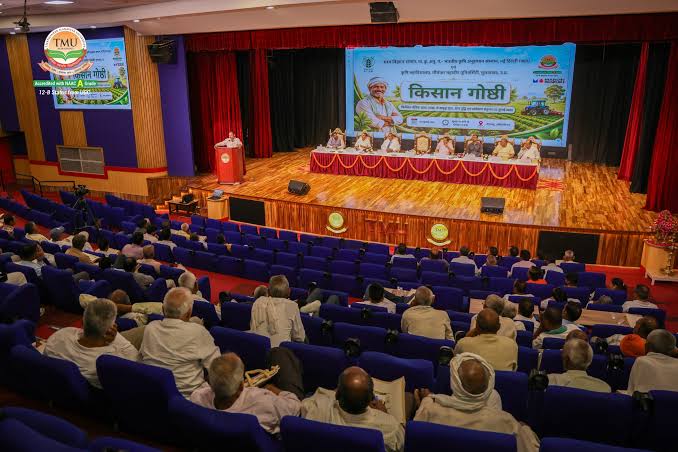
- Invited local farmers, agri-entrepreneurs, food processors and extension agencies to share experiences and identify local production constraints through Kisan Gosthi.
- Conducted demonstrations of improved agricultural practices/ farm machinery/protected cultivation/ water-saving technologies/ organic inputs/ value addition and post-harvest management.
- Arranged question-and-answer sessions and problem-solving clinics under RAWE program where farmers can obtain expert advice on crop, soil, water and marketing-related issues.
Farmer Skills – Focusing on Skill Development
- Conducted structured skill-development training programmes for farmers on crop production, seed selection, nursery management, integrated pest management, nutrient management, irrigation and harvesting.
- Provide hands-on training on modern and low-cost technologies such as organic farming, protected cultivation, bio-inputs and climate-resilient practices.
- Radio and television talk conducted by experts from college of agriculture sciences for farmers on scientific livestock management, including balanced feeding, clean housing, breeding management, disease prevention and animal welfare.
- Assessed farmers’ knowledge before and after kisan gosthi and technology adoption, productivity improvement and income-related outcomes was observed impact of kisan gosthi where a large numbers of farmers have replaced their sugarcane variety in adopted villages.
Khet Bachao Abhiyan on Millets (Protect the Farms Campaign)
On 25 June 2025, an awareness programme under the Khet Bachao Abhiyan (Protect the Farms Campaign) was conducted at Bilari with the active participation of farmers. The programme focused on promoting millet cultivation as a nutritious, climate-resilient, and sustainable agricultural practice. Farmers were informed about the nutritional value of millets, their potential economic benefits, and their role in supporting sustainable farming systems. The programme encouraged farmers to consider millet-based farming practices and highlighted the importance of millets in strengthening food and nutritional security. It also supports the broader goal of improving food-system resilience by highlighting the role of millets in diversifying crop production and strengthening agricultural sustainability.
Kisan Gosthi on Sugarcane Diseases
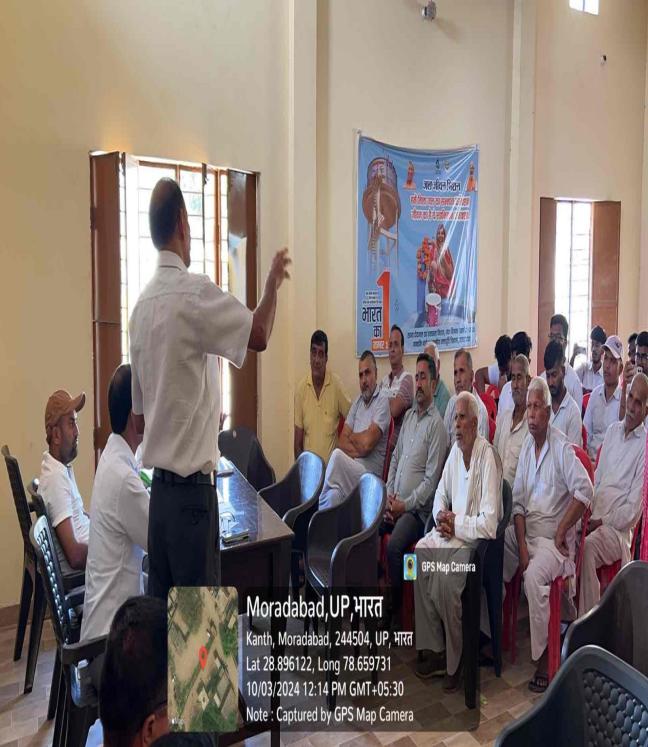
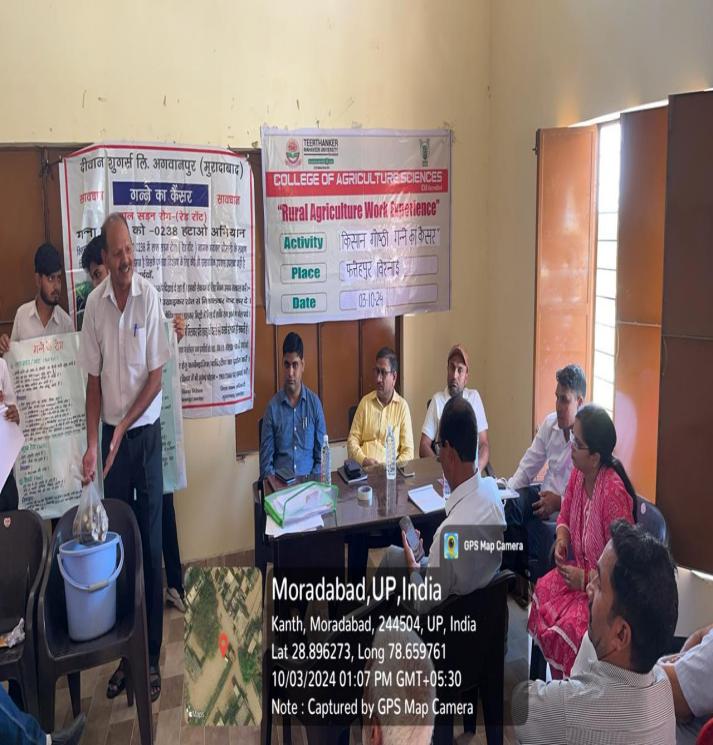
A Kisan Gosthi (Farmers’ Meeting) was conducted on 10 March 2024 at Fatehpur village to raise awareness among farmers about major sugarcane diseases, particularly Red Rot, and their management. The technical session was led by Dr. Balaj Singh, Professor, College of Agriculture Sciences, who explained the symptoms, spread, and favorable conditions of Red Rot disease. He highlighted the importance of using healthy, disease-free planting material and adopting suitable preventive and cultural practices to minimize disease incidence and maintain crop productivity. The programme was attended by the Chief Development Officer (CDO), Moradabad, Uttar Pradesh, and the General Manager of Agwanpur Sugar Mill. Their participation enabled farmers to interact with agricultural experts and industry representatives and discuss practical challenges associated with sugarcane cultivation and disease management. Such knowledge-sharing activities support efforts to protect crop health, reduce potential production losses, and promote sustainable agricultural productivity, which are important for strengthening food security.
Land Use & Soil Protection
- Conducted soil-health awareness camps and practical demonstrations on soil testing, soil organic matter management, balanced fertilization, composting, and conservation agriculture.
- Trained farmers through kisan gosthi in integrated nutrient management and integrated pest management to improve resource-use efficiency while protecting soil health.
- Promoted water conservation methods, including rainwater harvesting, farm ponds, drip and sprinkler irrigation wherever appropriate through RAWE and NSS activities.
- Organized field visits and NSS event to identify local soil, reduce soil erosion through cover crops and land-management problems and transfer suitable technologies through participatory discussion.
Khet Bachao Abhiyan – Save Soil Health
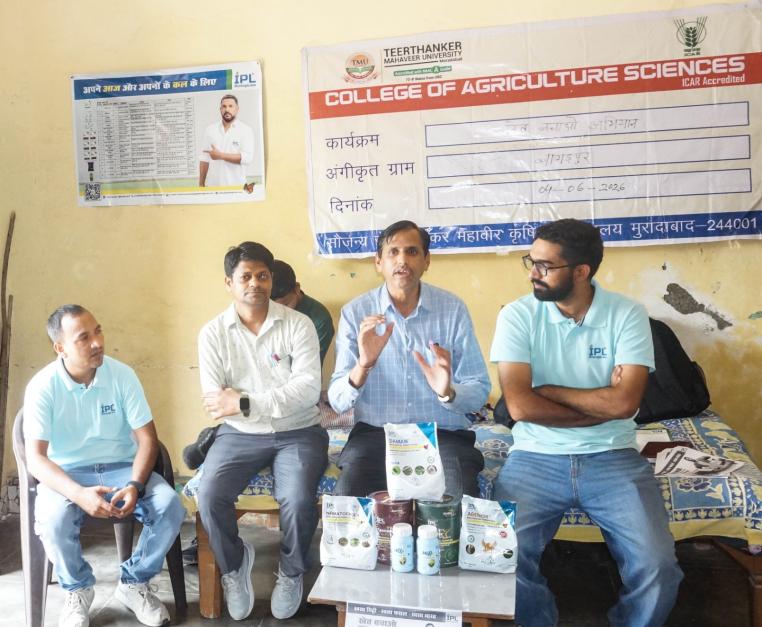
An awareness programme under the “Khet Bachao Abhiyan” was conducted on 4 June 2026 with farmers at Bagadpur, Moradabad, focusing on the theme “Save Soil Health.” The programme emphasized the importance of maintaining soil health for sustainable agricultural production. Farmers were sensitized about soil conservation, balanced use of fertilizers, organic matter management, and the adoption of sustainable farming practices. The interaction provided an opportunity to discuss soil-related challenges faced by farmers and promote practices for maintaining long-term soil fertility and productivity.
Soil Health Awareness Programmes at Falada Village
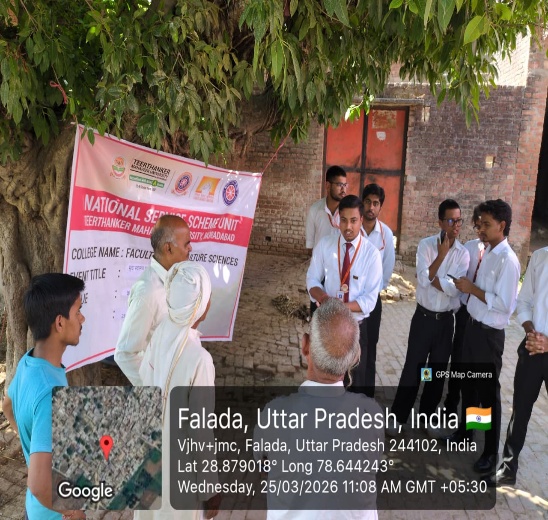
Under the National Service Scheme (NSS), students of Teerthanker Mahaveer University (TMU) conducted Soil Health Management Awareness Programme at Falada Village to educate farmers about the importance of maintaining soil health for sustainable crop production. Students explained the need for regular soil testing, balanced fertilizer application, the use of organic manure, crop residue management, and integrated nutrient management. The programme highlighted how appropriate soil management practices can support crop productivity and the efficient use of agricultural resources.
Organic Farming
- Established demonstration plots showing organic crop production practices, including composting, vermicomposting, green manuring, crop rotation and the use of suitable bio-inputs.
- Organized farmer field schools and exposure visits to successful organic farms so that farmers can observe complete production systems.
- Promote integrated approaches where farmers select suitable organic practices according to local soil, crop, climate and market conditions.
Animal Husbandry & Sustainable Practices
- Radio and television talk conducted by experts from college of agriculture sciences for farmers on scientific livestock management, including balanced feeding, clean housing, breeding management, disease prevention and animal welfare.
- Promoted preventive animal-health practices through exposure visits in coordination with veterinary experts and appropriate extension agencies.
- Exposure visits with students in hygienic milk, egg and meat production, safe handling and basic value-addition practices to reduce losses and improve food quality.
Soil Sampling Awareness Programmes at Falada Village
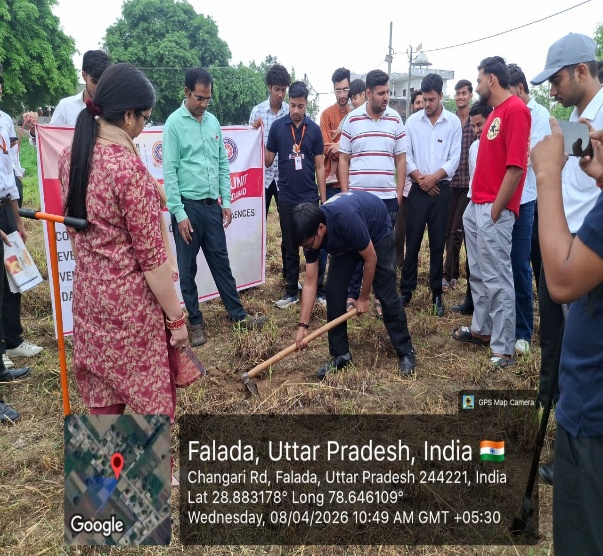
Under the National Service Scheme (NSS), students of Teerthanker Mahaveer University (TMU) conducted awareness programmes at Falada Village on Soil Sampling Awareness Programme focused on the importance of scientific soil testing to promote scientific soil management and sustainable agricultural practices. Farmers received guidance on selecting appropriate sampling sites, determining sampling depth, following proper collection methods, and obtaining representative soil samples for reliable soil analysis. These initiatives promote soil health, nutrient management, and sustainable farming practices. Through direct engagement with farmers, the programmes helped raise awareness of scientific approaches to soil management that support agricultural productivity and the long-term sustainability of food production systems.
Advanced Research Facilities Supporting Innovation & Sustainable Agriculture
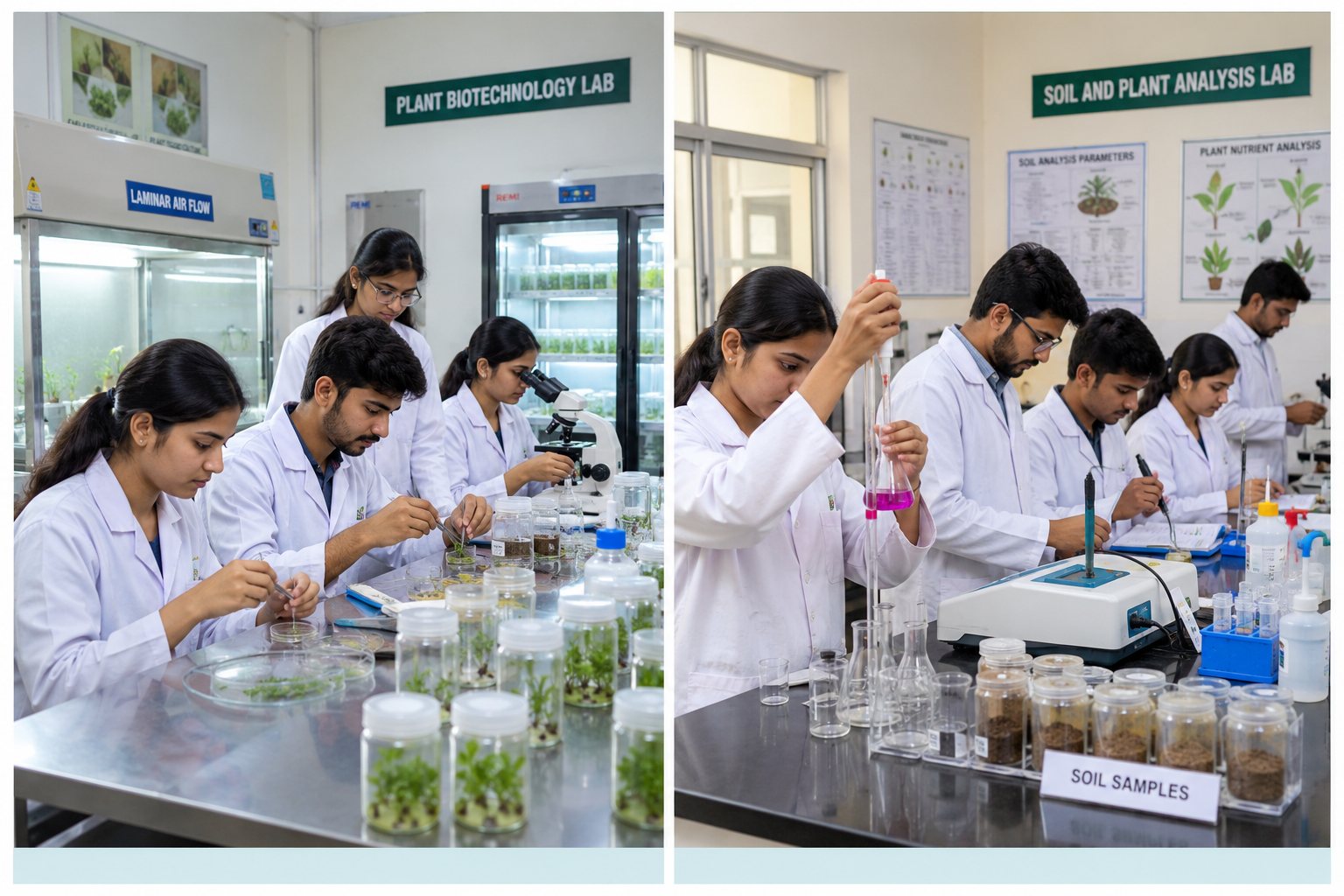
Teerthanker Mahaveer College of Agriculture Sciences is equipped with state-of-the-art infrastructure and expert faculty to conduct impactful research and field trials. The University adheres to the guidelines of the National Education Policy (NEP) to foster a strong research culture, encourage multidisciplinary collaboration, and uphold ethical research practices that support cross-disciplinary innovation. Research requirements are addressed through a streamlined mechanism in which the Head of the Laboratory communicates the requirements to the Dean, ensuring the timely availability of materials and equipment for postgraduate dissertation work. The University consistently allocates dedicated resources to meet postgraduate research contingencies, with a particular focus on Agronomy, Horticulture, Genetics and Plant Breeding, Plant Pathology, Entomology, and Soil Science and Agricultural Chemistry. Additional support is provided through seed money, research incentives, and travel grants for faculty members. This comprehensive research ecosystem strengthens advanced research initiatives, contributes directly to enhancing food security, and promotes sustainable agricultural practices.
Viksit Krishi Sankalp Abhiyan (Developed Agriculture Resolution Campaign)
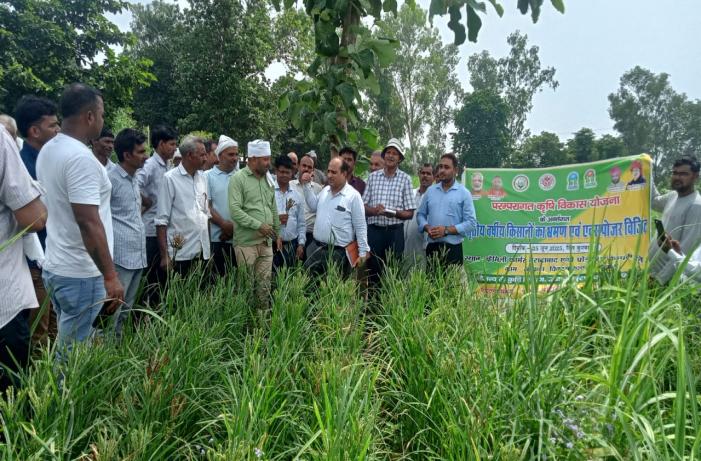
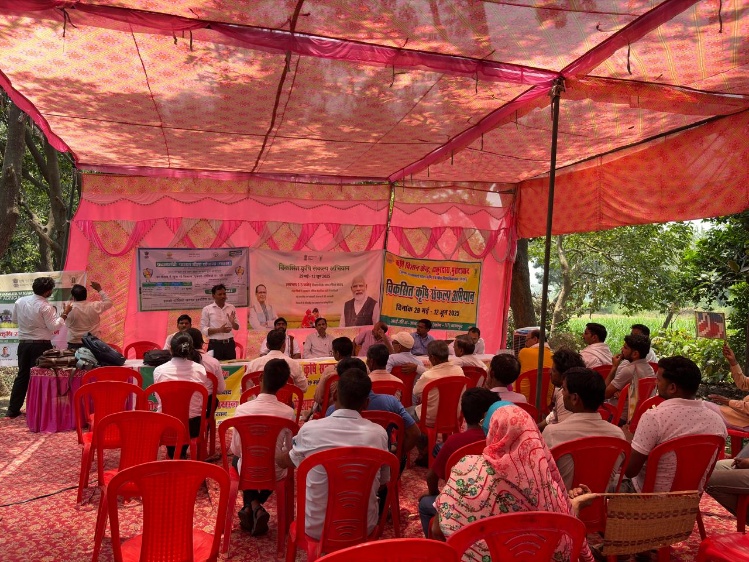
On 9 June 2025, a farmer awareness programme was conducted at Fatehpur, Moradabad, under the Viksit Krishi Sankalp Abhiyan, with special emphasis on the Khet Bachao Abhiyan. The programme aimed to strengthen interaction between farmers and agricultural experts and promote the adoption of improved and sustainable farming practices. Its central objective was to facilitate the transfer of agricultural technologies from the laboratory to the field, helping farmers gain practical knowledge relevant to their farming needs. The programme covered key areas such as soil health and management, improved crop production techniques, crop diversification, natural farming, and awareness of government agricultural schemes. Direct interaction with farmers provided an opportunity to understand field-level challenges and offer appropriate technical guidance. Through farmer engagement and the dissemination of agricultural technologies, the programme supported awareness of approaches that can help improve farm productivity, strengthen resilience, and promote sustainable food production systems.
Sustainable Practices & Environmental Dimensions
Sustainable Farming Practices
- Promoted climate-smart and resource-efficient farming practices such as crop diversification, crop rotation, intercropping, integrated nutrient management and integrated pest management.
- Conducted farmer field schools in collaboration with agriculture department Uttar Pradsh government where farmers compare conventional and improved practices using locally relevant indicators such as yield, cost and resource efficiency.
- Providing follow-up advisory support through social media (Whatsapp group).
Protecting Public Health
- Conducted awareness program (under RAWE & NSS) and kisan gosthi to farmers and food producers on safe and responsible use of pesticides, fertilisers, veterinary medicines and other agricultural inputs, following approved recommendations.
- Promoted integrated pest management and biological control to reduce unnecessary chemical use and minimise risks to consumers, farm workers and the environment through NSS activites and Kisan Gosthi.
- Conducted awareness programmes on food hygiene through NSS activities & RAWE program.
- Demonstrated proper use of organic manure and disposal of agricultural chemicals.
- Conducted tree plantation in adopted villages.
Low Environmental Impact
- Encouraged farmers to adopt integrated farming systems, agroforestry, crop diversification and other practices that support biodiversity and ecological balance.
- Conducted environmental awareness program through RAWE program and NSS.
- Conducted tree plantation under RAWE & NSS.
- Promoting organic farming under RAWE and NSS.
- Running Namami Gange program for that formed Namami club.
Good Employment Practices
- Promoting productive employment opportunities in agriculture such as mushroom production, food processing, livestock, aquaculture (pearl farming), and vermicompost.
- Conducted entrepreneurship and skill-development programmes for farmers, rural youth, women and students on value addition, food processing, nursery enterprises and other agricultural businesses.
- Provided awareness on fair remuneration, safe workplaces, skill development and responsible employment practices within agricultural and food-related enterprises through alumni.
- Facilitated linkages with agri-enterprises, industries and relevant institutions to support livelihood and enterprise opportunities.
- Encouraged value addition and local processing to create employment close to farming communities.