



2.2.2 Campus Food Waste
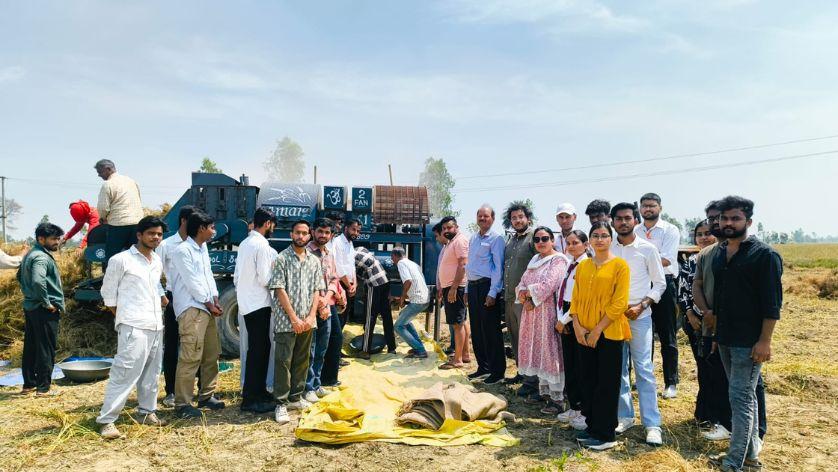
Teerthanker Mahaveer University (TMU) addresses campus food waste through the collection and management of biodegradable food waste generated in its messes and canteens. As documented in the University's waste-management practices, food waste is collected regularly and channeled to nearby piggery farms for utilization. This arrangement provides an alternative to disposing of suitable food waste through general waste streams and supports the responsible handling of biodegradable waste generated by campus catering services.
Total Annual Waste
Daily Average
Per Person / Day
Per Person / Year
Food-Waste Analysis (Per Capita)
| S.No. | Operational Indicator | Audited Data |
|---|---|---|
| 1 | Total food waste generated (Annual) | 19.986 Metric Ton |
| 2 | Average food waste generated per day | 54.75 Kgs |
| 3 | Number of centralized campus messes | 04 Central Mess Facilities |
| 4 | Food waste generated per person per day | 13.26 Gms |
| 5 | Food waste generated per person per year | 4.84 Kgs |
| 6 | Audited reporting period | January to December, 2025 |
The annual food waste recorded at Teerthanker Mahaveer University (TMU) was 19.986 Metric Ton, equivalent to an average of 54.75 kg per day. The reported per-person food waste was approximately 4.84 kg per year, or 13.26 grams per day. These figures provide a baseline for assessing food waste generation across campus food services and identifying opportunities for improvement. Systematic monitoring of meal consumption, food preparation, and leftovers can help identify major sources of wastage and support more efficient food management practices.

The recorded food waste data highlights the importance of systematic monitoring and effective food waste management at TMU. Introducing digital meal tracking, monitoring consumption patterns, and analysing food waste can help the University identify areas where wastage occurs most frequently and take appropriate corrective measures. These efforts support responsible food consumption, efficient resource use, and the objectives of SDG-2 (Zero Hunger) and SDG 12 (Responsible Consumption and Production).
Impact of Digital Food Waste Monitoring & Management
The introduction of digital food waste monitoring at TMU provides a systematic approach to tracking meal bookings and cancellations in hostel messes. Compared with the 2024 baseline, this approach supports better understanding of food waste patterns and helps catering teams plan meal preparation according to expected demand. Analysing booking records and consumption patterns can help identify where avoidable food wastage occurs most frequently. The app-based system supports ongoing monitoring and corrective action through improved food planning, quantity adjustments, and more efficient use of ingredients. Combined with practices such as serving smaller portions initially and offering additional servings when required, enhances the prevention of unnecessary waste.
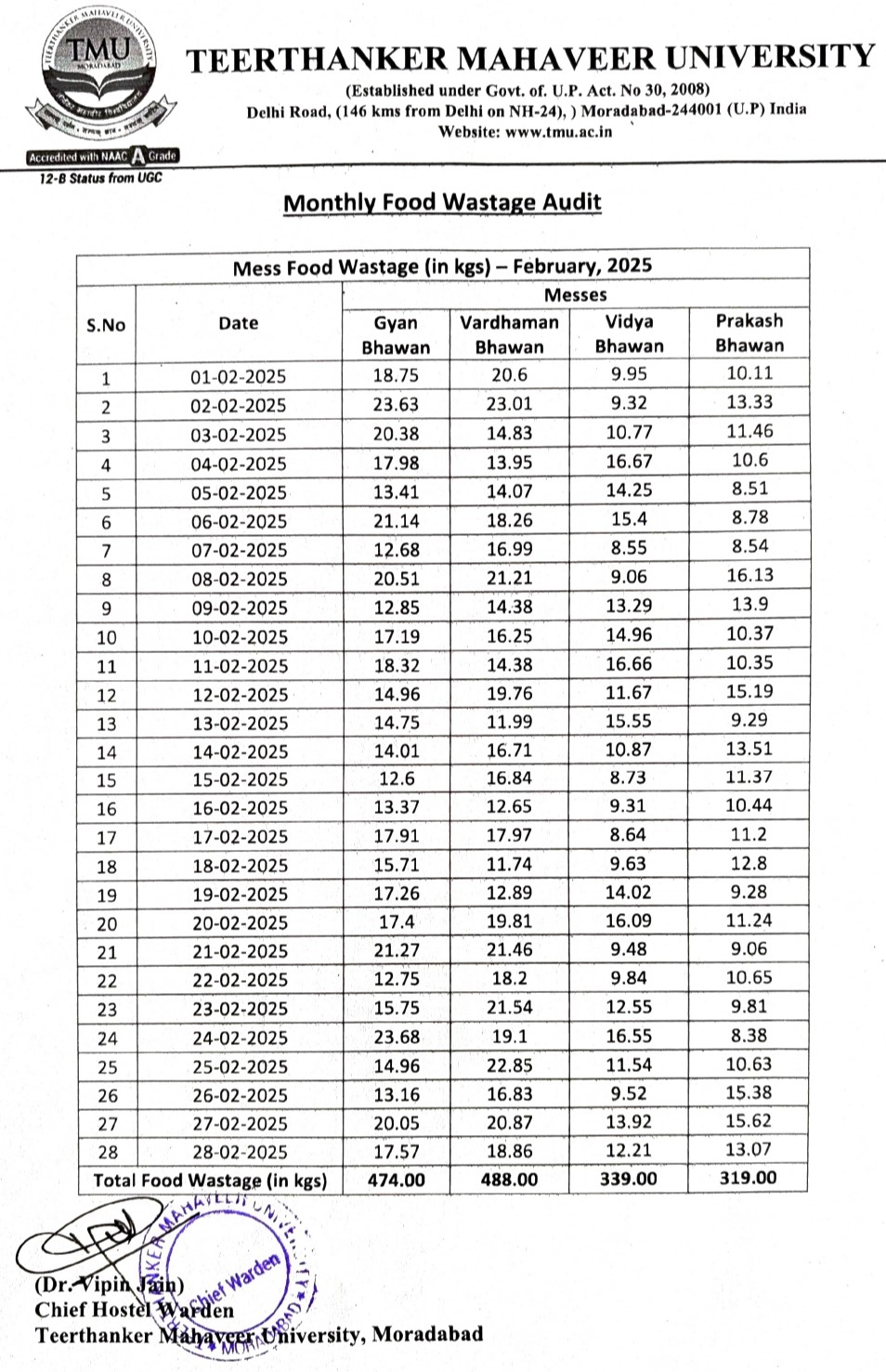
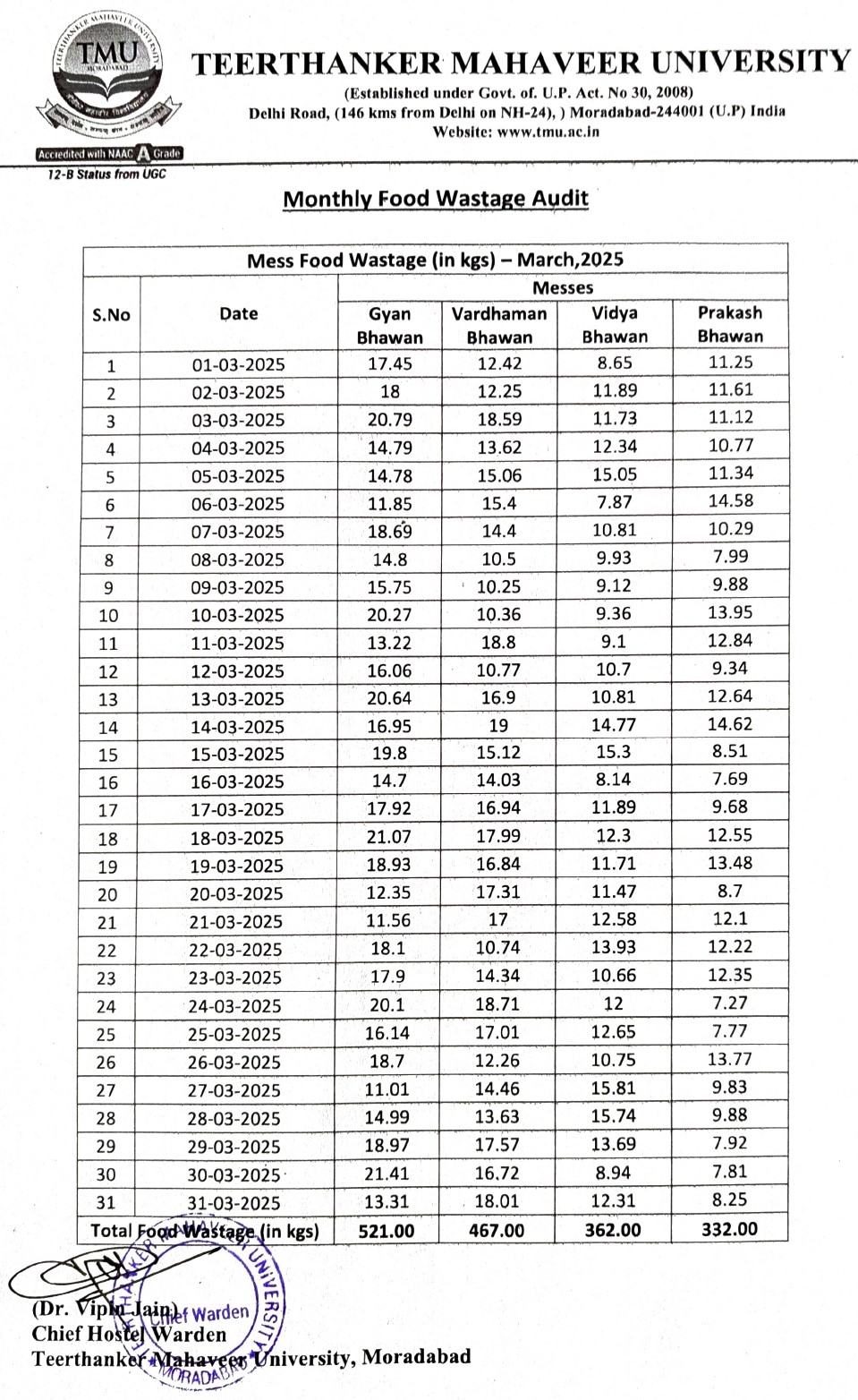
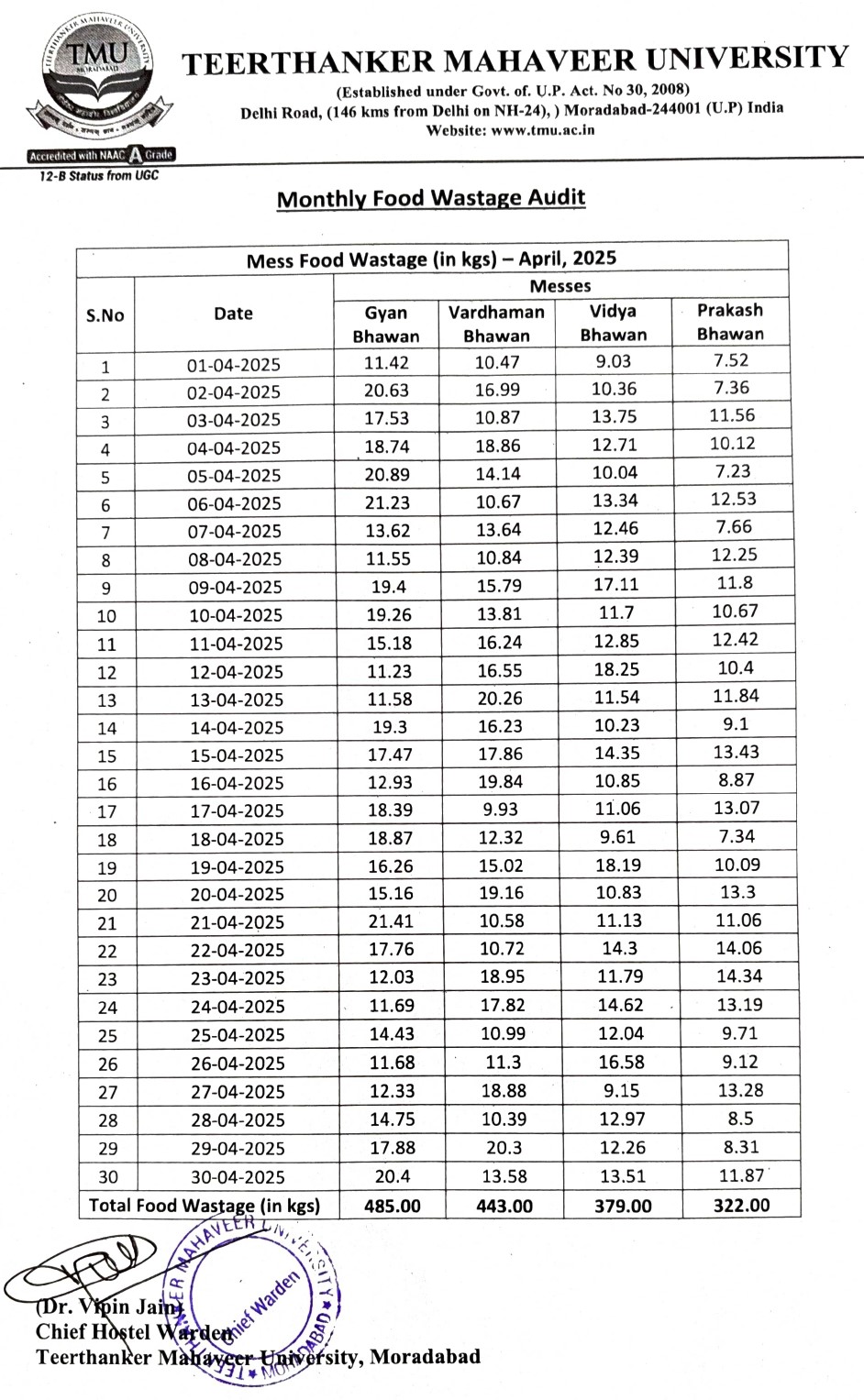
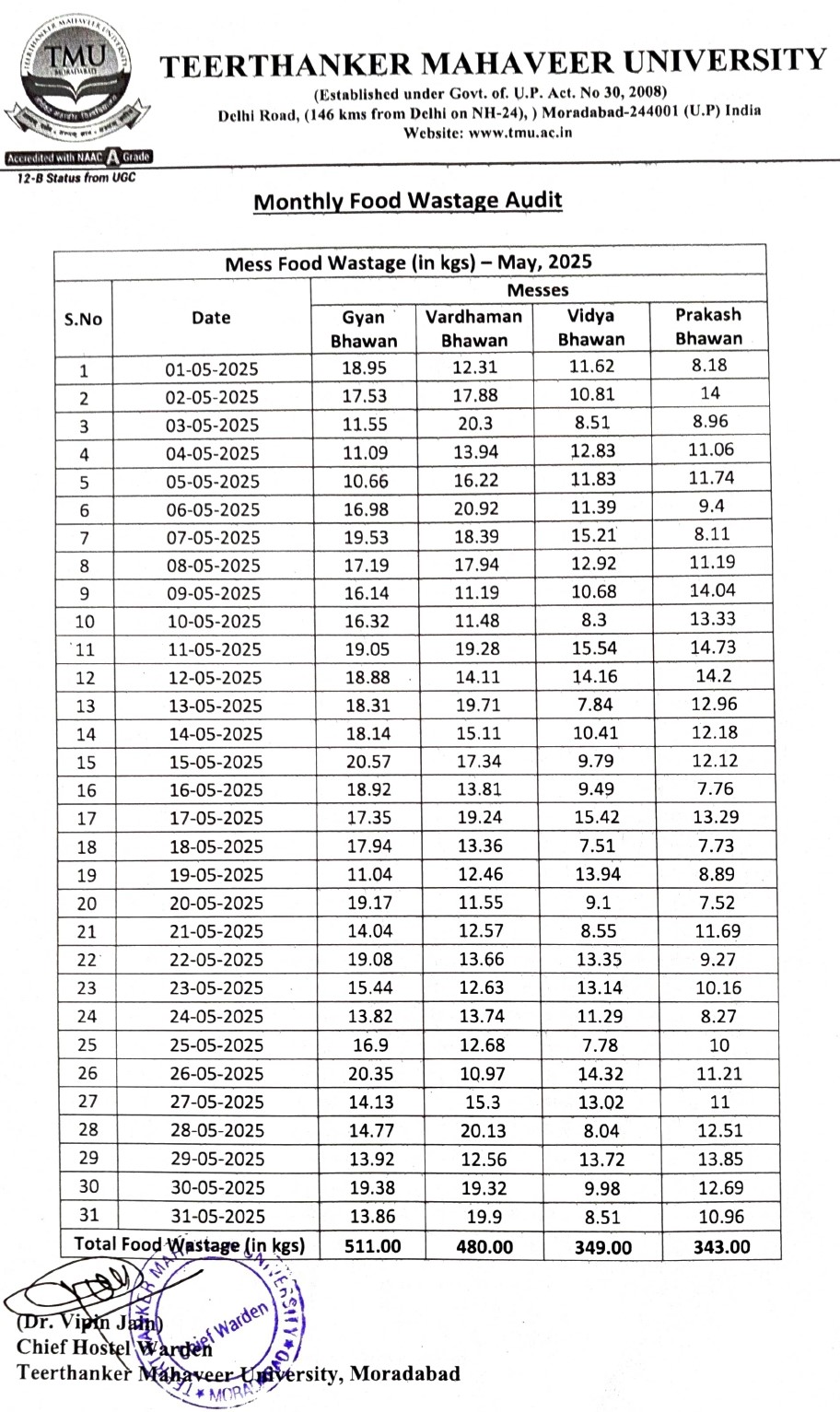
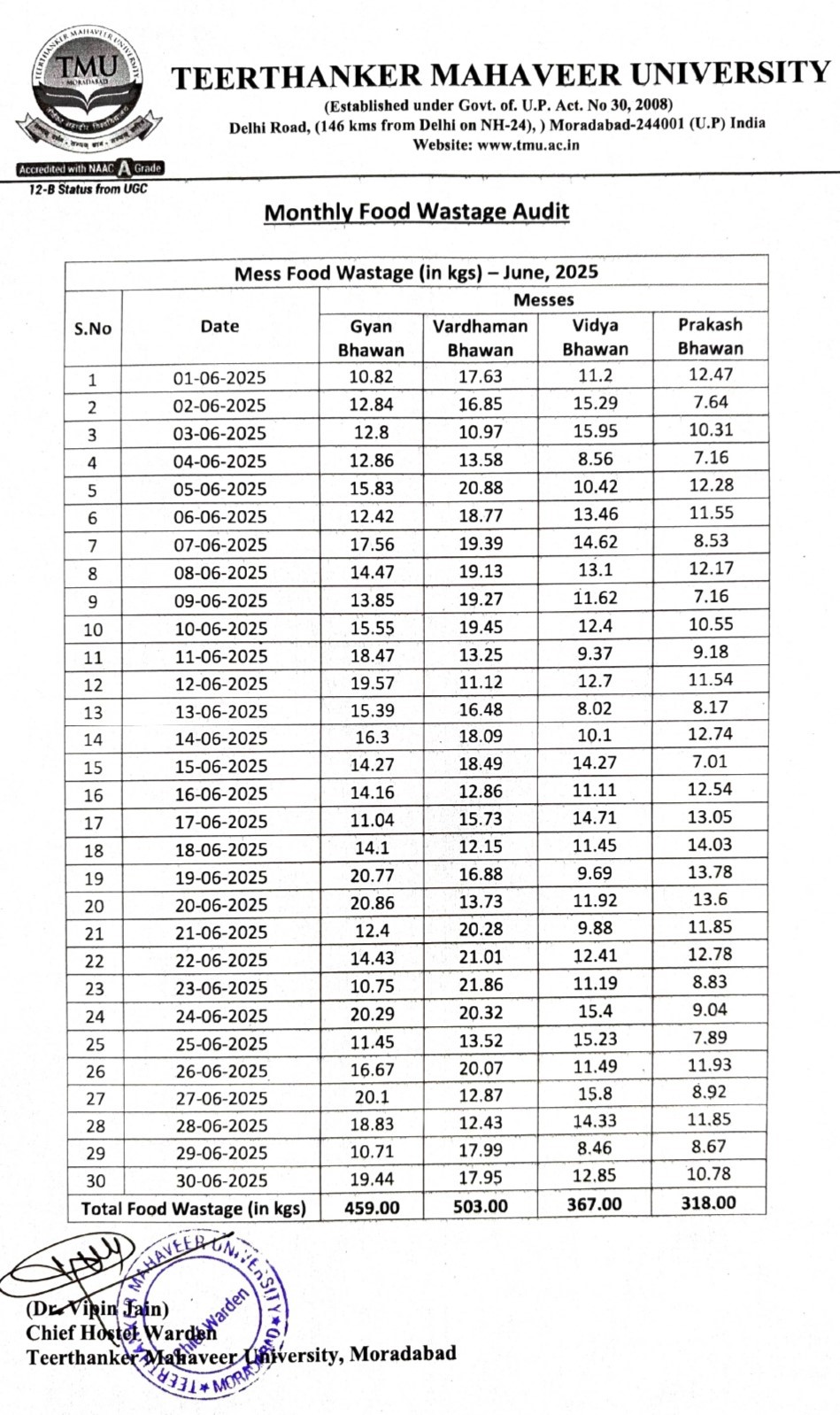
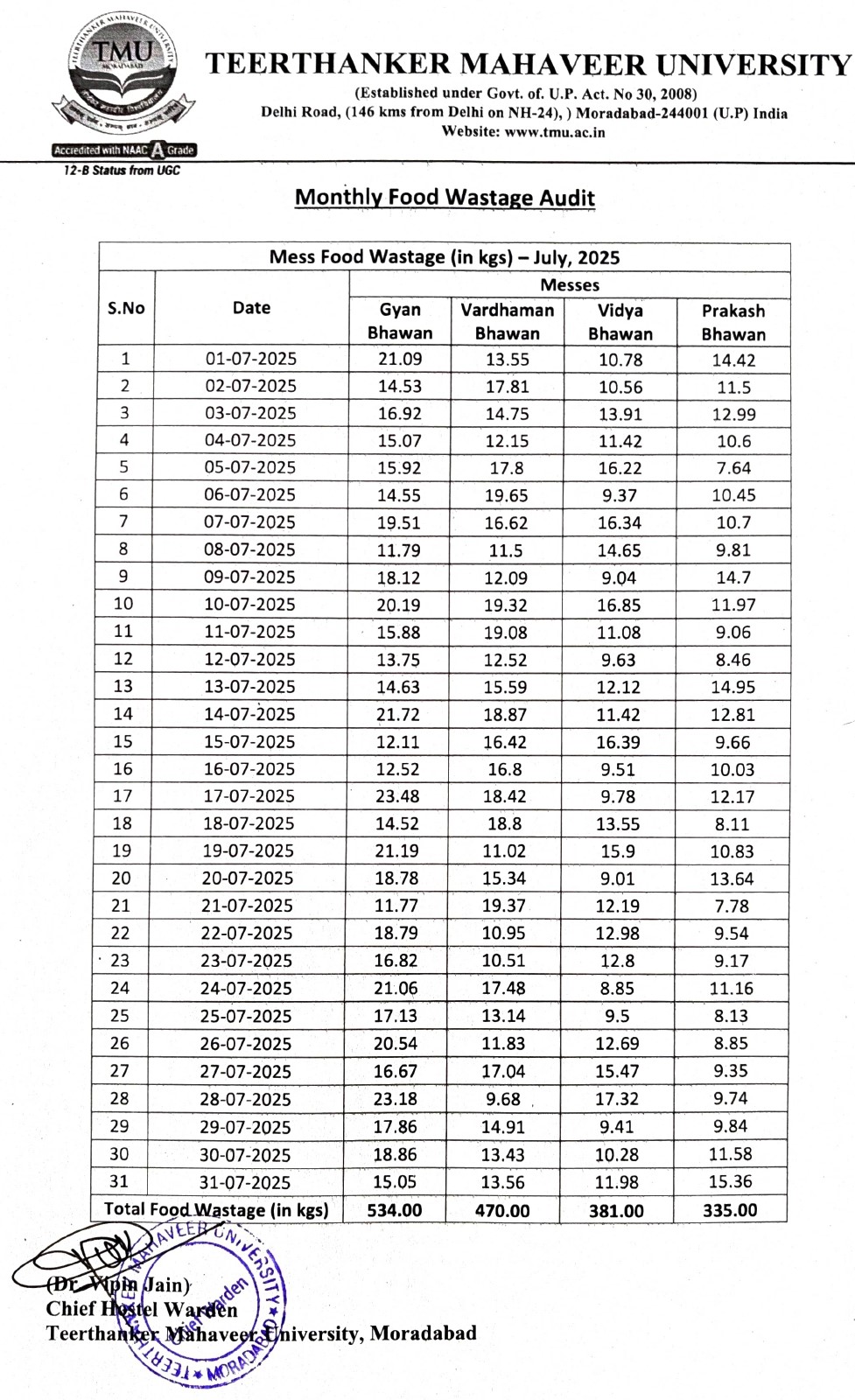
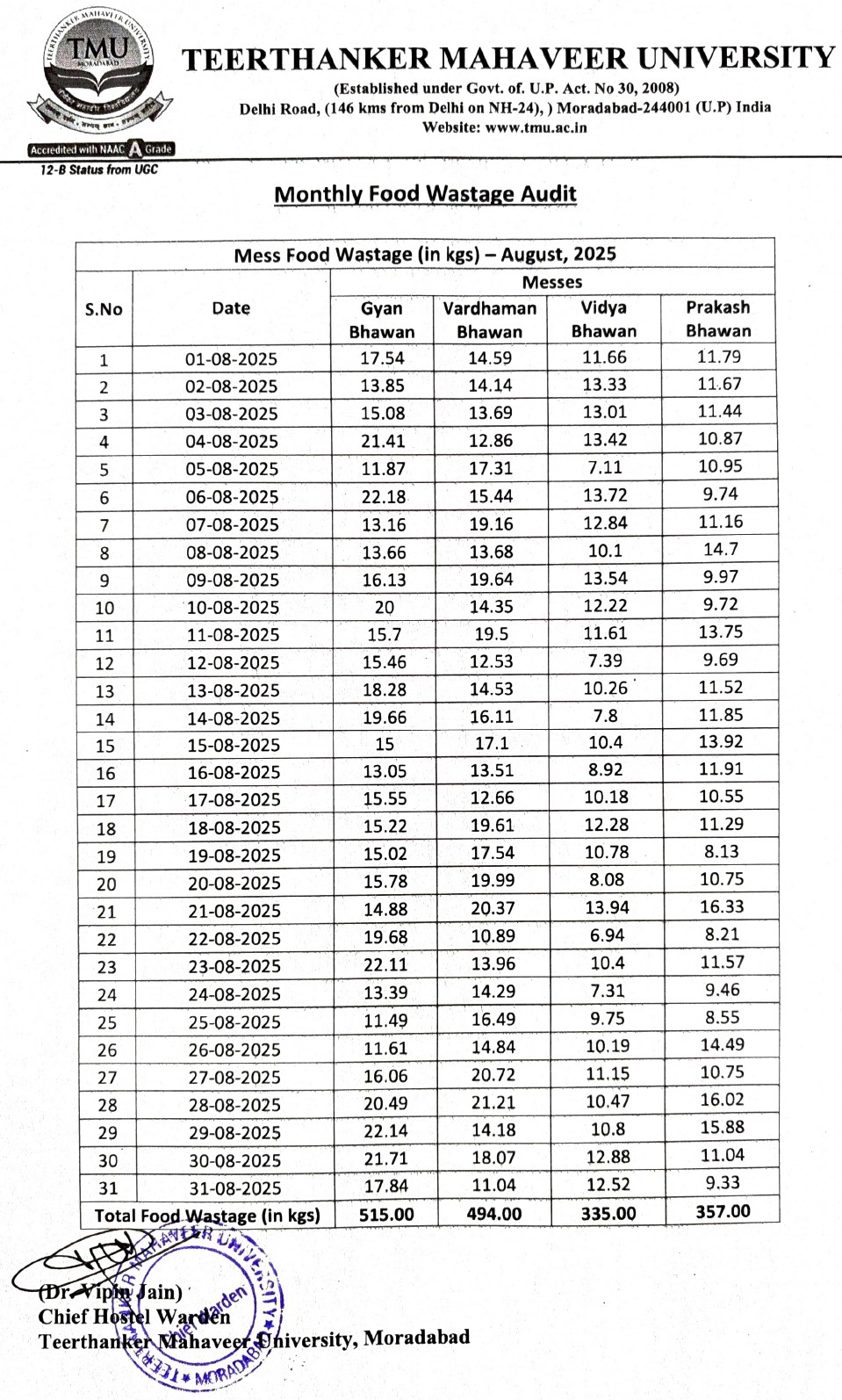
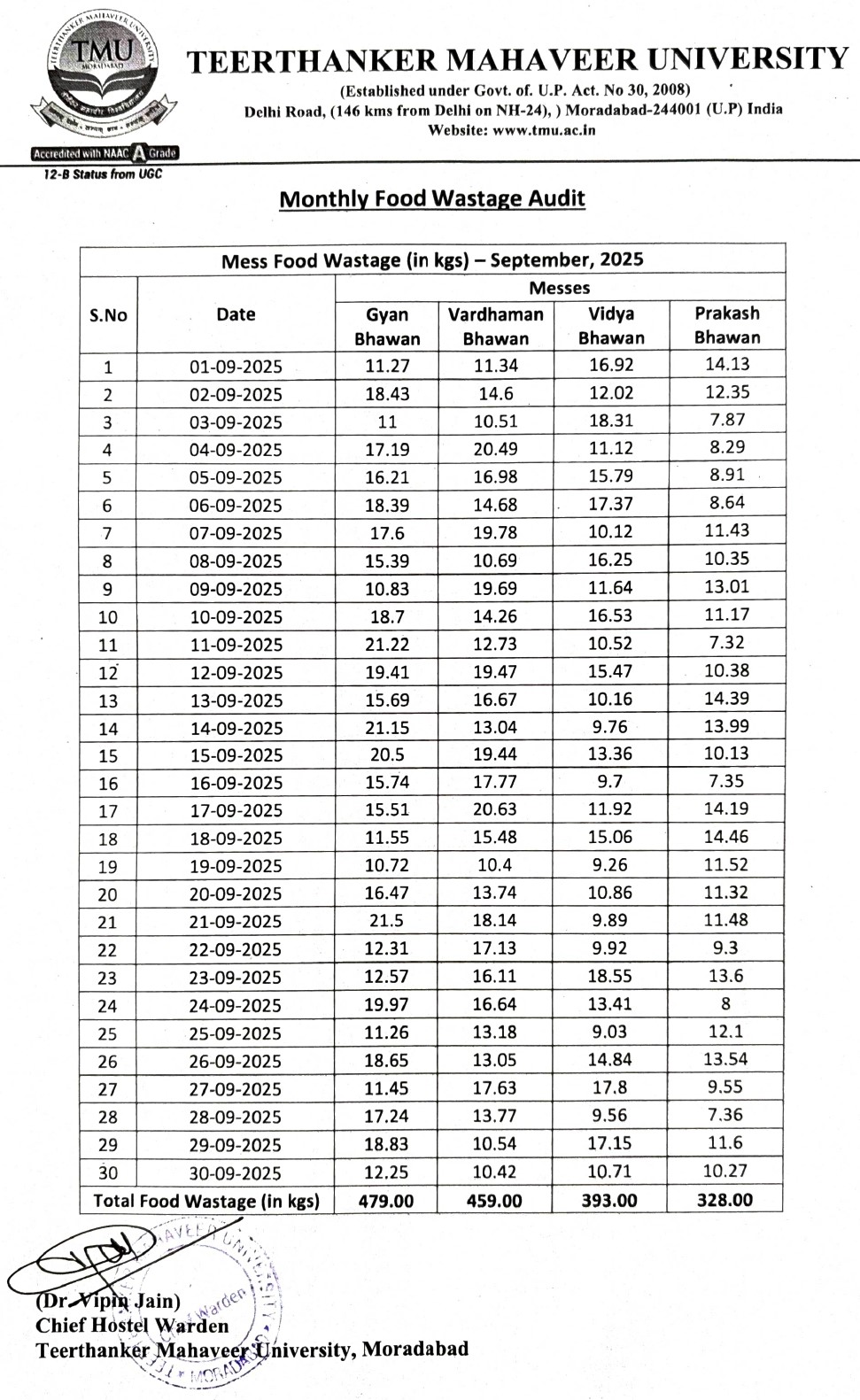
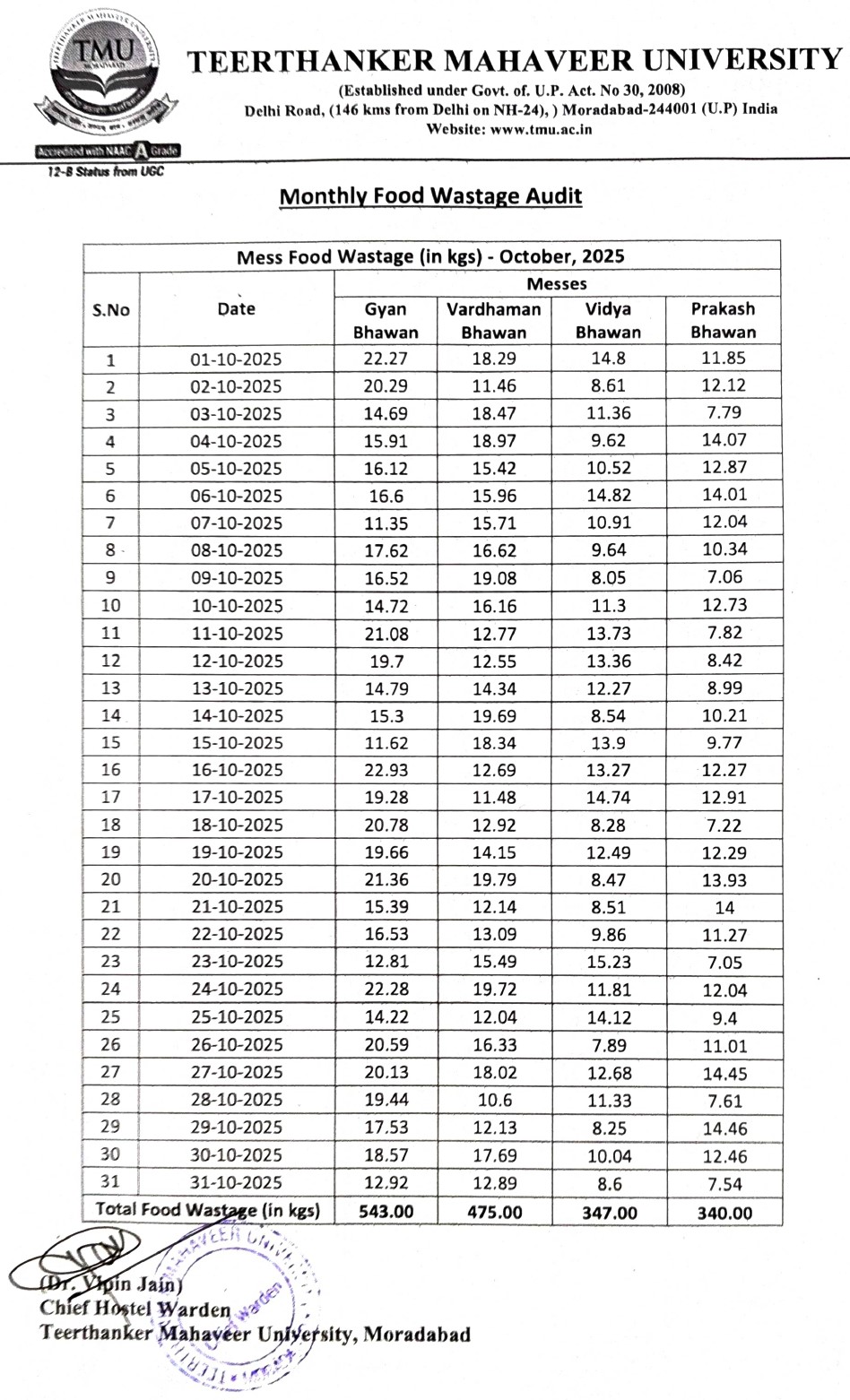
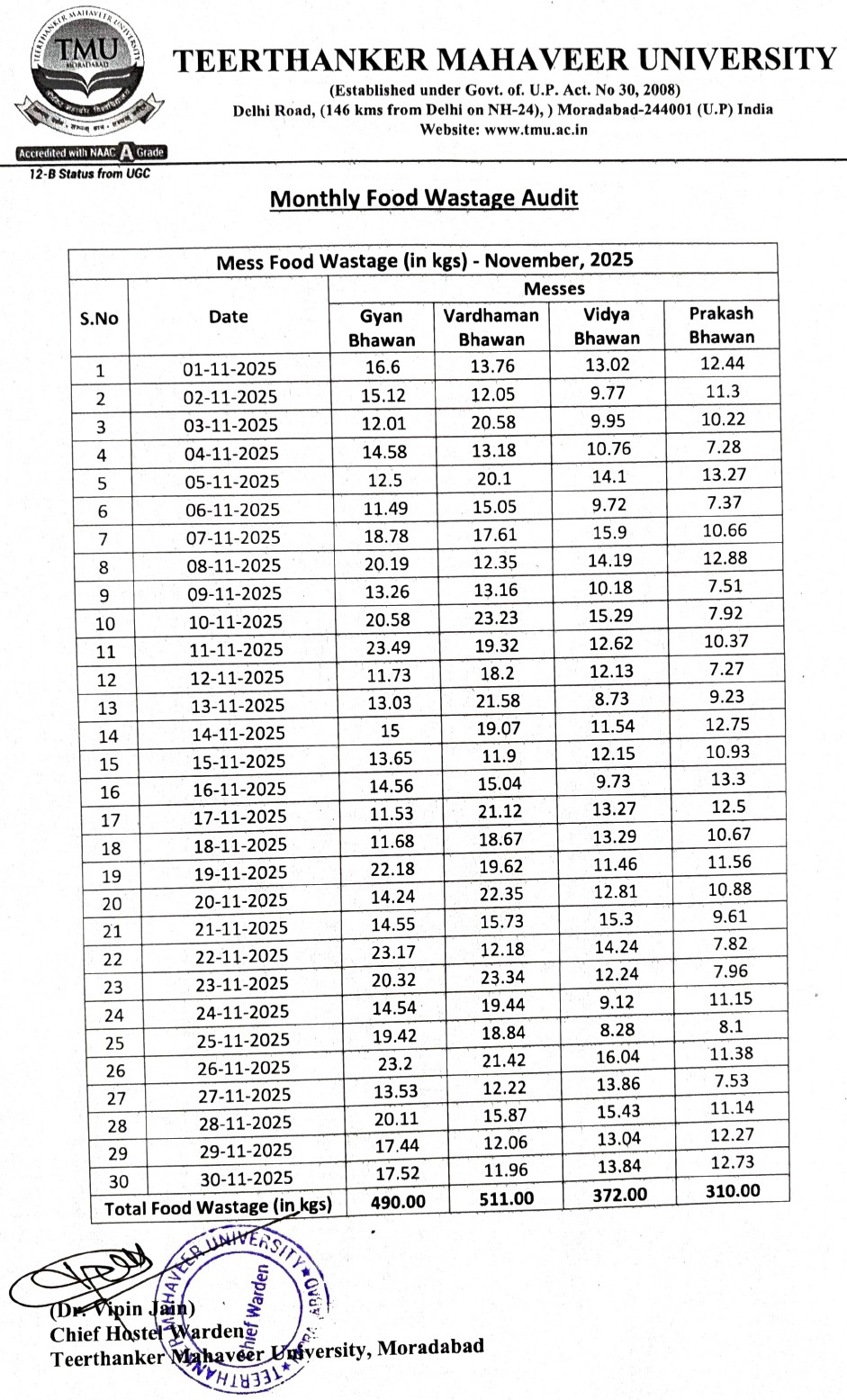
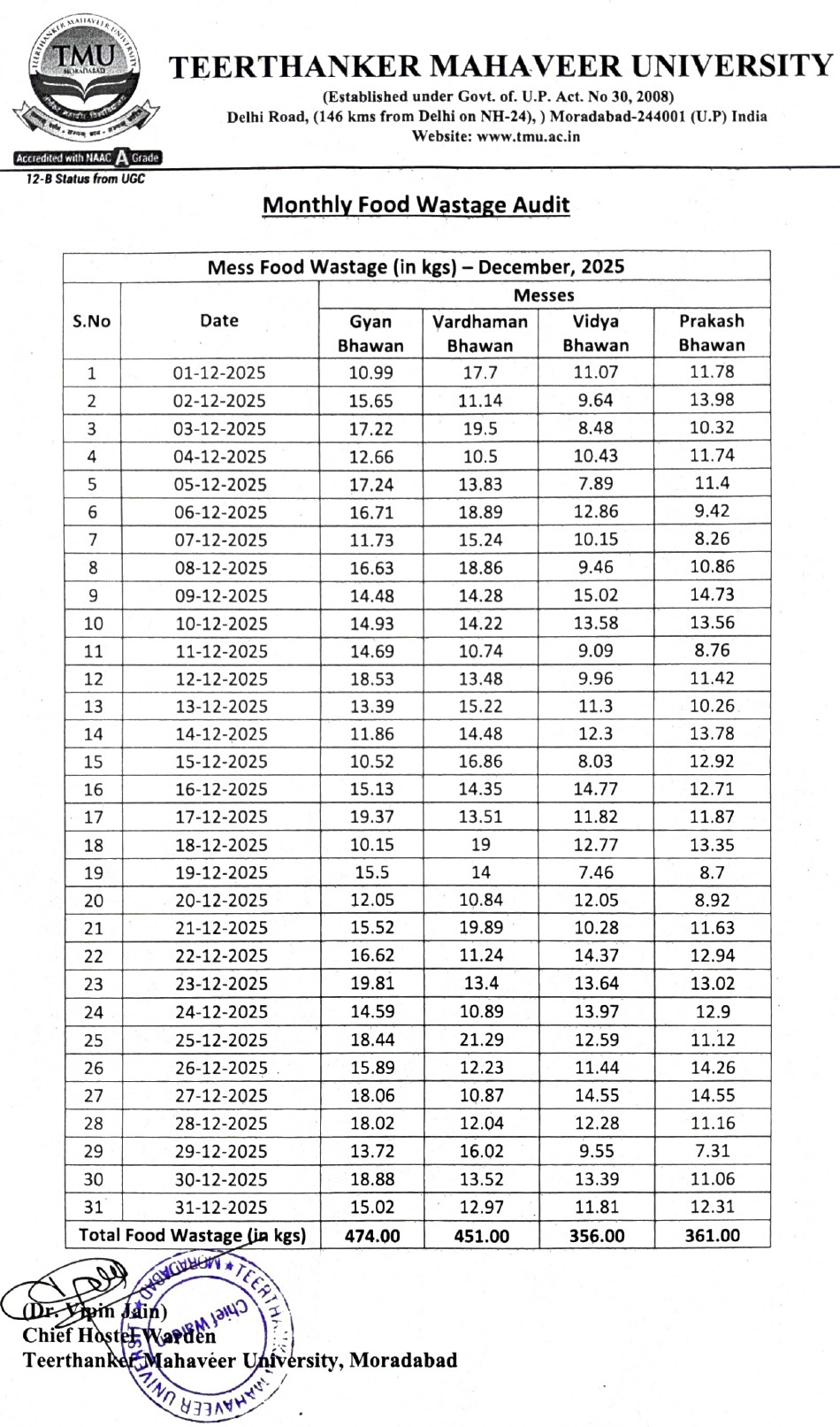
Monthly Piggery Farm Waste-Transfer Documentation (2025 Audit)
Continuous institutional continuity is corroborated by documented monthly waste weigh-slips and handover receipts confirming that 100% of recorded kitchen waste (19.986 Metric Ton) was transferred to authorized farm units throughout January–December 2025:
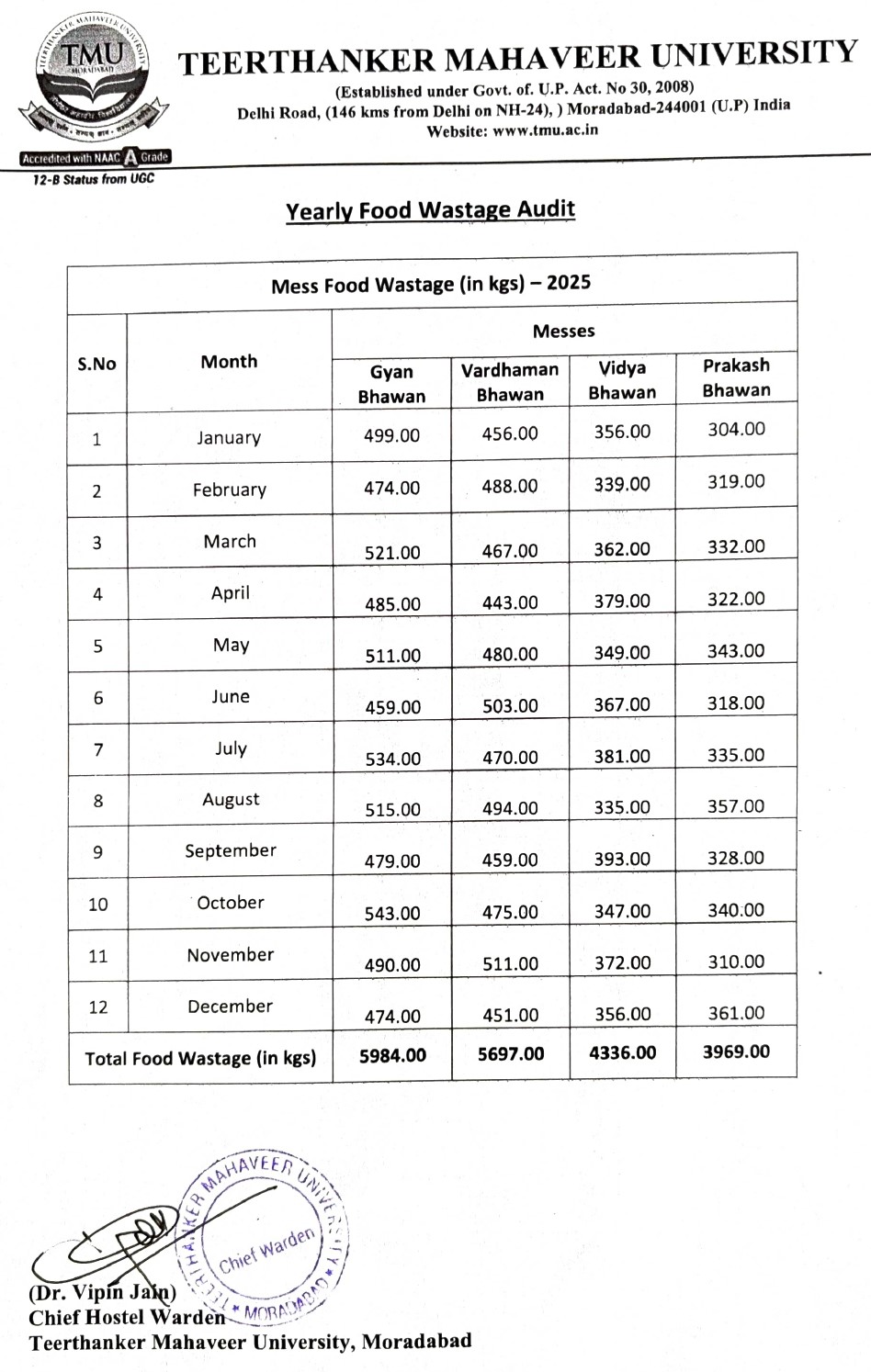
Verified Piggery Farm Waste-Transfer Documentation
View All Monthly Waste Transfer Slips (13 Records)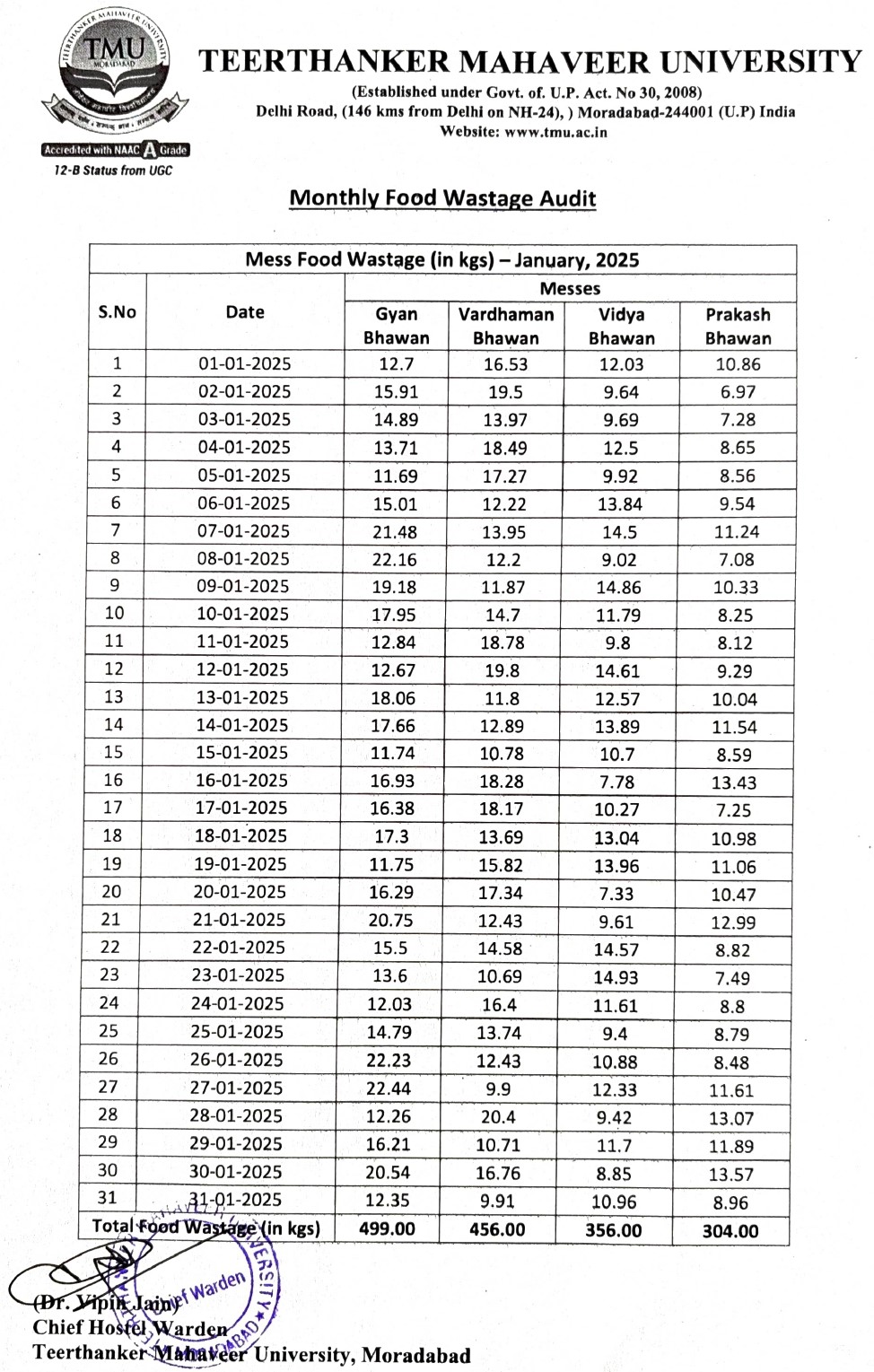
Campus Population for Assessment
| Population Category | Cadre Metric | Headcount |
|---|---|---|
| Resident Students on Campus | Full-Time Equivalent (FTE) | 3,972 |
| Resident Staff & Faculty | Full-Time Equivalent (FTE) | 154 |
| Total Campus Population | Students + Employees (FTE) | 4,126 |
TMU App for Meal Booking & Food-Waste Prevention
Teerthanker Mahaveer University (TMU) uses its mobile application to facilitate meal booking and track booked and cancelled meals, supporting better planning of food preparation in campus dining facilities. By recording meal bookings and cancellations, the system can help catering services estimate expected demand and adjust food preparation quantities accordingly. Identifying cancellations before meals are prepared or served can help avoid cooking more food than required, while comparing booking records with actual meal attendance can improve demand forecasting over time. This digital intervention supports responsible food consumption by helping reduce surplus food and avoidable food wastage across campus catering services. The booking and cancellation records can also provide a basis for monitoring meal demand and assessing improvements in food-preparation planning.
Food Waste & Responsible Consumption
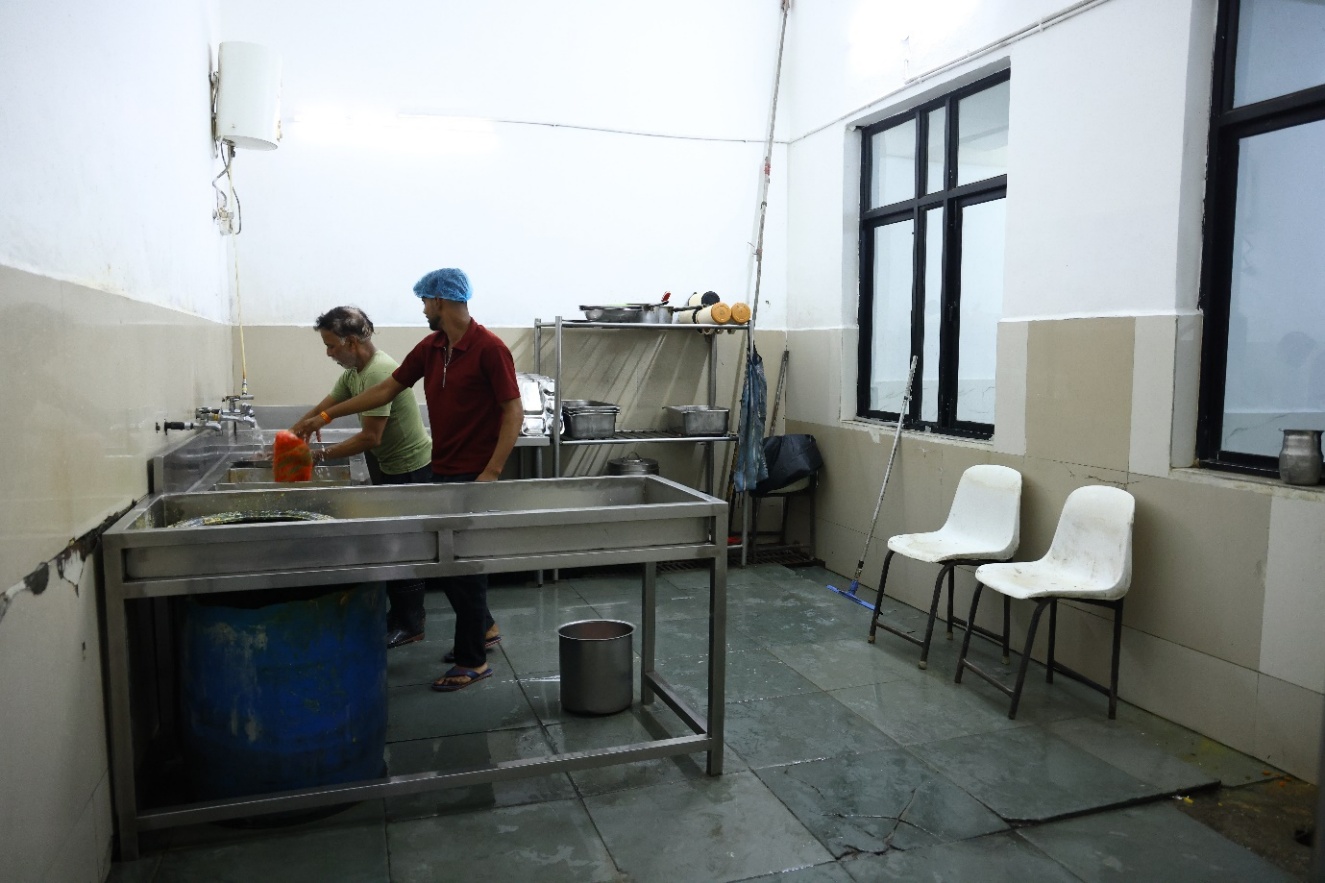
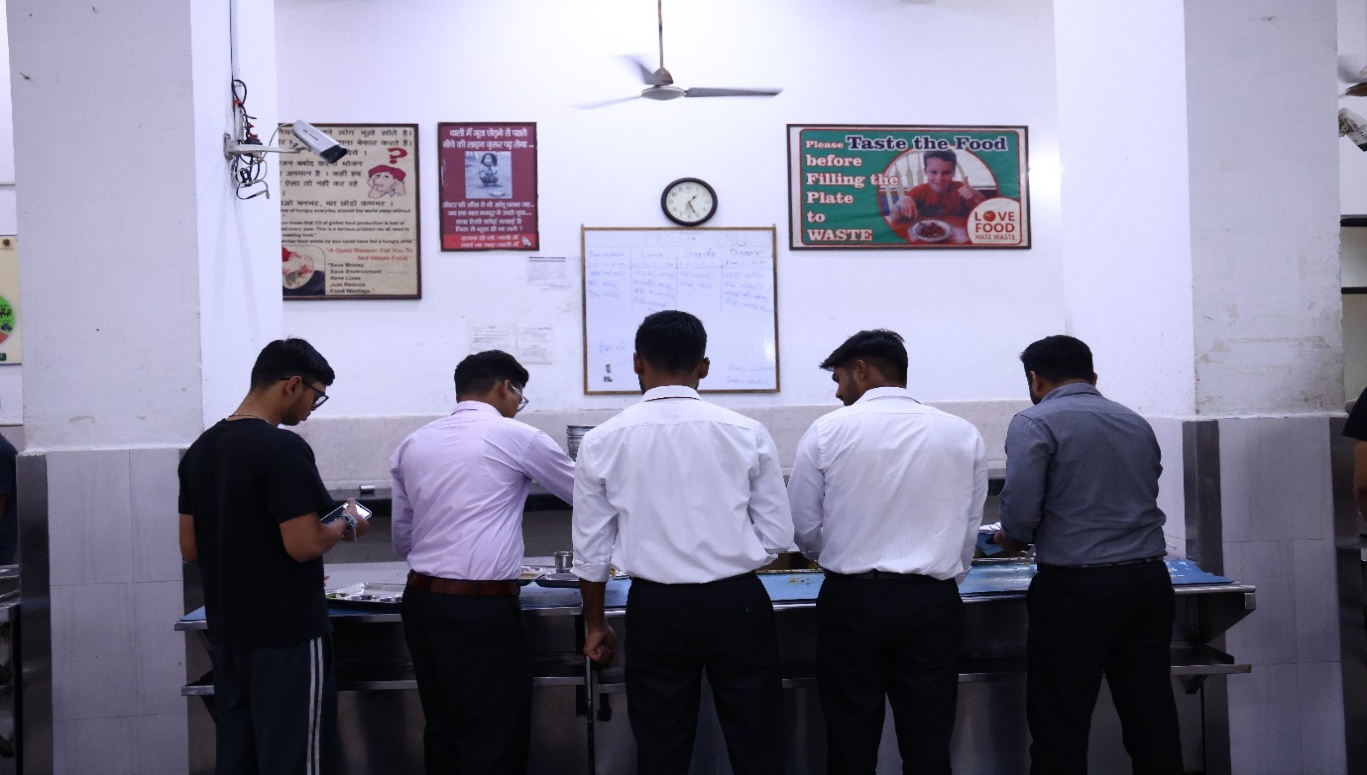
TMU's food-waste management practices are also supported by responsible food-consumption practices within its hostel mess system. The University's hostel mess guidelines encourage students to serve smaller portions initially and return for additional food when required, thereby helping avoid unnecessary food wastage. Students are also instructed to dispose of food waste appropriately. These practices complement the daily food-waste collection mechanism by encouraging responsible consumption at the point of food service.