Future Plan
TMU Carbon Neutrality 2045: Institutional Milestone Framework · 2026–2045
Establish the Carbon Baseline
Measurement and accountability
- Complete the university-wide GHG inventory.
- Establish Scope 1, Scope 2 and material Scope 3 baselines.
- Conduct energy, water and waste audits.
- Introduce building-wise monitoring and carbon accounting.
Accelerate Emission Reduction
Priority operational upgrades
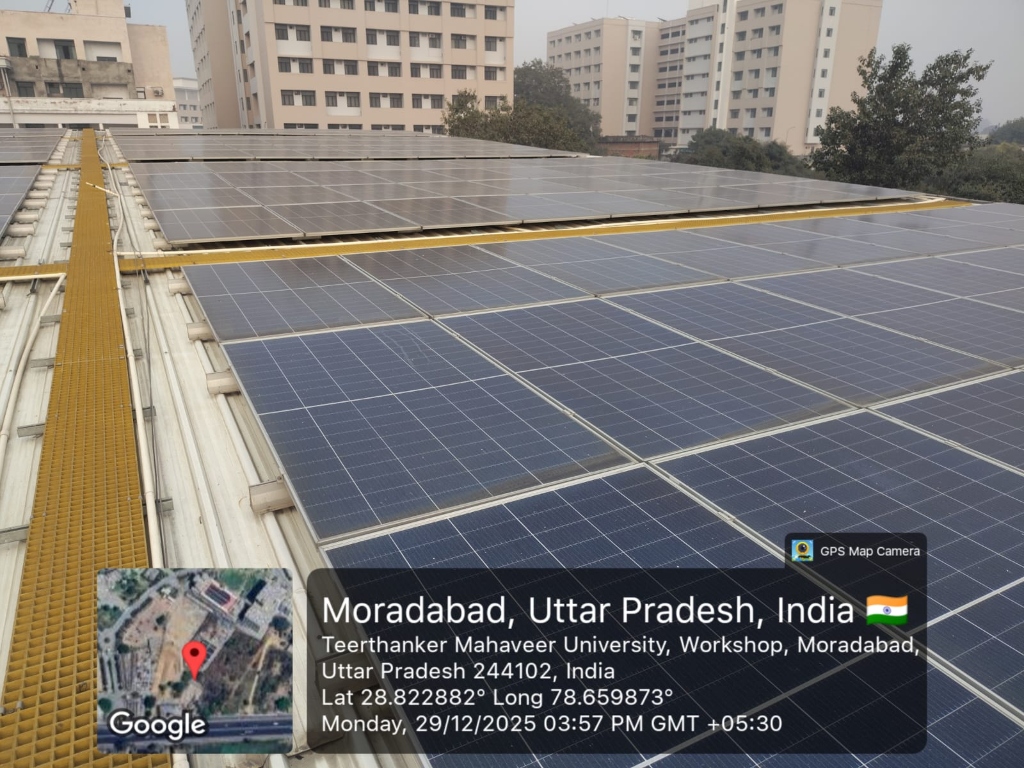
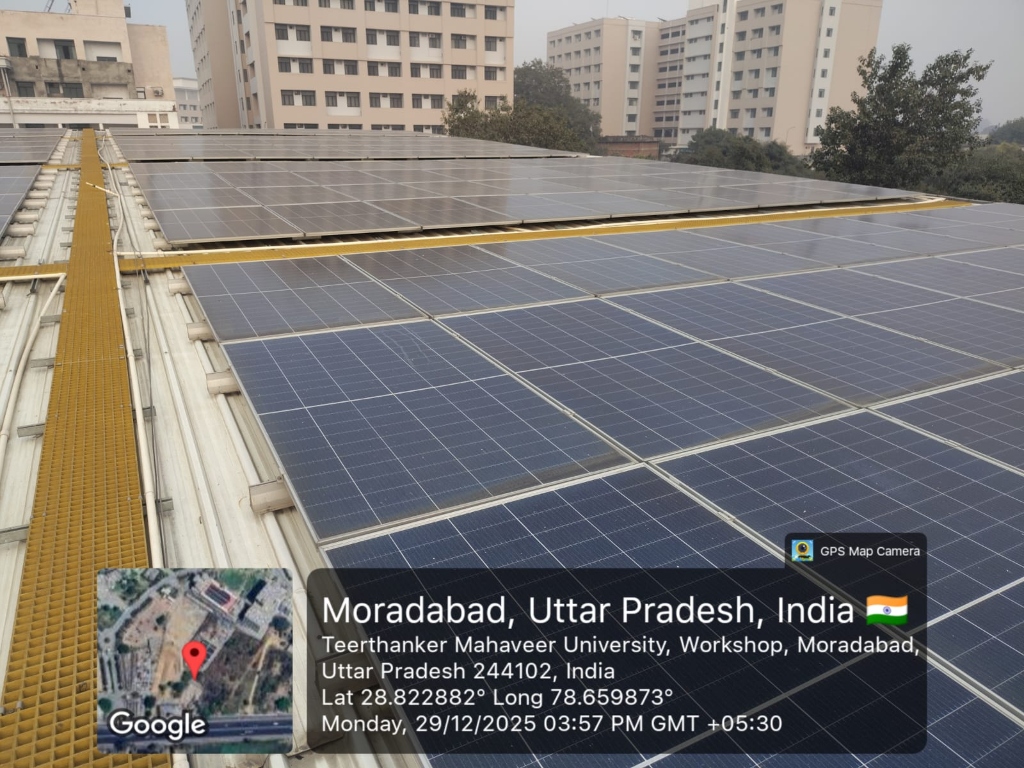
- Expand solar energy wherever technically feasible.
- Improve HVAC, lighting and electrical efficiency.
- Reduce freshwater demand through wastewater reuse.
- Strengthen waste prevention, recycling and composting.
- Introduce sustainable procurement and mobility measures.
Transition Towards a Low-Carbon Campus
Systemic integration
- Increase renewable-energy penetration.
- Integrate smart energy management across buildings.
- Expand low-carbon transport and EV infrastructure.
- Strengthen supply-chain and waste-related emission reductions.
- Demonstrate measurable reductions in all three scopes.
Deep Decarbonisation
Near-zero operational emissions
- Progress towards near-zero operational emissions.
- Increase renewable electricity procurement and generation.
- Electrify suitable campus operations.
- Address remaining material Scope 3 emission sources.
- Develop a verified residual-emissions management strategy.
Carbon Neutrality Achievement
Proposed target year: 2045
- Complete deep reductions across Scope 1, Scope 2 and Scope 3.
- Independently verify the remaining institutional emissions.
- Neutralise eligible residual emissions through credible carbon removals or other appropriately accounted neutralisation measures.
- Publish the University's verified carbon neutrality performance.
6. Quantitative Emission-Reduction Targets
For accountability, TMU adopts measurable interim targets against a formally verified 2026 baseline. The following are recommended planning targets, not achievements already demonstrated in the supplied reports.
| Target Year |
Scope 1 and 2 Absolute Emissions Reduction |
Scope 3 Emissions Reduction |
| 2026 |
Baseline year |
Baseline year |
| 2030 |
40% |
20% |
| 2035 |
70% |
35% |
| 2040 |
90% |
60% |
| 2045 |
At least 95% |
At least 90% |
Final target: By 2045, to achieve carbon neutrality across its defined institutional boundary, with at least 95% reduction in Scope 1 and 2 emissions and at least 90% reduction in Scope 3 emissions against the verified baseline, followed by neutralisation of eligible residual emissions.
7. Understanding and Addressing Scope 1, Scope 2 and Scope 3 Emissions
A credible carbon neutrality commitment must cover all three GHG Protocol emission scopes. The distinction is essential because reducing electricity consumption alone does not make a university carbon neutral.
Scope 1: Direct Emissions
On-Campus & Owned-Source
Emissions from sources owned or controlled by TMU.
Relevant Sources at TMU:
- Diesel consumed by backup generators.
- LPG or other fuels used in kitchens and heating systems.
- Fuel used by university-owned vehicles.
- Refrigerant leakage from air-conditioning and refrigeration systems.
- Direct emissions from wastewater treatment processes, where applicable.
Proposed Interventions:
- Maintain fuel-consumption registers for generators and vehicles.
- Improve generator efficiency and reduce unnecessary operation.
- Introduce electric vehicles for suitable institutional transport.
- Maintain refrigerant inventories and prevent leakage.
- Assess lower-carbon alternatives for thermal energy requirements.
Key indicators: Litres of diesel, kilograms of LPG, vehicle fuel consumption, refrigerant leakage and annual tCO₂e.
Scope 2: Purchased Energy Emissions
Electricity & Purchased Energy
Indirect emissions associated with the generation of electricity and other purchased energy consumed by TMU.
Relevant Sources at TMU:
- Electricity purchased from the grid.
- Purchased electricity consumed in academic buildings, laboratories, hospitals, hostels and administrative facilities.
- Purchased electricity for water pumping, STP and ETP operations.
Proposed Interventions:
- Increase solar generation and renewable electricity procurement.
- Introduce building-wise smart meters.
- Continue LED and BLDC fan replacement.
- Improve inverter AC efficiency and HVAC scheduling.
- Optimise electricity-intensive water treatment and pumping systems.
- Evaluate battery storage and demand management.
Key indicators: Grid electricity in kWh, renewable electricity in kWh, electricity intensity in kWh/m² and annual tCO₂e.
Scope 3: Value-Chain Emissions
Indirect Value Chain Beyond Energy
Emissions arising from activities across TMU's upstream and downstream value chain that are not already accounted for in Scope 1 or Scope 2.
Relevant Sources at TMU:
- Purchased food, stationery, laboratory supplies, furniture and construction materials.
- Transportation and distribution of purchased goods.
- Student, faculty and employee commuting.
- Business travel and official transportation.
- Waste generated in university operations and its treatment or disposal.
- Water supply, wastewater treatment and associated services, where not included in Scope 1.
- Outsourced catering, housekeeping, security and other contracted services.
- Embodied emissions associated with construction and infrastructure development.
Proposed Interventions:
- Implement life-cycle-based sustainable procurement.
- Prioritise local and seasonal food sourcing where feasible.
- Introduce reusable materials and reduce single-use products.
- Expand recycling, composting and landfill diversion.
- Promote public transport, carpooling and low-carbon commuting.
- Integrate embodied-carbon criteria into construction procurement.
- Obtain emissions-related information from major suppliers and service providers.
Key indicators: Procurement expenditure and product quantities, passenger-kilometres, business travel, waste by treatment route, water volumes and supplier emissions data.
7.1 Scope-Wise Implementation and Expected Contribution
| Emission Scope |
Main Institutional Contribution |
Intended Outcome |
| Scope 1 |
Fuel management, generator optimisation, refrigerant control and fleet electrification |
Reduction in direct fuel and process emissions |
| Scope 2 |
Solar energy, renewable electricity, energy efficiency and smart monitoring |
Reduction in purchased-electricity emissions |
| Scope 3 |
Sustainable procurement, mobility, recycling, food sourcing and construction standards |
Reduction in indirect value-chain emissions |
8. Integrated Action Plan Based on TMU's SDG 6, SDG 7 and SDG 12 Performance
The following table connects existing institutional achievements with measurable interventions, proposed targets and their contribution to carbon neutrality.
| Strategic Area |
Existing TMU Contribution |
Proposed Action and Measurable Target |
Timeline |
| Solar Energy |
2,660 kW reported installed capacity |
Assess further viable solar capacity; progressively increase renewable electricity share |
2027–2035 |
| Energy Efficiency |
90% conventional fans replaced by BLDC fans; inverter ACs and LED lighting |
Complete remaining priority upgrades; reduce energy intensity against 2026 baseline |
2030–2035 |
| Smart Energy Management |
Energy monitoring and energy audits |
Building-wise metering and centralised energy dashboard across priority facilities |
2026–2030 |
| Clean Mobility |
Energy transition roadmap identifies EV infrastructure |
Phase in electric institutional vehicles and promote low-carbon commuting |
2027–2040 |
| Wastewater Treatment |
1.5 MLD STP and 200 KLD ETP |
Monitor actual treatment, electricity consumption, water quality and reuse; optimise plant energy efficiency |
2026–2030 |
| Water Conservation |
Rainwater harvesting, water storage and efficient fixtures |
Meter major water-use areas and reduce freshwater intensity by 30% against baseline |
2030 |
| Waste Management |
Segregation, recycling and vermicomposting |
Target at least 90% verified recycling/resource recovery and no more than 10% landfill disposal of eligible non-hazardous waste |
2035 |
| Plastic and Disposable Reduction |
Institutional waste and plastic-minimisation measures |
Eliminate avoidable single-use items in controlled campus operations, subject to health and safety requirements |
2030 |
| Paper Conservation |
ERP, e-governance and double-sided printing |
Digital-first administration and annual measurement of paper purchased and consumed |
2030 |
| Sustainable Procurement |
Ethical sourcing and supplier engagement |
Introduce GHG-related procurement criteria for major purchasing categories and contracted services |
2030–2035 |
| Carbon Accounting |
Energy and resource-performance reporting |
Annual verified Scope 1, 2 and material Scope 3 inventory |
2027 onwards |
9. Resource Efficiency as a Carbon-Reduction Strategy
An important feature of TMU's carbon neutrality programme is that water and waste management must be treated as integral components of decarbonisation rather than independent environmental activities.
9.1 Water Stewardship and Carbon Reduction – SDG 6
TMU's water infrastructure provides opportunities for reducing the energy requirements and indirect emissions associated with freshwater supply, pumping and wastewater management.
The proposed interventions are:
- Optimization of STP and ETP operations: Introduce periodic energy-performance assessments to identify electricity-intensive treatment processes and improve plant efficiency.
- Treated-water reuse: Maximize the reuse of appropriately treated wastewater for horticulture, landscaping, toilet flushing and other permitted non-potable applications.
- Rainwater harvesting: Strengthen rainwater collection and groundwater recharge to reduce dependence on externally supplied or extracted freshwater.
- Water-efficient infrastructure: Continue installing low-flow fixtures, dual-flush systems and efficient pumping equipment.
- Water consumption monitoring: Establish digital meters for major buildings, hostels, healthcare facilities and water-intensive operations.
- Water-related carbon accounting: Measure electricity used in extraction, pumping, treatment and distribution, and account for relevant indirect emissions.
Proposed 2030 milestone: Reduce freshwater consumption intensity by at least 30% against the verified 2026 baseline, subject to occupancy and operational requirements.
9.2 Clean Energy Transition – SDG 7
TMU's existing solar infrastructure and energy-efficiency interventions provide the primary operational pathway for reducing Scope 2 emissions.
The University will progressively:
- Assess the technical and financial feasibility of additional rooftop solar installations.
- Evaluate solar carports and solar-powered water pumping systems.
- Increase renewable electricity generation and procurement.
- Introduce smart energy monitoring in major energy-consuming facilities.
- Continue replacing inefficient electrical equipment.
- Improve building energy performance through daylight utilisation, HVAC optimisation and energy-efficient construction.
- Evaluate energy storage for improved renewable-energy utilisation.
Proposed 2035 milestone: Establish a predominantly renewable-powered, energy-efficient campus through increased on-site generation and eligible renewable electricity procurement, supported by documented annual energy and emissions data.
9.3 Responsible Consumption and Circular Resource Management – SDG 12
TMU's responsible consumption initiatives contribute to carbon neutrality by addressing emissions associated with materials, waste generation, procurement and disposal.
The University will strengthen:
- Waste prevention and source segregation.
- Recycling and recovery of paper, plastics, metals and glass.
- Composting and vermicomposting of biodegradable waste.
- Reduction of disposable products and unnecessary packaging.
- Digital administration and paper-efficient institutional processes.
- Sustainable procurement of food, stationery, laboratory materials and construction supplies.
- Environmental performance requirements for suppliers and outsourced service providers.
Proposed 2035 milestone: Achieve at least 90% verified recycling and resource recovery of eligible campus waste, while limiting landfill disposal to a maximum of 10% of the relevant non-hazardous waste stream.
10. Review Mechanism
MONTHLY
Review electricity, water, fuel and waste consumption.
QUARTERLY
Assess progress against the carbon-reduction action plan.
HALF-YEARLY
Review infrastructure investments, operational improvements and implementation gaps.
ANNUALLY
Prepare a consolidated GHG inventory, verify emissions reductions and publish institutional progress.
11. Expected Institutional Outcomes by 2045
Successful implementation of the proposed roadmap is expected to deliver the following outcomes:
- Low-carbon energy infrastructure: A substantial transition from conventional electricity and fossil-fuel-dependent systems towards renewable and cleaner energy.
- Reduced operational emissions: Measurable reductions in direct fuel consumption, purchased electricity emissions and energy intensity.
- Water-resource resilience: Reduced freshwater dependence through treatment, reuse, rainwater harvesting and efficient water infrastructure.
- Circular resource management: Reduced waste generation, increased material recovery and lower dependence on landfill disposal.
- Sustainable supply chains: Greater integration of environmental criteria into procurement, construction and outsourced services.
- Institutional accountability: Annual reporting of Scope 1, Scope 2 and Scope 3 emissions supported by verifiable activity data.
- Climate-responsive education and research: Greater integration of carbon management, renewable energy, water conservation and circular economy principles into institutional learning and innovation.
- Carbon neutrality: A verified institutional emissions balance by the proposed target year of 2045.
12. Institutional Commitment
Teerthanker Mahaveer University recognises that carbon neutrality cannot be achieved through isolated renewable-energy installations or individual environmental initiatives. It requires a coordinated transformation of the University's entire operational and institutional value chain.
Building upon its existing achievements in renewable energy adoption, energy efficiency, wastewater treatment, water reuse, waste segregation, recycling, digital governance and responsible procurement, TMU proposes a structured pathway towards carbon neutrality by 2045.
The proposed roadmap places emphasis on measurable emission reductions across Scope 1, Scope 2 and Scope 3, supported by systematic monitoring, institutional accountability, technological improvements and evidence-based resource management. TMU shall prioritise emission avoidance and reduction at source, strengthen its transition towards renewable energy, improve resource productivity and progressively address indirect emissions associated with procurement, mobility, construction and waste management.
TMU’s Carbon Neutrality Commitment – 2045
Teerthanker Mahaveer University commits to pursuing carbon neutrality by 2045 through a phased and measurable reduction of greenhouse gas emissions across Scope 1, Scope 2 and material Scope 3 activities. The University shall establish a verified institutional emissions baseline, implement progressive emission-reduction targets, expand renewable energy, improve energy and water efficiency, strengthen circular resource management and integrate sustainability into procurement and campus operations.