



12.3.2: Waste Recycled & Diverted
Quantitative Measurement, Organic Composting, Material Recovery, and Landfill Diversion Framework
Teerthanker Mahaveer University enforces quantitative measurement, strict source segregation, and circular diversion pathways across all campus-generated waste streams to prevent landfill dumping and foster a circular campus economy. Under the institutional Waste Management Policy, recyclable commodities, organic dining residues, wastewater effluents, and specialized electronic and chemical streams are diverted through dedicated processing channels.
Central dining facilities, residential hostels, hospitals, and academic departments actively participate in decentralized source-segregation into biodegradable, non-biodegradable, recyclable, and hazardous categories. Wet organic waste is diverted to on-site bio-composting pits and local agricultural repurposing, while dry recyclables (paper, cardboard, plastics, and metals) are baled and transferred to authorized recyclers.
Campus Material Recovery & Recycling Operations
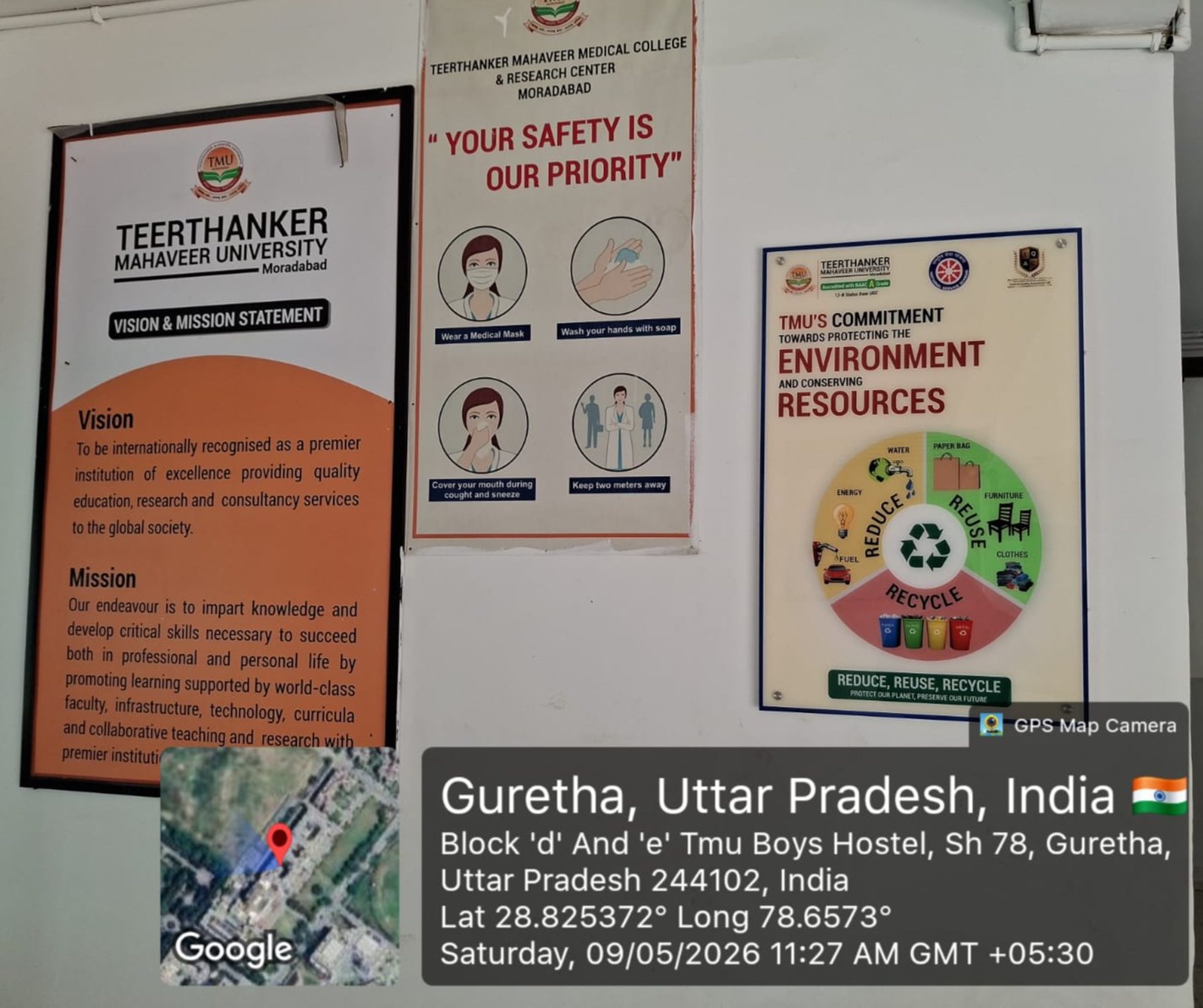
Visual overview of segregated collection, material handling, and circular processing at Teerthanker Mahaveer University
Key Campus Waste Streams, Diversion Mechanisms & Circular End-Uses
| Waste Category | Diversion & Processing Channel | Circular Output & Environmental Impact |
|---|---|---|
| Dining & Kitchen Wet Waste | Decentralized collection from student hostels, hospitals, and campus dining halls. | Diverted to on-campus vermicomposting pits and local agricultural repurposing—enriching soil organic carbon without landfill decay. |
| Paper, Cardboard & Packaging | Centralized baling of academic examinations scrap, cardboard packaging, and administrative stationery. | Transferred to authorized recycling mills for paper pulp recovery, reducing fresh tree felling and water consumption. |
| Plastics & Beverage Containers | Strict segregation of non-single-use plastics, packaging liners, and laboratory containers. | Shredded and forwarded to registered recycling partners for industrial plastic extrusion and remanufacturing. |
| Sewage & Hospital Effluent | Treated through on-site 1.5 MLD Sewage Treatment Plant (STP) and 200 KLD Effluent Treatment Plant (ETP). | 100% of treated water reclaimed for 130-acre campus landscape irrigation, horticultural recharge, and secondary flushing. |
| Electronic & IT Equipment | Periodic collection of retired computer hardware, server components, lab instrumentation, and batteries. | Disposed of through certified e-waste recyclers under Extended Producer Responsibility (EPR) regulations. |
| Hazardous & Biomedical Waste | Color-coded containment, daily tracking, and manifest-controlled transportation. | Handled in partnership with Sheetala Waste Management Project under strict Form 10 consignment oversight. |
WASTE RECYCLED & DIVERTED REPORT
Institutional audit documentation detailing quantitative campus waste generation data, recycling ratios, composting yields, and certified diversion records across Teerthanker Mahaveer University.
View PDFCircular Resource Recovery: Turning Campus Waste into Productive Value
By maximizing recycling rates, eliminating landfill dumping, and repurposing organic and wastewater flows into secondary nutrients and irrigation resources, Teerthanker Mahaveer University demonstrates a closed-loop institutional ecosystem that champions responsible consumption and sustainable production.