



12.2.1: Ethical Sourcing Policy
Policy on Ethical and Sustainable Procurement of Food, Supplies, and Operational Resources
Teerthanker Mahaveer University (TMU) follows the principles of responsible resource utilization, waste prevention, operational efficiency, and environmental initiatives into its institutional practices, advancing the objectives of Responsible Consumption and Production. Our approach extends beyond waste management to encompass resource-efficient infrastructure, sustainable energy use, water recovery, digital governance, and responsible procurement.
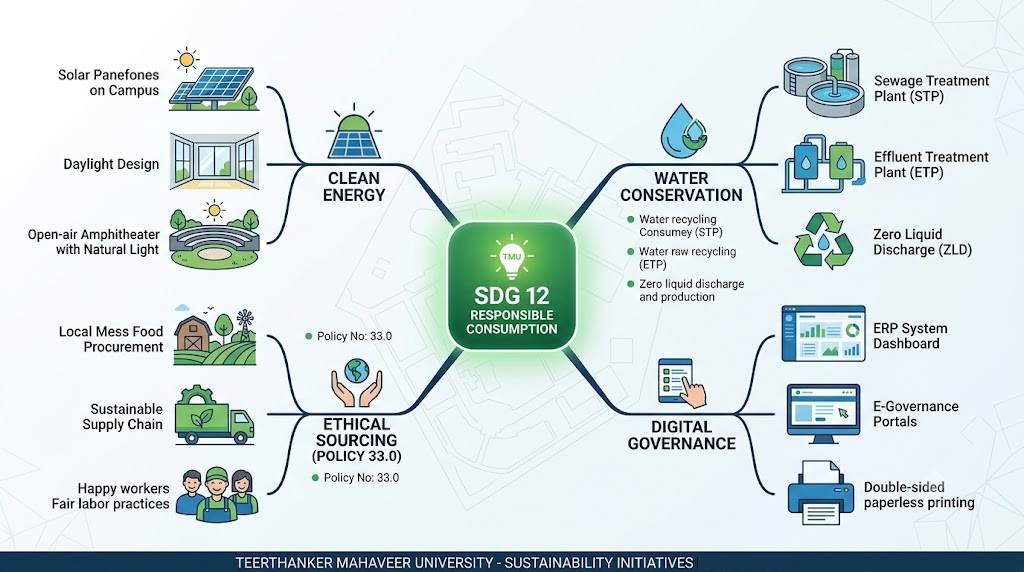
Solar energy installations support the transition towards cleaner energy, while Sewage Treatment Plants (STPs), Effluent Treatment Plants (ETPs), and Zero Liquid Discharge practices promote wastewater treatment, reuse, and reduced dependence on freshwater resources. Architectural and operational measures, including maximizing natural daylight and using an open-air amphitheater where suitable, support more efficient use of energy and built infrastructure. ERP-based administration, e-governance, reduced paper consumption, and double-sided printing help minimise paper-intensive processes and improve operational efficiency.
Responsible procurement for mess operations, food, and institutional supplies further connects everyday purchasing decisions with the principles of sustainable consumption and supply-chain responsibility. Together, these initiatives reflect TMU’s institutional commitment to embedding sustainability into routine decision-making and resource management. Their significance lies in creating opportunities to reduce avoidable consumption, improve resource recovery, minimise waste generation, and strengthen environmental accountability across campus operations.
Four Key Pillars of TMU’s Sustainable Sourcing Framework
Clean & Decarbonized Energy
Large-scale solar photovoltaic arrays, daylight harvesting in academic blocks, and open-air amphitheatre use for university gatherings to curb grid reliance and operational emissions.
Water Stewardship
Campus-wide biological STPs, chemical ETPs, and Zero Liquid Discharge (ZLD) practices ensuring 100% of treated wastewater is recirculated on-site for landscape and secondary uses.
Digital Governance
University-wide ERP ecosystem, digital examination and grading workflows, double-sided printing mandates, and less-paper administrative protocols preventing avoidable paper waste.
Ethical Sourcing (Policy 33.0)
Direct local procurement of fresh food and grains from regional farmers, stringent vendor vetting for fair labour standards, and sustainable supply chain certifications.
Institutional Sustainable Initiatives & Impact Outcomes
Overview of TMU's integrated approach connecting clean energy, water recovery, paperless governance, and ethical supply chains
Operational Implementation Across University Units
1. Climate-Conscious Architecture & Clean Energy
- Solar Integration: Rooftop solar PV systems offsetting peak grid load and curbing carbon footprint.
- Passive Daylighting: High-ceiling classrooms and daylight-optimized corridors cutting artificial illumination demands.
- Open-Air Assemblies: Major campus events conducted in open-air amphitheaters reducing indoor HVAC loads.
2. Closed-Loop Water Recovery (STP, ETP, ZLD)
- STP & ETP Operations: Treatment of domestic wastewater and clinical/laboratory liquid effluents.
- Zero Liquid Discharge: 100% of treated water reclaimed for landscaping, agricultural fields, and cooling towers.
- Freshwater Protection: Drastically reducing campus groundwater drawdown through continuous circular recycling.
3. ERP-Driven Digital Governance & Paper Reduction
- Paperless Workflow: Admissions, registrations, fee payments, and evaluation managed via a centralised ERP portal.
- Double-Sided Printing: Compulsory two-sided printing protocols for essential physical records and dissertations.
- E-Governance: Departmental communications, notices, and approvals routed digitally across all 14 faculties.
4. Ethical Food & Mess Sourcing (Policy 33.0)
- Local & Seasonal Produce: Direct sourcing from regional farm cooperatives, slashing transport emissions.
- Responsible Mess Protocols: Systematic single-use plastic avoidance, biodegradable packaging, and organic composting.
- Supplier Due Diligence: Mandatory background vetting ensuring fair living wages, safe working conditions, and absence of forced labour.
Policy on Ethical Sourcing of Food and Supplies (Policy No. 33.0)
Institutional guidelines mandating responsible procurement, vendor compliance with fair labour laws, local agricultural sourcing, and environmental accountability across all TMU dining facilities and departmental purchases.
View PDFInstitutional Commitment to Ethical Procurement
By embedding ethical sourcing standards into campus procurement, Teerthanker Mahaveer University ensures that institutional buying power actively fosters sustainable regional agriculture, fair employment practices, and circular resource management, advancing UN SDG 12 across every level of university governance.