



12.2.3: Hazardous Waste & Quality Assurance
Institutional Policy on Hazardous Materials, Waste Segregation, Quality Assurance, and Liquid Waste Management
Teerthanker Mahaveer University (TMU) believes in Responsible Consumption and Production by integrating waste prevention, safe waste disposal, wastewater treatment, resource recovery, and paper-efficient administration into its institutional operations. We recognise responsible waste management as a fundamental component of sustainable institutional development and a practical expression of our commitment to UN SDG 12. Our approach emphasizes not merely the disposal of waste, but the responsible management of waste throughout its lifecycle to minimize environmental risks and promote the efficient use of resources.
Sewage Treatment Plants (STPs) and Effluent Treatment Plants (ETPs) support the treatment of wastewater, while Zero Liquid Discharge (ZLD) practices promote wastewater recovery and reuse, helping reduce the release of untreated effluents and dependence on freshwater resources. Hazardous, biomedical, chemical, and electronic wastes require appropriate segregation, safe handling, designated storage, and disposal through authorized agencies in accordance with applicable statutory regulations.
The University adopts a comprehensive approach to campus waste streams—including biodegradable waste, dry recyclables, sanitary waste, electronic waste, non-recyclable waste, and biomedical waste—supported by source-level segregation across classrooms, laboratories, offices, hostels, dining halls, food outlets, and common areas.
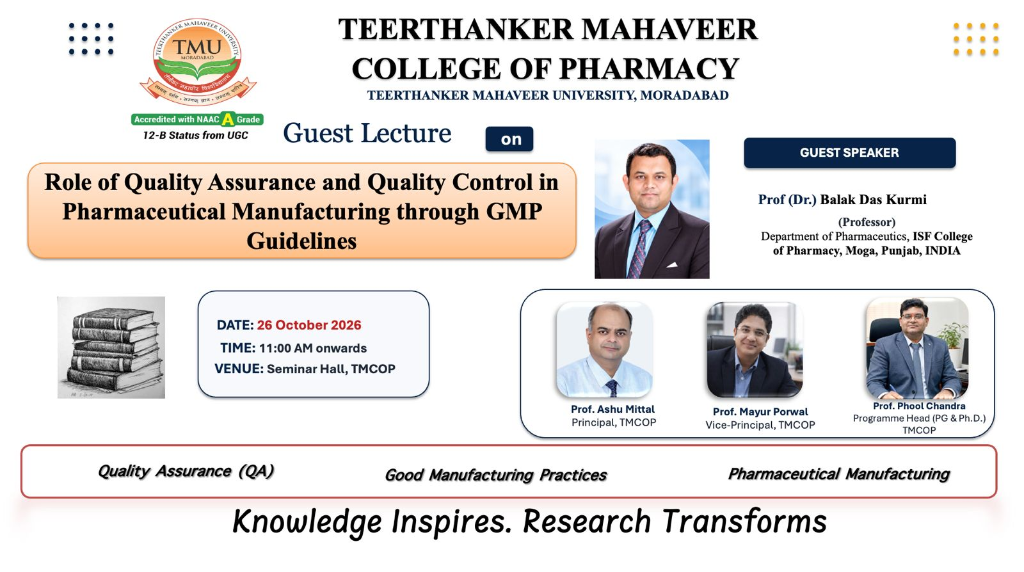
Quality Assurance, GMP & Laboratory Standards
Laboratory protocols, pharmaceutical quality control, and safe hazardous substance handling at TMU College of Pharmacy
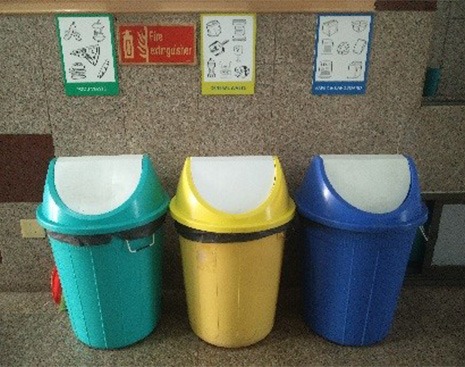
Colour-Coded Source Segregation
Designated colour-coded bins for biomedical, hazardous, recyclable, and organic waste.
Key Waste Management Initiatives & Institutional Significance
| TMU Initiative | Contribution to Responsible Consumption | Impact & Outcome |
|---|---|---|
| Waste Segregation at Source | Designated waste bins and collection points across academic buildings, laboratories, offices, hostels, dining areas, food outlets, and common spaces. | Facilitates the separate collection of biodegradable, recyclable, sanitary, electronic, non-recyclable, and biomedical waste, supporting responsible disposal and material recovery. |
| Paper Waste Reduction (Digital Governance) | Double-sided printing mandate, digital communication systems, online academic submissions, and ERP-based administrative processes. | Reduces dependence on paper-intensive workflows, supports efficient administrative processes, and prevents avoidable paper waste. |
| Plastic Reduction & Responsible Consumption | Discouragement of single-use plastics and awareness initiatives promoting environmentally responsible behaviour. | Encourages reduced reliance on disposable plastics and strengthens awareness of consumption choices that prevent waste generation. |
| E-Waste Segregation & Authorized Disposal | Identification and segregation of discarded electronic equipment and biomedical waste, with stringent handling protocols. | Mitigates risks associated with improper disposal, supports safer waste handling, and promotes environmentally responsible management of specialised waste. |
| STPs and ETPs Operations | Continuous wastewater treatment, biological aeration, and chemical effluent neutralization. | Supports wastewater treatment, pollution prevention, and responsible conservation of freshwater resources. |
| Biodegradable & Hazardous Material Management | Separate handling of food waste from hostels, cafeterias, and dining facilities, along with garden residues and hazardous chemicals. | Supports improved organic-waste management, campus hygiene, and opportunities for organic-waste bio-composting. |
| Zero Liquid Discharge (ZLD) Practices | 100% of treated wastewater reclaimed for landscape irrigation, cooling towers, and secondary flushing. | Zero wastage of water extracted, leading to circular water consumption across the 130-acre campus. |
Hazardous Waste Consignment Manifest (Form 10)
Official Form 10 hazardous waste consignment authorization and manifest documentation in collaboration with Sheetala Waste Management Project
Good Manufacturing Practice & Laboratory Standards Video
Visual walkthrough of quality management, pharmaceutical manufacturing techniques, and safety protocols
QA/QC & GMP in Practice
Watch how TMU College of Pharmacy demonstrates hands-on compliance with quality control standards, cleanroom regulations, and safe chemical management.
Watch on Facebook ReelHazardous Chemicals, Radioactive Safety & Authorized Waste Manifest
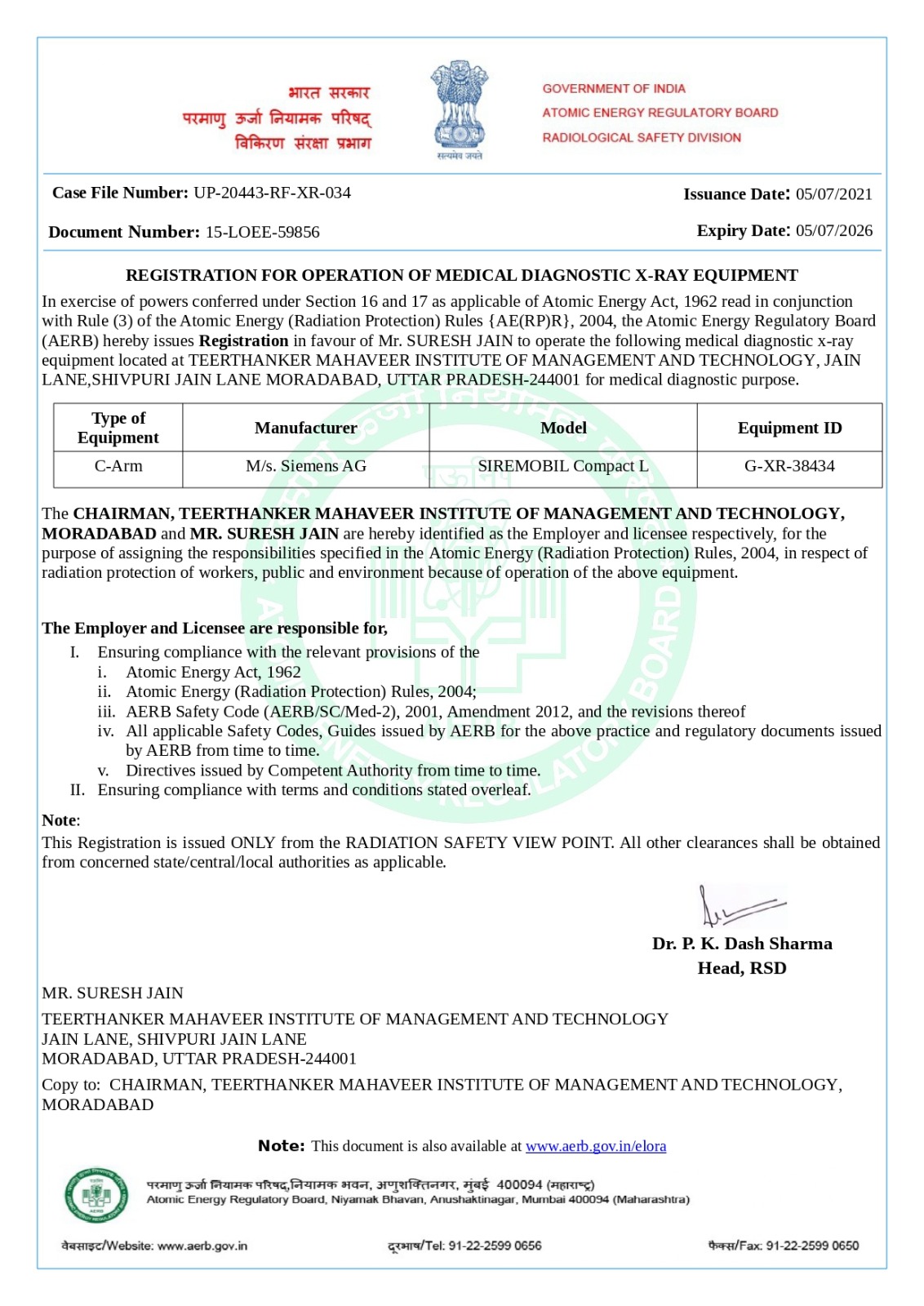
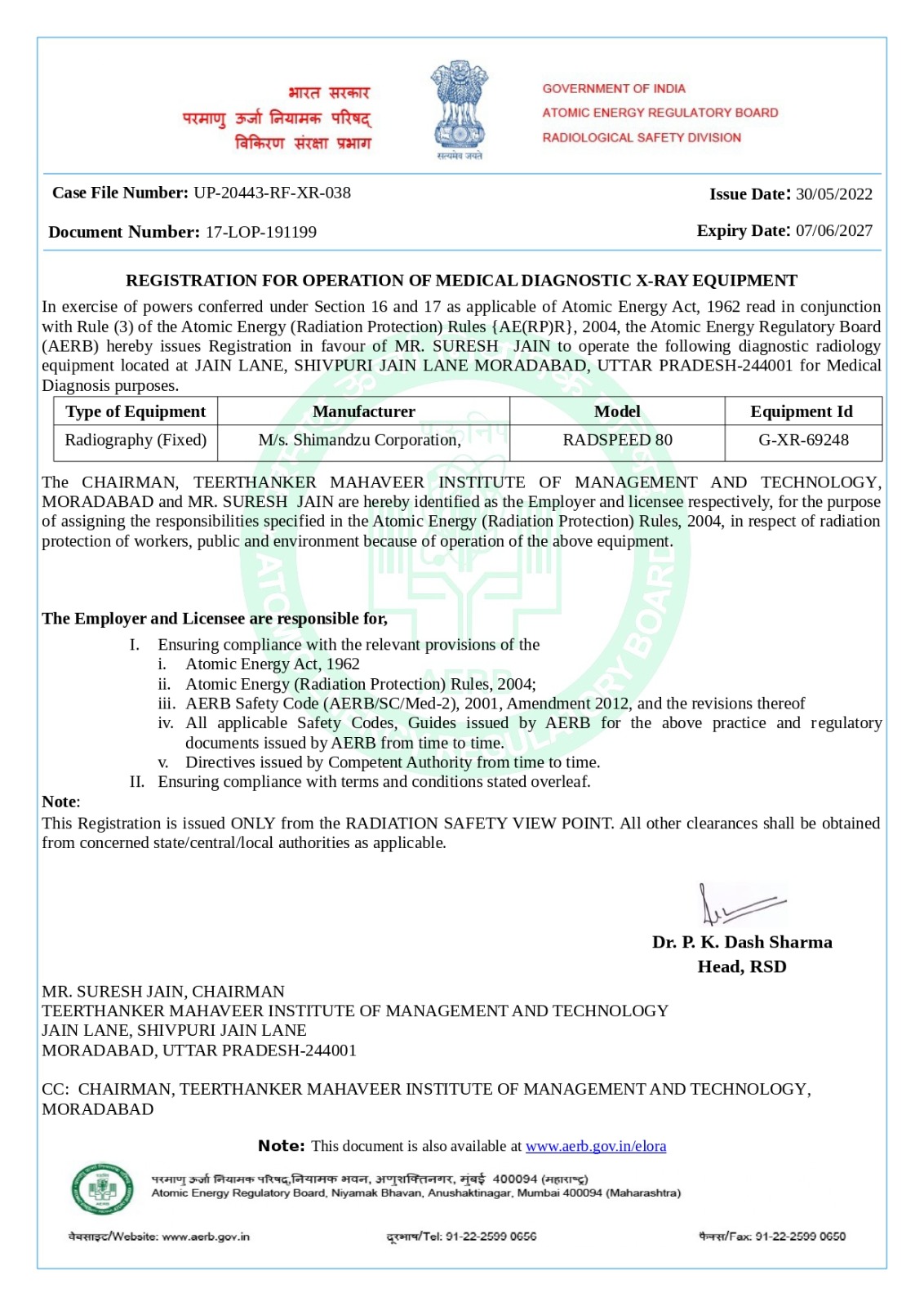
TMU adopts a structured, safety-oriented approach to hazardous chemical and radioactive waste management to protect human health, safeguard the campus environment, and promote responsible laboratory operations. Radioisotope-related activities are overseen by a designated Radiation Safety Officer (RSO), who ensures that the procurement, storage, use, and disposal of radioisotopes strictly follow the requirements of the Atomic Energy Regulatory Board (AERB).
In continuation of this commitment, the University collaborates formally with Sheetala Waste Management Project for authorized collection, transportation, and safe disposal of hazardous and specialized waste streams under strict manifest tracking:
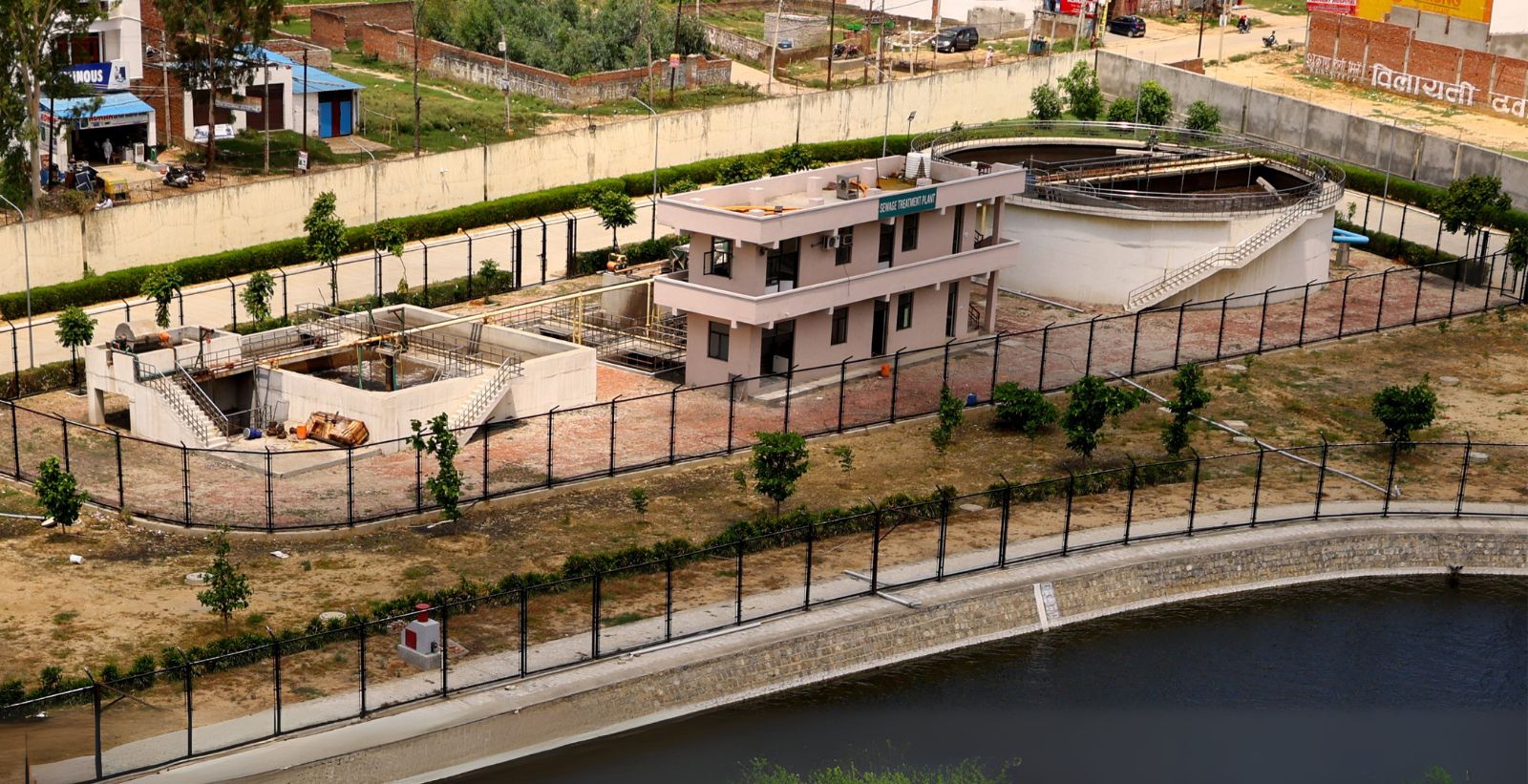
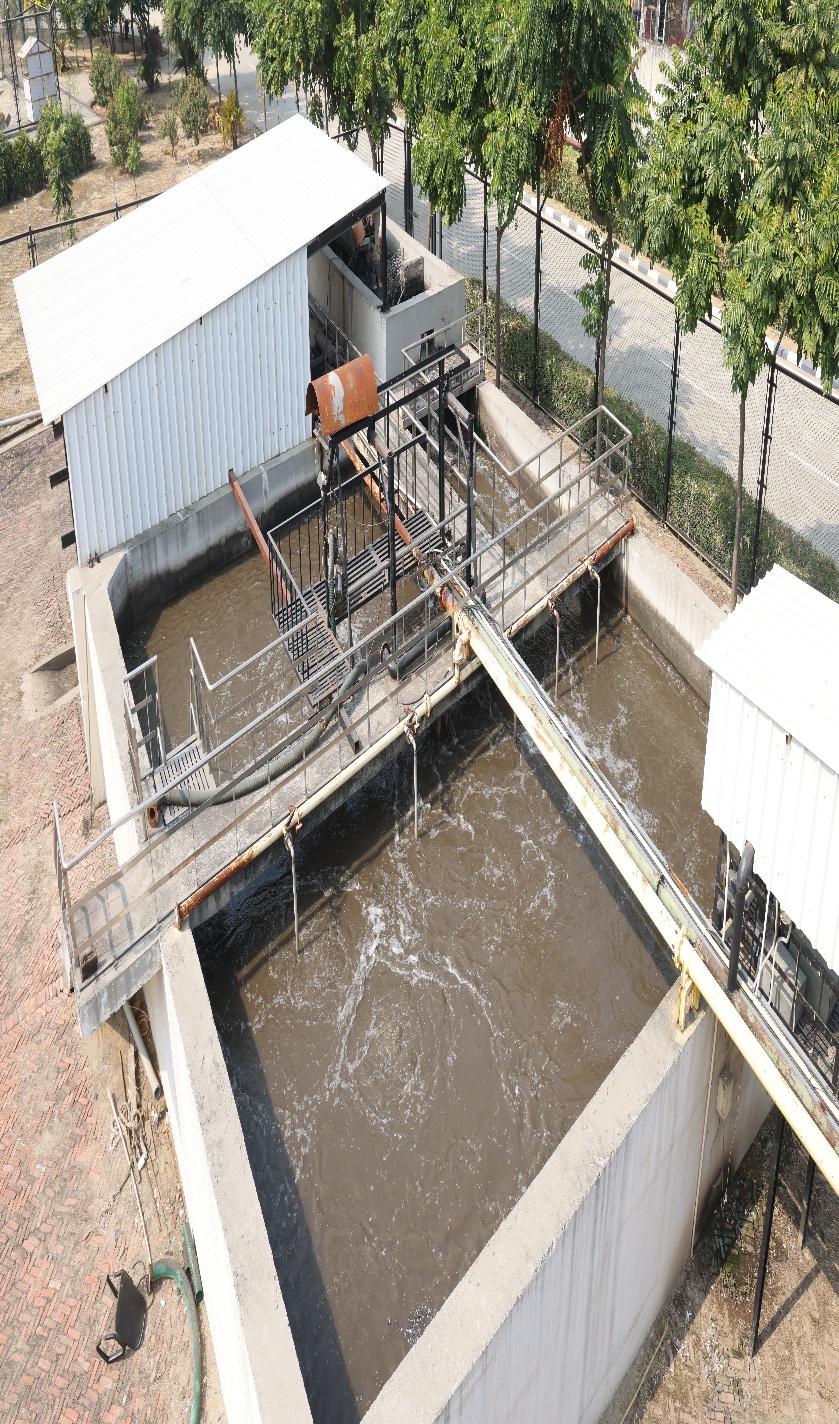
Liquid Waste Management Infrastructure: STP & Sludge Tank
TMU’s wastewater management infrastructure includes a 1.5 Million Litres per Day (MLD) Sewage Treatment Plant (STP) with an installed annual capacity of 547.5 million litres, and an Effluent Treatment Plant (ETP) with an installed capacity of 73,000 kilolitres per year. Supported by advanced monitoring and operational controls, 80% of generated wastewater is fully treated and 100% of this treated water is reclaimed and recirculated on-site for landscape maintenance and secondary flushing.
Waste Management Policy
Comprehensive policy on solid, liquid, hazardous, chemical, e-waste, and biomedical waste management across campus.
University IT Policy
Guidelines governing institutional digital workflows, e-waste handling, double-sided printing, and paperless administration.
AERB Registration Certificate
Official regulatory certification from the Atomic Energy Regulatory Board for radiation safety and radioisotope oversight.
Institutional Commitment to Safe & Responsible Production
By embedding Good Manufacturing Practices, source segregation, advanced liquid waste treatment (STP/ETP/ZLD), and rigorous Quality Assurance into academic and clinical operations, Teerthanker Mahaveer University ensures that educational excellence and high-volume healthcare delivery do not compromise environmental health. Through end-to-end hazardous waste stewardship, TMU actively reinforces its responsibility towards a sustainable, hazard-free campus and community.