



What Is Forensic Science? Courses, Career Opportunities & Salary
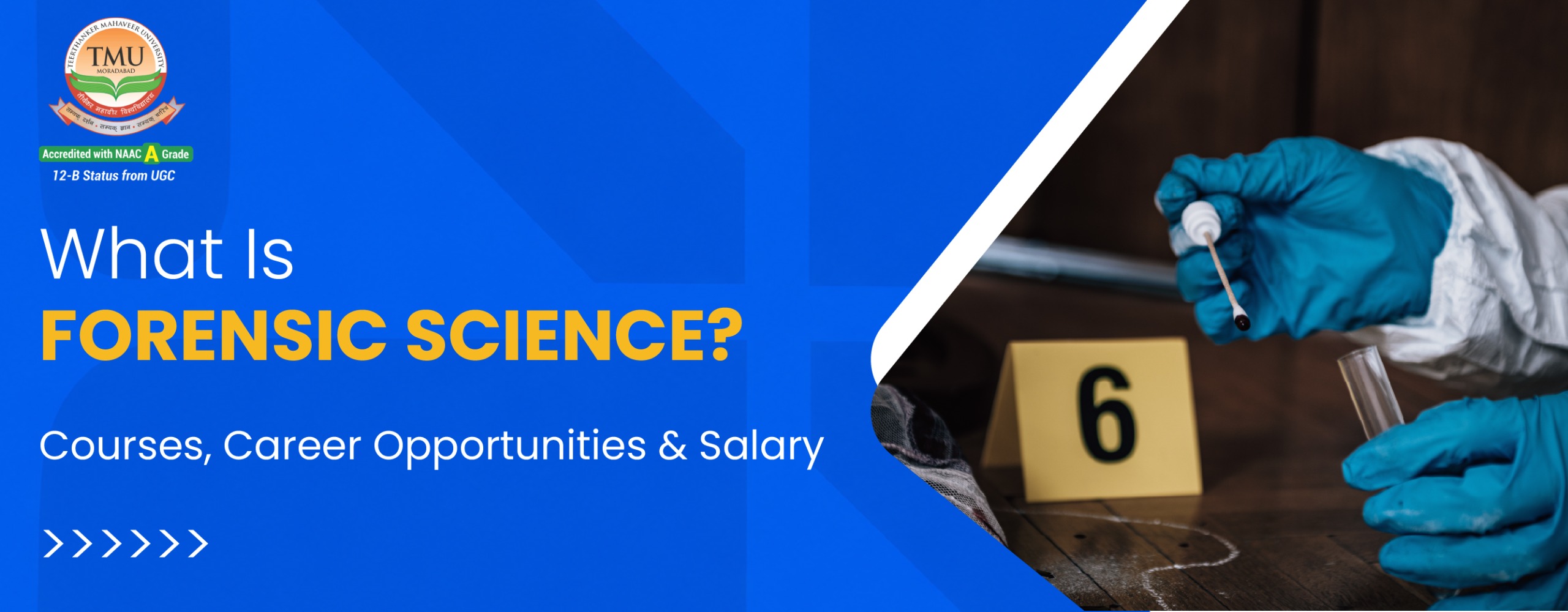
Table of Contents
Have you ever wondered how a single fingerprint or a hidden digital file can solve a complex mystery? Forensic science operates at the intersection of science, law, and investigation to bring clarity to legal cases.
With the rise in cybercrime, digital fraud, and online financial scams, the demand for skilled investigative professionals in India has grown significantly, making it one of the fastest-growing career paths today.
What is Forensic Science?
Forensic science applies scientific methods and techniques to assist legal and judicial proceedings. It combines technology, law, and analytical investigation to collect, preserve, and analyse physical or digital evidence—such as DNA, fingerprints, electronic logs, and questioned documents.
Teerthanker Mahaveer University
Apply for Admission
Apply for Admission
What Do Investigative Experts Do?
Investigators and laboratory analysts uncover crucial facts to support criminal cases. They secure physical and digital evidence directly from crime scenes to prevent contamination, then process it in specialised laboratories using advanced tools and analytical chemistry.
Key evidence handled includes:
- Latent fingerprints and footwear impressions
- Biological materials (Blood, saliva, DNA)
- Mobile devices, computers, and cloud storage media
- Firearms, shell casings, and ballistics trajectory
- Toxic substances, poisons, and controlled drugs
- Questioned documents and handwriting verification
Example: If latent prints are recovered from a crime scene, analysts match them against national criminal databases to identify suspects. Similarly, DNA profiling provides vital evidence in violent crime investigations.
Major Specialisations
- Forensic Biology: DNA testing and biological evidence
- Forensic Chemistry: Analysis of chemicals, drugs, and toxins
- Cyber Forensics: Investigation of digital crimes
- Forensic Toxicology: Detection of poison and harmful substances
- Ballistics: Study of firearms and bullets
- Fingerprint Analysis: Identification through fingerprints
- Forensic Psychology: Understanding criminal behaviour
- Digital Forensics: Recovery of digital evidence
- Document Examination: Detecting fake documents and signatures
- Forensic Pathology: Determining cause of death
Key Fact: According to The Economic Times, specialisations such as cyber forensics, mobile forensics, and digital evidence analysis are witnessing rapid career growth in India, with experienced experts earning salaries up to ₹15–20 LPA in the private sector.
Educational Pathways
Undergraduate Degrees
- BSc Forensic Science
- BSc Cyber Security / Digital Investigation
- BSc Criminology and Forensic Studies
- Diploma in Forensic Techniques
Postgraduate & Doctoral Degrees
- MSc Forensic Science
- MSc Cyber Forensics
- MSc Toxicology / Forensic Psychology
- PhD Programs
Eligibility Criteria for Forensic Science
- Must pass Class 12 from a recognised board
- Science stream preferred.
- Typically, minimum marks are from 45% to 60%
- Admission exams are held at some universities.
Core Curriculum
- Forensic Biology
- Forensic Chemistry
- Crime Scene Investigation
- Criminal Law
- DNA Fingerprinting
- Toxicology
- Cyber Forensics
- Ballistics
- Digital Evidence Analysis
- Fingerprint Science
Essential Skill Set
- Keen observational skills and attention to detail
- Strong analytical reasoning and problem-solving
- Technical proficiency with laboratory and digital tools
- Effective written and oral communication for court reporting
- Patience, precision, and adherence to chain-of-custody protocols
Career Opportunities & Salary Landscape
Graduates find career opportunities across government laboratories, law enforcement agencies, cyber defence cells, intelligence departments, and private investigative consultancies.
Average Salary Breakdown in India
| Job Role | Average Annual Salary |
| Forensic Scientist | ₹3–5 LPA |
| Crime Scene Investigator | ₹4–6 LPA |
| Cyber Investigation Specialist | ₹5–12 LPA |
| Toxicologist | ₹4–7 LPA |
| DNA Analyst | ₹4–8 LPA |
| Senior Specialist | Up to ₹14+ LPA |
Salary progression generally starts at ₹3–4 LPA for freshers, advances to ₹5–8 LPA with 3–5 years of experience, and ₹10–15+ LPA for senior professionals.
Key Market Statistics
- National expansion plans aim to establish 26 campuses under the National Forensic Sciences University (NFSU) to train over 32,000 professionals annually.
- State forensic laboratories report high recruitment demand, with significant open vacancies awaiting qualified personnel across regions like Uttar Pradesh.
Top Institutions in India
- National Forensic Sciences University (NFSU), Gujarat
- Teerthanker Mahaveer University (TMU), Uttar Pradesh
- LNJN National Institute of Criminology and Forensic Science, Delhi
- Banaras Hindu University (BHU), Uttar Pradesh
- University of Delhi, Delhi
- Chandigarh University, Punjab
Institutional Highlight: Universities like TMU focus on industry-oriented training through modern laboratory infrastructure, hands-on workshops with law enforcement officers, and active research partnerships to prepare students for field challenges.
Conclusion
If you want to become a scientific officer or a Crime Scene Investigator, forensic science will be the right path for you. The field is perfect for a curious mind who enjoys research, technology, and uncovering hidden evidence. This programme can open doors to rewarding career opportunities in government departments, forensic labs and private investigation firms.
FAQ
Q1. What is Forensic Science?
Ans. Forensic science is the application of scientific methods to investigate crime and legal matters. It involves collecting and examining evidence such as DNA, fingerprints, blood samples, weapons, and documents.
Q2. What do forensic scientists do?
Ans. A forensic expert collects, examines, and analyses evidence related to crime and legal investigations.
Q3. What is the highest-paid job in forensics?
Ans. A forensic specialist or Forensic Pathologist is the highest-paid job in forensic science. In India, an experienced forensic specialist can earn around ₹14–15 LPA or more, depending on their expertise and organisation.
Q4. Is forensics a lot of math?
Ans. Forensic Science is not an entirely math-focused programme, but it involves some basic mathematics, statistics, and measurements used in areas like DNA analysis, toxicology, cyber forensics, and crime scene investigation.
Q5. Is a forensic expert a doctor?
Ans. A forensic expert is someone who uses scientific methods to investigate crimes, examine evidence and assist law enforcement agencies. A forensic expert is not necessarily a doctor.
This content gives an overview of the programme and is for educational purposes only. For updated admission guidelines and counselling support, please connect with our Counsellor Team.