



BTech Computer Science Course: Complete Career Guide
Table of Contents
BTech Computer Science is a 4-year undergraduate engineering degree that focuses on computer systems, software development, programming and modern technologies. Students learn programming languages, databases, operating systems, artificial intelligence, and other important areas of computing. It combines both theoretical knowledge and practical experience through laboratory sessions and industry-based training.
The full form of BTech Computer Science is Bachelor of Technology in Computer Science and Engineering. It is considered one of the most popular undergraduate degree programmes for students who wish to build a career in the technology and IT sectors. It helps students understand how computers work, how software applications are developed, and how technology is used to solve real-world problems.
BTech Computer Science: Key Overview
- Course Name: Bachelor of Technology in Computer Science
- Course Duration: 4 Years
- Course Level: Undergraduate
- Eligibility: 10+2 with Physics, Chemistry, and Mathematics (PCM)
- Admission Process: Entrance exam or merit-based admission, as per university guidelines.
- Study Mode: Full-time
- Career Opportunities: Software Developer, Web Developer, Data Analyst, System Engineer, and more.
Teerthanker Mahaveer University
Apply for Admission
Apply for Admission
What Will You Study in BTech Computer Science?
Some of the important subjects covered during the programme include:
1st Year
- Engineering Mathematics
- Engineering Physics
- Engineering Chemistry
- Basic Electrical Engineering
- Programming in C/C++
- Engineering Graphics and Communication Skills
2nd Year
- Data Structures
- Object-Oriented Programming
- Discrete Mathematics
- Database Management Systems
- Digital Logic Design
- Computer Organisation and Operating Systems
3rd Year
- Computer Networks
- Software Engineering
- Design and Analysis of Algorithms
- Artificial Intelligence
- Machine Learning
- Web Technologies and Compiler Design
4th Year
- Cloud Computing
- Cybersecurity
- Deep Learning
- Internet of Things (IoT)
- Mobile Application Development
- Professional Electives
- Major Project and Internship
Practical Learning and Projects
Apart from classroom teaching, BTech Computer Science also focuses on practical learning. Students participate in programming laboratories, technical projects, workshops, coding activities and internships. These activities help them apply theoretical concepts, improve problem-solving abilities and gain experience in developing technology-based solutions.
Note: The exact subjects and semester-wise curriculum may vary depending on the university and chosen specialisation.
Eligibility Criteria for BTech Computer Science
- Students must have passed Class 12 (10+2) from a recognised board.
- Physics and mathematics are generally required, along with one approved third subject.
- Most universities require around 45%–50% aggregate marks, depending on their admission criteria.
- Some colleges accept JEE Main scores, while others offer merit-based or university-level entrance admission.
Which Entrance Exams Are Required to Get into a BTech Computer Science Programme?
| Entrance Exam | Conducted By | Level |
| JEE Main | National Testing Agency (NTA) | National |
| JEE Advanced | Joint Admission Board (JAB) | National |
| MHT CET | State Common Entrance Test Cell, Maharashtra | State |
| WBJEE | West Bengal Joint Entrance Examinations Board | State |
BTech Computer Science: Admission Process
The following are the common steps involved in the BTech Computer Science admission process:
Step 1: Fill Out the Application Form
- To pursue the B.Tech Computer Science programme, you have to fill out the online application form available on the official admission portal.
- Fill out all the personal information, such as name, DOB, email, mobile number, and programme details, and apply.
Step 2: Entrance Exam/Merit List
- Entrance Score: TMU considers the entrance exam score, like JEE Main or CUET.
- Merit-Based: The university also grants admission based on your academic merit.
- For accurate and the latest information, kindly contact the TMU admission cell.
Step 3: Submit Required Documents
Students may need to upload or submit the following documents:
- Class 10 marksheet and certificate
- Class 12 marksheet and certificate
- Transfer Certificate (TC)
- Migration Certificate (if applicable)
- Aadhaar Card or other valid identity proof
- Passport-size photographs
- Entrance examination scorecard (if applicable)
Step 4: Counselling and Document Verification
- Shortlisted candidates may be required to participate in counselling or a document verification process.
- During this stage, universities verify academic records and confirm eligibility.
Step 5: Fee Payment and Admission Confirmation
- After selection and document verification, candidates need to pay the prescribed admission fee to confirm their seat.
- Once the payment and admission formalities are completed, they can proceed with enrolment.
For any admission-related queries or assistance, students can contact the TMU admission team at 1800-270-1490 or WhatsApp 9258112544 for personalised guidance throughout the application process.
Which College Is Best for BTech CSE?
Choosing the right university is equally important when planning to pursue a BTech in Computer Science Engineering. Some popular institutes include:
- Indian Institute of Technology (IIT) Bombay
- Indian Institute of Technology (IIT) Delhi
- Indian Institute of Technology (IIT) Madras
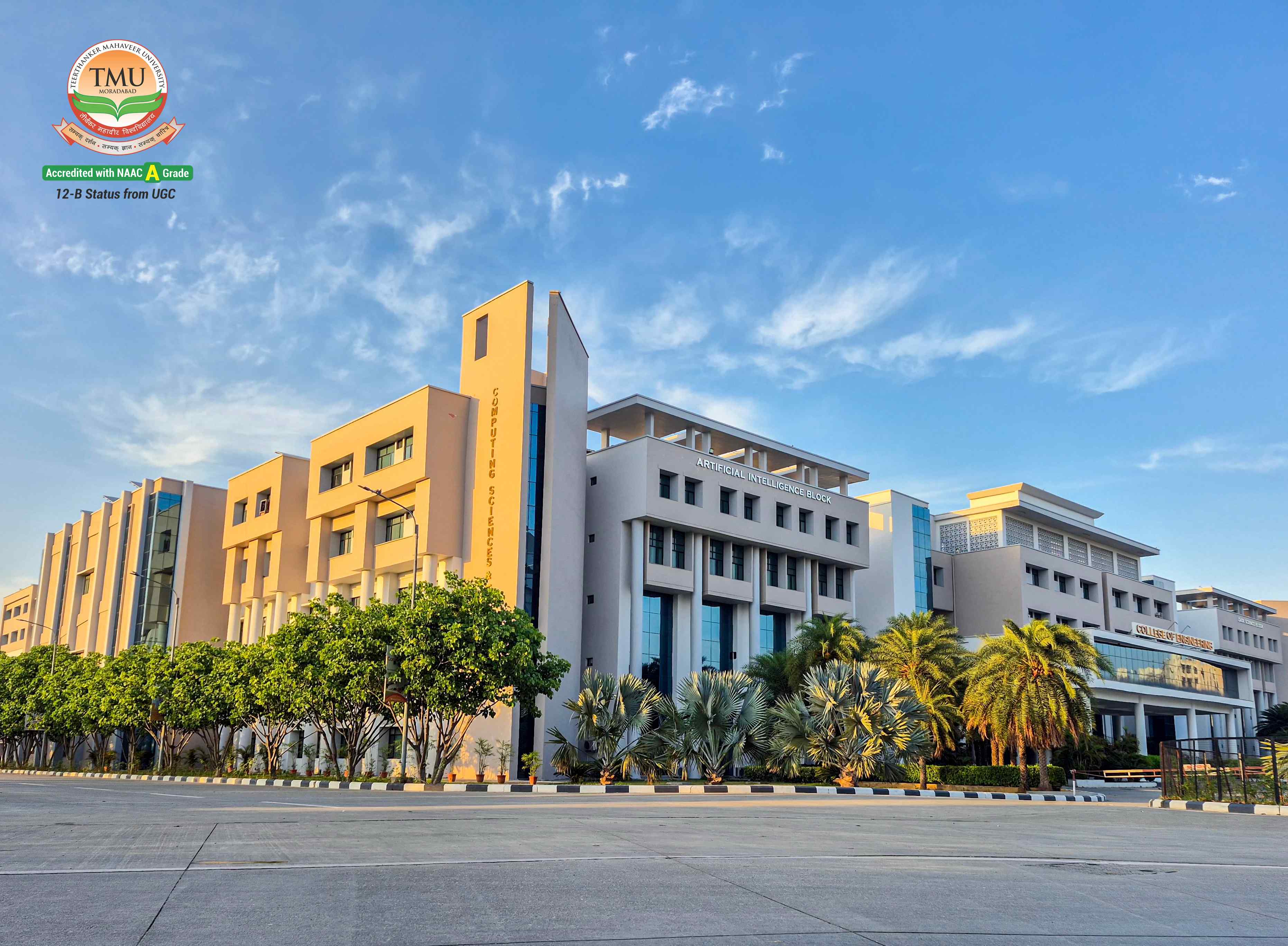
- Teerthanker Mahaveer University (TMU), Moradabad
- Birla Institute of Technology and Science (BITS Pilani)
Why Choose TMU for BTech CSE?
Teerthanker Mahaveer University offers students an opportunity to explore engineering education with a focus on academic learning and skill development. With the right academic foundation, consistent practical learning and a willingness to adapt to new technologies, students can prepare themselves for diverse career opportunities. TMU provides various specialisations in B.Tech Computer Science. The main specialisations include:
- Computer Science & Engineering
- CSE Artificial Intelligence, Machine Learning & Deep Learning
- CSE-Cloud Technology & Information Security
- CSE-Data Science
- CSE-Cyber Security
- CSE-Application Development
- CSE-AI and Blockchain
Scope & Career Opportunities After BTech CSE
BTech Computer Science Engineering offers a wide range of career opportunities in the growing technology and IT industries. The increasing use of digital solutions, automation, artificial intelligence and cloud-based technologies is driving continued upward demand for computer science graduates in a variety of industries.
Top Job Roles & Salary
| Job Role | Average Salary (Fresher) | Average Salary (After Experience) |
| Software Developer / Engineer | ₹4–8 LPA | ₹10–20 LPA |
| Data Scientist | ₹6–12 LPA | ₹15–30 LPA |
| Web Developer / Full Stack Developer | ₹3–7 LPA | ₹10–18 LPA |
| AI / Machine Learning Engineer | ₹6–15 LPA | ₹15–35 LPA |
| System Analyst | ₹4–8 LPA | ₹9–16 LPA |
| Cybersecurity Analyst | ₹5–10 LPA | ₹12–25 LPA |
| Cloud Engineer | ₹6–12 LPA | ₹15–28 LPA |
| Database Administrator | ₹4–9 LPA | ₹10–18 LPA |
| Network Engineer | ₹3–6 LPA | ₹8–14 LPA |
| Software Tester / Quality Analyst | ₹3–6 LPA | ₹8–15 LPA |
Note: Salary figures are indicative estimates and may vary depending on skills, experience, location, company, and industry demand.
Hiring Industries
- IT and Software Development
- Banking and Financial Services
- E-commerce and Retail
- Healthcare and Medical Technology
- Telecommunications
- Artificial Intelligence and Data Science
- Cybersecurity
- Cloud Computing
- Education and EdTech
- Government and Public Sector
Conclusion
After completing BTech Computer Science, graduates can explore various career opportunities, such as software developer, web developer, data analyst, system engineer, cybersecurity analyst and AI engineer. However, success in this field does not depend only on obtaining a degree. Students should focus on developing problem-solving abilities, learning relevant programming languages, working on practical projects, participating in internships and keeping themselves updated with changing industry requirements.
FAQ
Q1. What is the BTech CSE salary?
Ans. The salary after completing BTech in Computer Science Engineering depends on skills, experience, job role and company. Freshers get an average salary of ₹3–6 LPA. After gaining experience and having some special skills, the salary could go up to ₹8 – 15 LPA or even beyond.
Q2. Can I do CSE without JEE?
Ans. Yes, students can do BTech Computer Science without appearing in the JEE exam. There are many private universities or colleges that take admission based on their own entrance test or merit based on the marks obtained in Class 12.
Q3. What is a BTech computer science?
Ans. The BTech Computer Science Engineering course is a four-year undergraduate degree programme that emphasises computer systems, programming, software development, data structures, artificial intelligence, databases, and networking.
Q4. Which is better, CS or IT?
Ans. Both CS AND IT offer good career opportunities. CS is more about programming, algorithms, software development and computing concepts, while IT is more about management of computer systems, networks, and technology infrastructure. The better choice is yours based on your interests and career aspirations.
Q5. Which is better, BCA or BTech?
Ans. BCA is a three-year undergraduate programme that focuses on computer applications and software development, whereas BTech is a four-year engineering degree covering computer science along with engineering and technical concepts.
Q6. Is BTech CSE full of maths?
Ans. Yes, BTech CSE includes mathematics subjects such as engineering mathematics, statistics, probability and discrete mathematics. The programme also includes practical courses on programming, software development, computer networks, etc.
Q7. Which CS branch is best?
Ans. The best computer science branch depends on your interests and career goals. Some popular specialisations include Computer Science and Engineering (CSE), Artificial Intelligence and Machine Learning (AI & ML), Data Science, Cybersecurity and Cloud Computing.
Q8. Can I do BTech CS without Maths?
Ans. Generally, mathematics is a compulsory subject for admission to BTech Computer Science Engineering. However, eligibility requirements may vary depending on the university and applicable admission regulations.
This content gives an overview of the programme and is for educational purposes only. For updated admission guidelines and counselling support, please connect with our Counsellor Team.