



Complete Guide to B.Tech Course: Eligibility, Duration, and Career Options
Table of Contents
A Bachelor of Technology (B.Tech) is a four-year professional undergraduate engineering programme designed to equip students with industry-ready technical skills, analytical thinking, and practical problem-solving abilities. Structured across eight semesters, the programme integrates classroom learning with laboratory work, live projects, internships, and research-oriented training.
In today’s technology-driven economy, a B.Tech degree serves as the foundation for careers in software engineering, artificial intelligence, data science, manufacturing, infrastructure development, renewable energy, and emerging technologies. Graduates are prepared not only for employment but also for innovation, entrepreneurship, and higher education.
B.Tech Course Overview
| Particulars | Details |
|---|---|
| Course Name | B.Tech (Bachelor of Technology) |
| Level | Undergraduate |
| Duration | 4 Years (8 Semesters) |
| Eligibility | 10+2 with Physics, Chemistry and Mathematics (PCM), minimum 50% aggregate |
| Admission Process | Entrance Exam / Merit-Based / Direct Admission (as per university norms) |
| Accepted Entrance Exams | JEE Main, JEE Advanced, UPSEE, WBJEE, MHT CET, University-Level Entrance Exams |
| Specialisations Offered | Computer Science Engineering, Mechanical Engineering, Civil Engineering, Electronics & Communication Engineering, Information Technology, Artificial Intelligence & Data Science |
| Teaching Methodology | Classroom lectures, laboratory practicals, industry-oriented projects, internships |
| Internship Requirement | Mandatory summer internship / industrial training |
| Assessment Pattern | Internal assessments, end-semester examinations, project evaluation |
| Project Work | Minor project (pre-final year), Major capstone project (final year) |
| Career Pathways | Industry roles, higher studies (M.Tech / MBA / MS), entrepreneurship |
B.Tech Course Specialisations
| Stream / Branch | Focus Area |
| Computer Science Engineering (CSE) | Software development, AI, ML, Data Science, Cybersecurity |
| Information Technology (IT) | Networking, Web Development, Cloud Computing, Database Management |
| Electronics & Communication Engineering (ECE) | Embedded systems, Communication Networks, VLSI, IoT |
| Mechanical Engineering | Design, Manufacturing, Robotics, Thermal Systems |
| Civil Engineering | Construction, Structural Design, Urban Planning, Infrastructure |
| Electrical Engineering | Power Systems, Electrical Machines, Renewable Energy |
| Chemical Engineering | Process Design, Chemical Reactions, Pharmaceuticals, Petrochemicals |
| Artificial Intelligence & Data Science (AI & DS) | Machine Learning, Data Analytics, Neural Networks |
| Biotechnology / Biomedical Engineering | Genetics, Medical Devices, Pharmaceuticals |
| Aerospace / Aeronautical Engineering | Aircraft Design, Space Systems, Propulsion |
Teerthanker Mahaveer University
Apply for Admission
Apply for Admission
BTech Eligibility Criteria
To be eligible for admission to a Bachelor of Technology (B.Tech) programme, candidates must fulfil the following academic and admission-related requirements:
- Completion of Class 12 (or equivalent) with Physics, Chemistry, and Mathematics (PCM) from a recognised board
- Minimum aggregate of 50% marks in PCM (relaxation applicable for reserved categories as per government and university norms)
- Qualification in a recognised entrance examination such as JEE Main, state-level Common Entrance Tests (CETs), or university-specific entrance exams
- Diploma holders in engineering are eligible to apply for lateral entry admission directly into the second year of the B.Tech programme
- Some private and deemed universities also offer direct admission based on Class 12 merit, subject to institutional guidelines
B.Tech Subjects
B.Tech (Bachelor of Technology) curriculum varies significantly by specialisation. Here is a well-structured list of B.Tec subjects:
Common B.Tech Subjects (All Branches - First Year)
| Semester | Core Subjects |
| Semester 1-2 | Engineering Mathematics, Physics, Chemistry, Basic Electrical Engineering, Engineering Mechanics, Computer Programming, Engineering Graphics, Environmental Studies, Communication Skills, Workshop Practice |
Core Subjects by Specialisation
| Specialisation | Key Subjects |
| Computer Science Engineering (CSE) | Data Structures & Algorithms, Operating Systems, Database Management Systems (DBMS), Computer Networks, Software Engineering, Artificial Intelligence, Machine Learning, Cybersecurity |
| Information Technology (IT) | Web Technologies, Cloud Computing, Mobile App Development, Big Data Analytics, Software Project Management |
| Electronics & Communication (ECE) | Digital Electronics, Analogue Circuits, Microprocessors, Communication Systems, VLSI Design, Embedded Systems, Internet of Things (IoT) |
| Mechanical Engineering | Thermodynamics, Fluid Mechanics, Machine Design, Manufacturing Processes, Robotics, CAD/CAM |
| Civil Engineering | Structural Engineering, Geotechnical Engineering, Surveying, Construction Materials, Environmental Engineering, Transportation Engineering |
| Electrical Engineering | Circuit Theory, Electrical Machines, Power Systems, Control Systems, Renewable Energy Systems |
| AI & Data Science | Artificial Intelligence, Deep Learning, Data Mining, Natural Language Processing (NLP), Data Visualisation |
| Chemical Engineering | Chemical Reaction Engineering, Process Dynamics & Control, Mass Transfer, Heat Transfer, Industrial Safety |
| Biotechnology | Genetic Engineering, Molecular Biology, Bioprocess Engineering, Bioinformatics |
BTech Admission Process
The admission process for Bachelor of Technology (B.Tech) programmes in India generally follows a structured, multi-stage procedure to ensure merit-based and transparent selection:
- Application Form Submission: Candidates apply through national examination portals such as JEE Main, state-level counselling authorities, or directly via university admission portals
- Entrance Examination: Applicants appear for recognised entrance tests, including JEE Main, state-level CETs, or university-specific entrance examinations
- Counselling & Seat Allotment: Seats are allocated based on entrance exam rank, choice preferences, reservation norms, and seat availability
- Document Verification: Verification of academic records, entrance exam scorecards, category certificates (if applicable), and valid identity proof
- Fee Payment & Enrolment: Final confirmation of admission is completed upon payment of the prescribed course fees and institutional enrolment
Career Opportunities After BTech
| Field | Job Roles | Industries |
| Computer Science / IT | Software Developer, Web/App Developer, Data Scientist, Cybersecurity Analyst, Cloud Engineer | IT Companies, Startups, FinTech, E-commerce |
| Electronics / Electrical | Embedded Systems Engineer, VLSI Engineer, Electrical Design Engineer, Automation Engineer | Electronics, Telecom, Power Plants, Manufacturing |
| Mechanical | Design Engineer, Production Engineer, Quality Control Engineer, Maintenance Engineer | Automotive, Manufacturing, Aerospace |
| Civil | Site Engineer, Structural Engineer, Planning Engineer, Project Manager | Construction, Infrastructure, Real Estate |
| Chemical / Biotech | Process Engineer, R&D Scientist, Production Chemist | Pharma, Petrochemical, Food Processing |
Average Salary After BTech (By Sector)
| Sector / Career Path | Job Roles | Average Starting Salary (INR per annum) | Experienced Salary (5+ years) |
| Information Technology (IT) & Software | Software Developer, Web/App Developer, Data Analyst, AI Engineer | ₹4 – ₹8 LPA | ₹10 – ₹30 LPA+ |
| Core Engineering (Mechanical, Civil, Electrical, Electronics) | Design Engineer, Site Engineer, Maintenance Engineer, Embedded Engineer | ₹3 – ₹6 LPA | ₹8 – ₹20 LPA |
| Public Sector Undertakings (PSUs) | Graduate Engineer Trainee (GET), Scientist, Technical Officer | ₹6 – ₹12 LPA | ₹15 – ₹25 LPA |
| Consulting & Management | Business Analyst, Product Manager, Project Consultant | ₹5 – ₹10 LPA | ₹15 – ₹35 LPA+ |
| Data Science & AI/ML | Data Scientist, Machine Learning Engineer, AI Specialist | ₹6 – ₹12 LPA | ₹15 – ₹40 LPA+ |
| Cybersecurity & Cloud Computing | Cybersecurity Analyst, Cloud Engineer, DevOps Engineer | ₹5 – ₹10 LPA | ₹12 – ₹35 LPA |
| Construction & Infrastructure | Project Engineer, Planning Engineer, Civil Site Manager | ₹3 – ₹6 LPA | ₹8 – ₹20 LPA |
| Research & Development (R&D) | Research Associate, R&D Engineer, Scientist | ₹4 – ₹8 LPA | ₹10 – ₹25 LPA |
| Higher Education / Teaching | Lecturer, Assistant Professor | ₹3 – ₹6 LPA | ₹8 – ₹15 LPA |
| Startups & Entrepreneurship | Founder, Co-founder, Product Developer | ₹0 – ₹10 LPA+ (varies widely) | ₹20 LPA+ (if successful) |
| Banking, Finance & Government Jobs | Probationary Officer, Technical Analyst, Civil Servant | ₹4 – ₹8 LPA | ₹10 – ₹25 LPA |
Disclaimer: Salary figures are indicative and may vary based on skill set, location, recruiting organisation, academic performance, and industry demand.
Skills Required for BTech Students
- They need skills in programming languages. They should also know software tools and engineering concepts. These should be relevant to their specialisation.
- Soft skills are crucial, encompassing communication, problem-solving, teamwork, leadership, and adaptability. These skills are essential. They are key to collaboration and fostering career growth.
Why Teerthanker Mahaveer University Aligns with 2026 Industry Demands
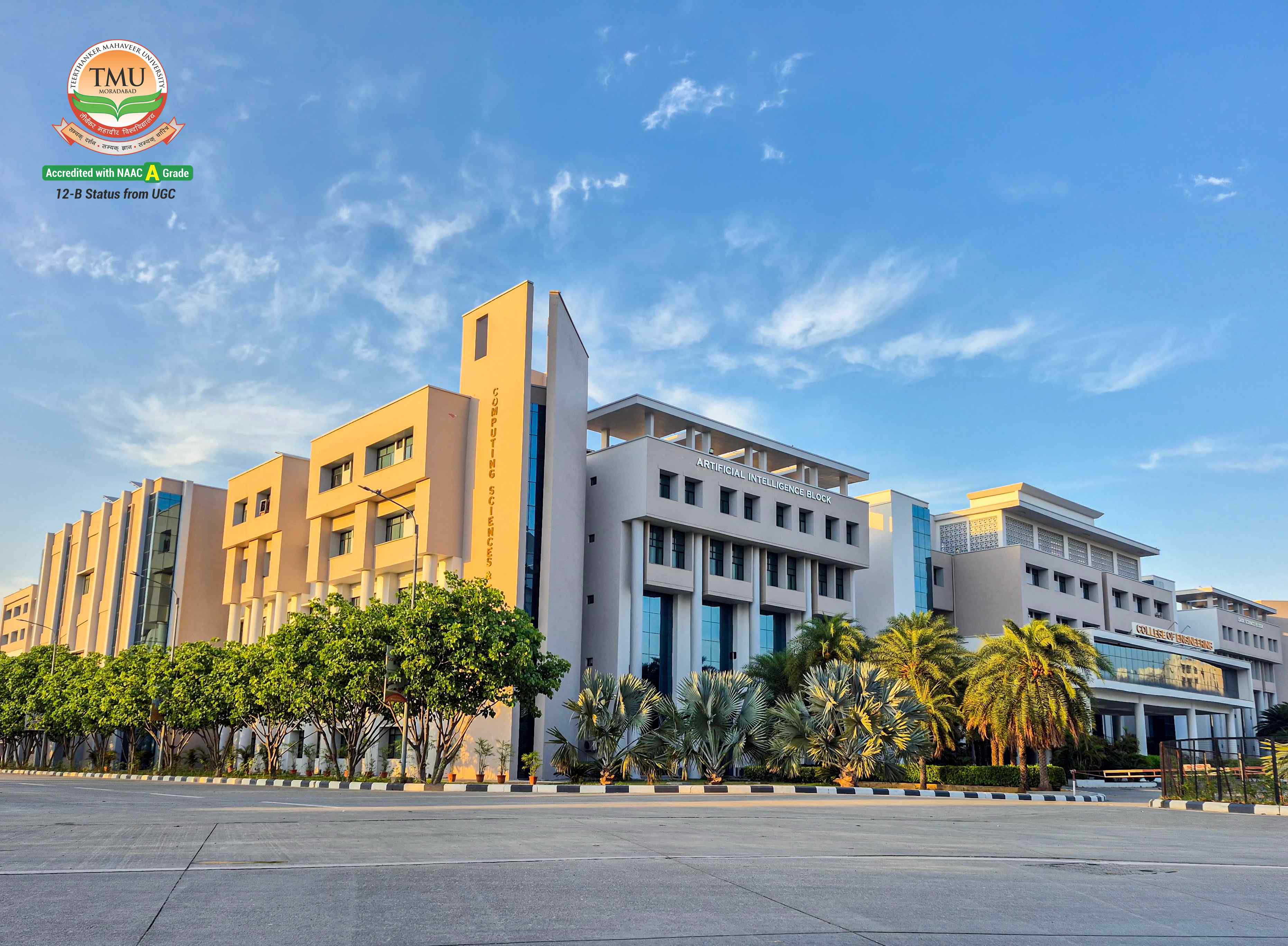
Teerthanker Mahaveer University (TMU) distinguishes itself by effectively bridging the gap between classroom learning and rapidly evolving industry requirements. Through advanced infrastructure, industry collaboration, and a strong innovation ecosystem, TMU prepares students for future-ready careers.
Specialised Laboratories and Practical Exposure
Students gain extensive hands-on experience through state-of-the-art facilities such as the NVIDIA AI Learning Center and the Bosch-Rexroth Center of Excellence, where they work on industrial-grade automation kits and emerging AI-driven technologies.
Industry-Integrated Curriculum
TMU’s B.Tech programmes are designed in collaboration with leading technology organisations including Microsoft and Oracle. This ensures that students acquire contemporary skills in high-demand areas such as Cloud Computing, Artificial Intelligence, and Full-Stack Development.
Innovation and Startup Ecosystem
The on-campus Business Incubation Centre supports student-led innovation by providing structured mentorship, industry guidance, and seed funding, enabling startups to progress from concept and prototype stages to market-ready solutions.
Proven Placement Performance
TMU has a strong placement record, with graduates securing positions in reputed organisations such as TCS, Wipro, and Google. Notably, the 2025 graduating batch recorded a 25% increase in super-dream job offers, reflecting the university’s growing industry credibility and outcome-driven education model.
What Skills Do B.Tech Subjects Develop?
The B.Tech curriculum is structured to develop a comprehensive skill set that aligns academic knowledge with real-world engineering applications. Through a balanced combination of theory, practice, and project-based learning, students acquire the following competencies:
- Technical Proficiency: In-depth understanding of core engineering subjects, tools, and technologies relevant to the chosen specialisation
- Analytical and Problem-Solving Skills: Application of mathematics, simulations, modelling, and logical reasoning to analyse and solve complex engineering problems
- Practical Exposure: Hands-on experience through laboratories, workshops, industrial training, and internships to bridge theory with practice
- Innovation and Research Aptitude: Development of creative thinking, experimentation, and research capabilities through electives, minor projects, and final-year capstone projects
Who Should Choose B.Tech?
A B.Tech programme is well-suited for students who possess a technical mindset and aspire to build careers in engineering, technology, and innovation-driven domains.
- Strong Academic Foundation: Students with a solid understanding of mathematics and science subjects
- Problem-Solving Orientation: Individuals who enjoy analytical thinking, logical reasoning, and tackling technical challenges
- Industry Aspirations: Candidates aiming to work in technology-driven sectors such as engineering, IT, manufacturing, and infrastructure
- Innovation & Research Focus: Learners interested in innovation, applied research, product development, or entrepreneurial ventures
Conclusion
The most demanded undergraduate degree program is a B.Tech course because it provides specific technical knowledge, problem-solving skills and practice in the shape of laboratories, projects and internships. Having studied this course, students receive diverse opportunities in different fields such as information technology, manufacturing, artificial intelligence, and data science. The B.Tech course provides numerous employment opportunities to students who would like to work in the technology sector. B.Tech graduates tend to receive better pay.
FAQ
Q1. Which is the best B.Tech course to pursue?
Ans. There’s no particular best B. Tech course to pursue, it depends on your choice, interest and career goal. Whether you want to pursue your career in Civil Engineering, Electronics Engineering or Mechanical Engineering.
Q2. What is the B.Tech course?
Ans. A B.Tech course (Bachelor of Technology) is a four-year undergraduate degree program. The course is designed to prepare students for a career in Computer Science, Mechanical Engineering, and Electrical Engineering.
Q3. Can I do a B.Tech course after 12th?
Ans. Yes, you can do a B.Tech course after 12th. The core subjects should be Physics, Chemistry, and Mathematics.
Q4. Is the B.Tech course 3 years or 4 years?
Ans. B.Tech (Bachelor of Technology) is typically a four-year undergraduate degree program. The program is divided into eight semesters.
This content gives an overview of the programme and is for educational purposes only. For updated admission guidelines and counselling support, please connect with our Counsellor Team.