



MBA in Digital Marketing: Course, Fees, Eligibility, Salary & Career Scope
Table of Contents
Marketing is no longer limited to television advertisements, newspapers, and billboards. Now think beyond traditional marketing! Explore a career where creativity meets technology and business strategy with an MBA in digital marketing.
What is an MBA in Digital Marketing?
An MBA in Digital Marketing is a two-year postgraduate degree programme that combines business management concepts with modern digital marketing strategies. The programme covers subjects that help students understand online advertising, brand promotion, customer behaviour and digital business operations. It equips students with a combination of marketing knowledge, creative thinking, analytical skills, and technical understanding.
The growing importance of online platforms has made digital marketing an essential part of business strategies. Companies across industries need professionals who can connect with audiences, promote products and services, and contribute to business growth through effective digital campaigns. This creates opportunities for MBA graduates in areas such as digital advertising, brand management, social media, content strategy, and marketing analytics.
Teerthanker Mahaveer University
Apply for Admission
Apply for Admission
What Are the Primary Subjects Taught in a Digital Marketing MBA Curriculum?
Subjects may vary depending on the university and its curriculum. Some of the primary subjects generally covered include:
- Principles of Management: Introduces students to management concepts, leadership, planning, decision-making, and organisational behaviour.
- Marketing Management: Covers marketing principles, marketing research, product positioning, pricing strategies, consumer needs and promotional activities.
- Search Engine Optimisation (SEO): Teaches students how search engines work, keyword research, on-page SEO, off-page SEO and website optimisation.
- Social Media Marketing: Focuses on promoting brands and products through platforms such as Facebook, Instagram, LinkedIn, and YouTube.
- Content Marketing: Covers content planning, blog writing, storytelling, content strategy and techniques for engaging online audiences.
- Search Engine Marketing (SEM): Introduces paid search advertising, Google Ads, campaign planning, keyword bidding, and performance tracking.
- Web Analytics: Helps students understand website traffic, user behaviour, conversion rates, and campaign performance using analytics tools.
- Email Marketing: Covers email campaign planning, audience segmentation, automation, and customer engagement strategies.
- Mobile Marketing: Focuses on reaching customers through mobile applications, mobile-friendly websites, SMS campaigns, and mobile advertising.
- Brand Management: Teaches students how to build brand identity, maintain brand reputation, develop positioning strategies, and improve customer loyalty.
- E-Commerce Marketing: Introduces online business models, digital sales strategies, customer experience, and e-commerce platform management.
- Marketing Research and Consumer Behaviour: Helps students understand customer preferences, buying patterns, market trends, and factors influencing purchasing decisions.
- Digital Advertising and Campaign Management: Covers online advertising formats, campaign development, budget allocation, audience targeting, and measuring advertising results.
- Business Analytics: Introduces data interpretation, performance measurement, and analytical techniques for making informed business decisions.
Note: The exact subjects and their semester-wise distribution may differ across universities.
Eligibility Criteria for MBA in Digital Marketing
To pursue an MBA in Digital Marketing, candidates need to meet the following eligibility criteria:
- Graduation in any stream from a recognised university.
- Minimum 50% aggregate marks in the qualifying examination.
- Admission is based on CAT/CMAT/MAT scores or qualifying examination merit and a personal interview.
What Skills Are Required for an MBA in Digital Marketing?
Some important skills required for this programme include:
- Communication Skills
- Creativity
- Analytical Skills
- SEO Knowledge
- Social Media Management
- Content Marketing Skills
- Technical Skills
- Problem-Solving Skills
- Time Management
- Adaptability
Cost Comparison of MBA in Digital Marketing Programme in India
The fee structure of an MBA in digital marketing in India can vary depending on the type of institution, course curriculum, infrastructure, and facilities. Generally, government universities have lower fees than private universities, which may charge more due to infrastructure, industry-oriented learning, practical training, and other facilities.
| College Type | Approximate Programme Fees |
| Government Colleges | ₹50,000 – ₹10 lakh+ |
| Private Colleges | ₹3 lakh – ₹14 lakh+ |
Note: Before selecting a college, students should compare the total programme fees, examination charges, hostel expenses, scholarships, practical training, and placement support. The final fee should always be confirmed through the university's official admission office.
MBA in Digital Marketing Colleges
- Teerthanker Mahaveer University (TMU), Moradabad
- Institute of Management Studies Noida (IMS Noida)
- K. R. Mangalam University
- Gyanmanjari Innovative University
- Dr. D. Y. Patil Institute of Management and Research
- HRIT University
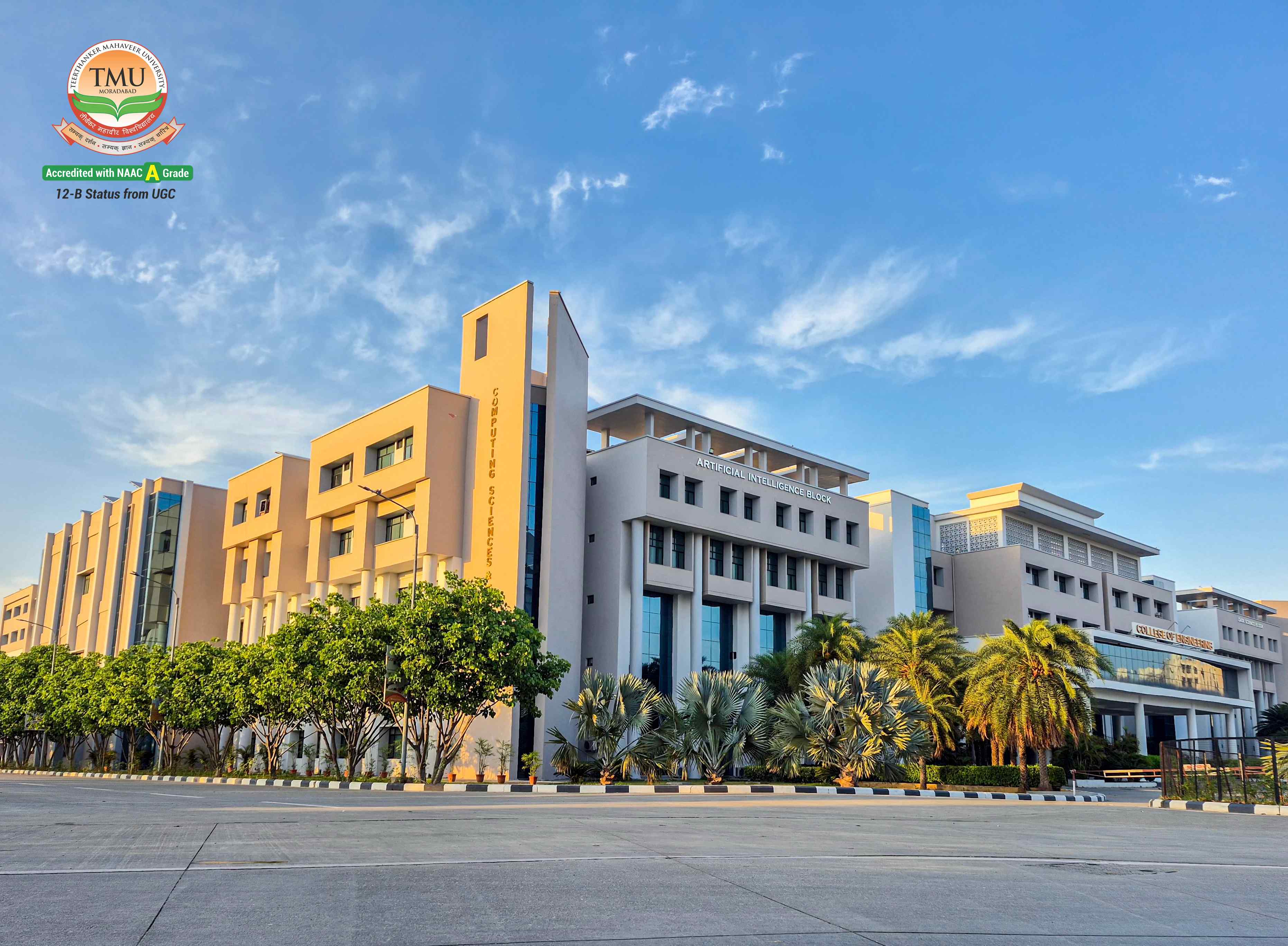
Students interested in pursuing an MBA in digital marketing can also consider Teerthanker Mahaveer University. TMU focuses on providing industry-oriented education through academic learning and practical exposure. TMU has a variety of career-oriented courses, trained faculty, learning facilities on campus and industry interaction opportunities. The university emphasises skill development and hands-on learning, equipping students with the practical knowledge needed for their future careers in the corporate world.
How Can I Begin the Application Process for an MBA in Digital Marketing?
- Research Universities: Shortlist recognised universities that offer the programme. Compare their curriculum, fee structure, faculty, industry exposure, and placement opportunities.
- Prepare for Entrance Exams: Check whether the university accepts entrance exam scores such as CAT, MAT, CMAT, or other relevant examinations. Some universities also offer merit-based admission.
- Fill Out the Application Form: Visit the official university website, register yourself, and complete the online application form with the required personal and academic details.
- Upload Required Documents: Keep scanned copies of your academic marksheets, graduation certificate (if available), identity proof, passport-sized photographs, and entrance examination scorecard ready.
- Attend the Selection Process: Depending on the university, candidates may need to appear for a personal interview, group discussion, or other selection rounds.
- Complete Admission Formalities: After receiving the admission offer, pay the required fees, submit the necessary documents, and confirm your seat.
Career Opportunities After an MBA in Digital Marketing
After completing the course, graduates can explore the following career opportunities:
- Digital Marketing Manager
- SEO Manager
- Social Media Manager
- PPC Specialist
- Content Marketing Manager
- Brand Manager
- Performance Marketing Manager
- Email Marketing Manager
- E-commerce Marketing Manager
- Digital Marketing Consultant
Industries Hiring MBA in Digital Marketing Graduates
Graduates can explore employment opportunities in several industries, including:
- Information Technology and Software
- E-commerce and Retail
- Banking and Financial Services
- Education and EdTech
- Healthcare and Pharmaceuticals
- Media and Entertainment
- Advertising and Digital Marketing Agencies
- Travel and Hospitality
Average Salary in India
The salary after completing the programme depends on factors such as job role, professional experience, practical skills, company, and location. Fresh graduates can start with entry-level marketing positions and gradually move into managerial and strategic roles as they gain experience.
| Experience Level | Average Annual Salary |
| Fresher (0–2 years) | ₹3–5 LPA |
| Mid-Level (3–5 years) | ₹6–10 LPA |
| Experienced (6–8 years) | ₹10–18 LPA |
| Senior-Level (8+ years) | ₹18–30 LPA+ |
Conclusion
For students keen to pursue a career in the booming digital business and marketing sector, they may consider an MBA in digital marketing. As businesses increasingly turn to digital platforms, graduates have opportunities to pursue careers in various industries. With continuous skill development and practical experience, graduates can work towards building a rewarding and long-term career in the digital marketing industry.
FAQ
Q1. What is an MBA in Digital Marketing?
Ans. An MBA in Digital Marketing is a management degree programme that focuses on using digital channels and technologies to promote products and services.
Q2. Which MBA is highly paid?
Ans. MBA specialisations such as Finance, Business Analytics, Marketing, International Business and Digital Marketing can offer attractive salary opportunities. However, salaries depend on the candidate's skills, experience, job role and the recruiting company.
Q3. Which MBA is better, HR or marketing?
Ans. Both MBA specialisations offer good career opportunities. MBA in HR is suitable for students interested in recruitment, employee management and organisational development. An MBA in Marketing is ideal for those interested in branding, sales, market research and customer engagement.
Q4. Can I pursue an MBA in Digital Marketing without an entrance exam?
Ans. Yes, you can pursue an MBA in digital marketing without an entrance exam. Many universities or colleges offer admission based on graduation marks and personal interviews without requiring national-level entrance exam scores.
Q5. Can students from any stream pursue an MBA in digital marketing?
Ans. Yes, students from all streams (commerce, science, maths, and arts) can pursue this programme. Students just need to meet the specific requirements set by the university or institution.
Q6. Does an MBA in digital marketing require coding?
Ans. No, coding is generally not compulsory. However, basic technical knowledge of websites, analytics and digital marketing tools can be helpful.
Q7. Is mathematics compulsory for an MBA in digital marketing?
Ans. No, advanced mathematics is generally not compulsory. However, students should understand basic calculations, statistics and data analysis.
Q8. Can I start my own business after an MBA in digital marketing?
Ans. Yes, graduates can start their own business. They can start digital marketing agencies, offer freelance marketing services or manage online businesses using their marketing and management knowledge.
This content gives an overview of the programme and is for educational purposes only. For updated admission guidelines and counselling support, please connect with our Counsellor Team.