



PhD in Education: Eligibility, Admission, Duration, Fees and Career Scope PhD in Education: Eligibility, Admission, Duration, Fees and Career Scope

Table of Contents
A PhD in education is a research-focused doctoral degree for those who want to engage in high-level academic work and become educators, researchers, and leaders in the education field. It covers key research areas such as educational psychology, policy planning, curriculum development and inclusive education. It takes 3 to 6 years to complete, depending on the complexity of the research and dissertation writing.
The programme allows students to explore complex educational challenges. As the NEP 2020 reshapes teaching frameworks, the demand for highly qualified educational professionals is growing. With so many career options, the programme can open doors to various successful and fulfilling opportunities. After completing a master’s degree in education, students can apply for this programme.
PhD in Education: Key Highlights
- Course level: Doctoral degree
- Duration: 3-6 years
- Eligibility: Master's degree
- Admission Process: May include an entrance exam, interview, and research proposal
- Research Areas: Educational psychology, curriculum development, teacher education, educational technology, inclusive education, and educational leadership.
Teerthanker Mahaveer University
Apply for Admission
Apply for Admission
What Will You Study?
Students conduct original research on topics such as:
- Modern teaching and learning methods
- The role of AI and technology in education
- National Education Policy (NEP) 2020
- Teacher training and professional development
- Student assessment and academic performance
- Inclusive education and special needs
- Educational management and leadership
Important Topics in the Syllabus
| Subject | Topics covered |
| Research Methodology | Hypothesis, research design, sampling, tools and techniques |
| Educational Psychology | Learning theories, motivation, intelligence and individual differences |
| Educational Statistics | Mean, median, standard deviation, correlation and statistical tests |
| Educational Technology | Online learning, digital classrooms and AI-based education |
| Curriculum Studies | Curriculum planning, implementation and evaluation |
| Educational Administration | Educational leadership, institutional management and policy |
| Research Writing | Literature review, referencing, research papers and thesis preparation |
Who Can Pursue a PhD in Education?
Anyone who meets the following eligibility requirements can pursue a PhD in Education-
- Educational Qualifications: Master's degree in Education (M.Ed.) or another relevant discipline
- Minimum Marks: Generally, at least 55% marks or an equivalent grade in the qualifying master's degree.
- Entrance Examination: Need to qualify for a university-level PhD entrance test or an accepted national-level qualification, depending on the admission rules.
- Personal Interview: Shortlisted candidates may need to present and discuss their proposed research topic.
- Research Proposal: Some universities require a proposal outlining the research problem, objectives, methodology, and expected contribution.
PhD in Education Admission Process
The admission process for a PhD in Education generally involves these steps-
Step 1: Fill Out the Application Form
- First, fill out the online or offline application form via the official university portal.
- The application will include personal details such as name, DOB, mobile number, academic records and documents.
Step 2: Entrance Examination
- Admission usually depends on entrance exams such as UGC NET/JRF.
- Many universities, including TMU, conduct their own research entrance test such as TRAT (Teerthanker Mahaveer Research Aptitude).
Step 3: Interview & Research Proposal
- Shortlisted candidates through the entrance exam are invited for a personal interview.
- During the interview session, students are required to present their research proposal outlining their focus area and intended research gaps.
Step 4: Final Selection
- Selected candidates may be required to submit additional documents before admission is confirmed.
- Selection is generally based on both the entrance exam score and the interview or research proposal.
What is the Career Scope After a PhD in Education?
A PhD in Education provides diverse career opportunities in higher education, academic research and education policy. Students will be able to pursue careers in universities/colleges, schools, research institutions, government departments, NGOs, and educational technology organisations.
Career Options & Average Salary
- Assistant Professor: An assistant professor teaches education-related subjects at colleges and universities, guides students and participates in academic research. Assistant Professors typically earn between ₹4–8 LPA annually.
- Associate Professor: Associate Professors teach advanced courses, publish research papers and contribute to curriculum development. An Associate Professor can expect to earn between ₹8–15 LPA.
- Professor: Professors lead academic and research activities, mentor doctoral scholars, and contribute to institutional development. The average annual salary of a professor is ₹12–25 LPA.
- Educational Researcher: An educational researcher conducts studies on teaching methods, student learning, educational policies, and academic performance. The average annual salary of an Educational Researcher is ₹4–9 LPA.
- Education Consultant: An education consultant advises schools, colleges, and educational organisations on teaching strategies, curriculum improvement, and institutional development. The average annual salary of an Education Consultant is ₹5–12 LPA.
- Academic Administrator: An academic administrator manages academic programmes, coordinates faculty activities, implements institutional policies, and monitors academic standards. The average salary for an Academic Administrator is ₹6–12 LPA
- Curriculum Developer: A curriculum developer designs and evaluates curricula, learning materials, course structures, and educational resources. The average annual salary of a curriculum developer is ₹4–8 LPA.
- Education Policy Analyst: An education policy analyst analyses education policies, assesses their impact, and recommends improvements to educational systems. An education Policy Analyst can generally earn an average salary of ₹5–12 LPA.
- Instructional Designer: An instructional designer develop digital learning content, online courses, instructional materials, and interactive learning experiences. The average annual salary of an Instructional Designer is ₹4–9 LPA.
- Teacher Trainer: A teacher trainer trains teachers in modern teaching methods, classroom management, assessment techniques, and educational technology. The average annual salary of a teacher trainer is ₹3–7 LPA.
Note: These are indicative salary ranges, not guaranteed averages. Actual salaries vary according to experience, institution type, location, qualifications, and research expertise. Government and private institutions may offer different pay scales.
Hiring Industries
| Hiring Industry | Career Opportunities |
| Higher Education Institutions | Assistant Professor, Associate Professor, Professor |
| Schools and School Networks | Academic Coordinator, Education Consultant |
| Educational Research Organisations | Educational Researcher, Research Associate |
| EdTech Companies | Instructional Designer, Learning and Development Specialist |
| Government Education Departments | Education Officer, Policy Analyst |
| Educational Consultancies | Education Consultant, Academic Advisor |
| Curriculum Development Organisations | Curriculum Developer, Academic Content Specialist |
| NGOs and Non-Profit Organisations | Education Programme Manager, Project Coordinator |
| International Education Organisations | Education Researcher, Programme Specialist |
| Teacher Training Institutes | Teacher Educator, Faculty Trainer |
| Educational Assessment Organisations | Assessment Specialist, Evaluation Researcher |
| Corporate Learning and Development | Training Specialist, Learning and Development Manager |
Why Choose TMU for PhD in Education?
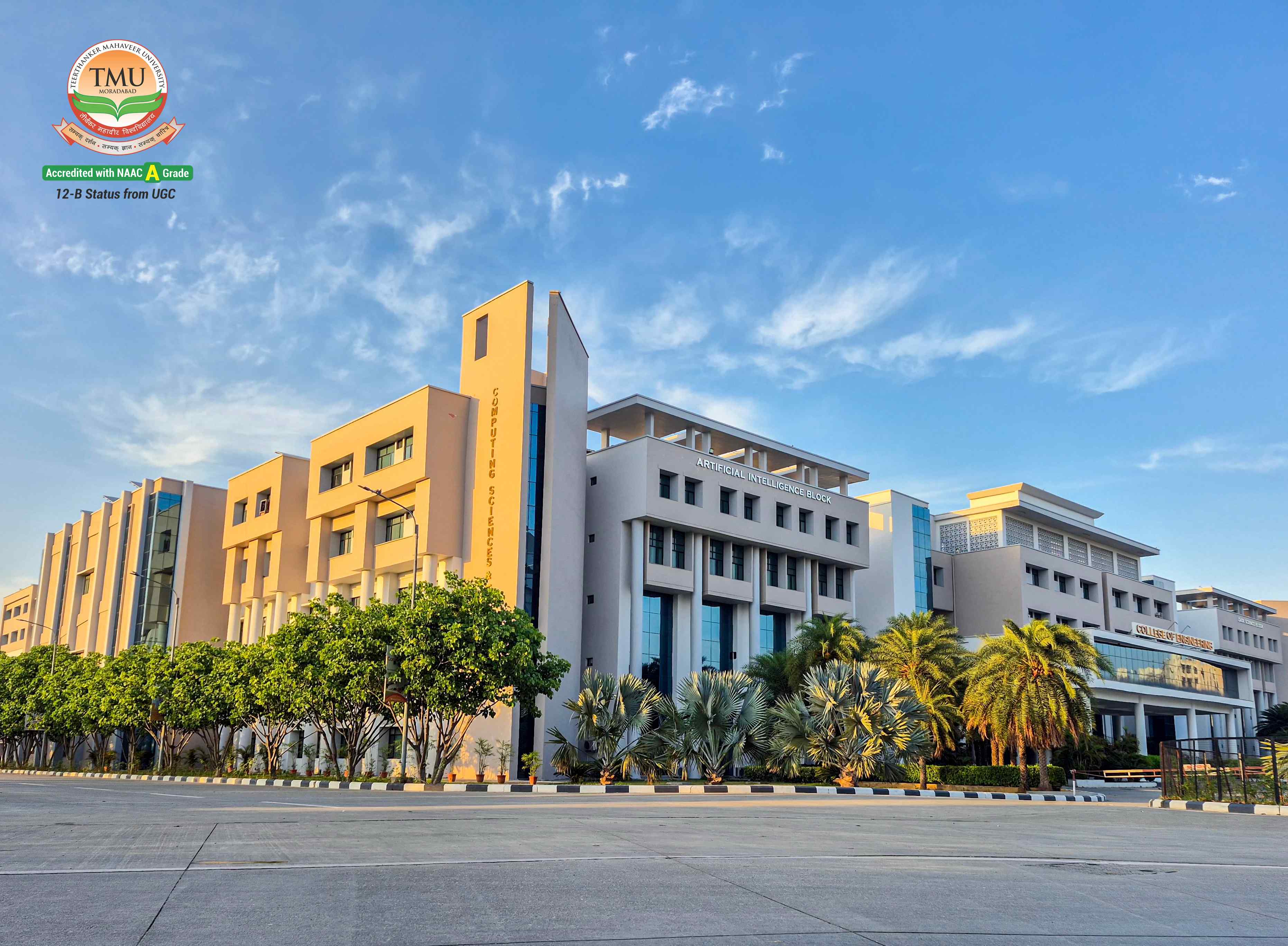
Choosing Teerthanker Mahaveer University for a PhD in education provides students with academic infrastructure, including classrooms with ICT facilities, smart classrooms, seminar halls, and a Research and Development Centre to support its broader academic and research activities. TMU's doctoral framework includes the Research Aptitude Test (TRAT), coursework, research-plan presentation, and thesis evaluation stages, subject to the university's applicable PhD regulations.
Apply for the PhD in Education Now!
Conclusion
A PhD in education can be a good choice if you are interested in research, higher education, and teaching at universities. The programme helps scholars develop critical thinking, research, and problem-solving skills while contributing to improvements in the education system. It also supports career opportunities in higher education, research institutions, academic administration, curriculum development, and educational consultancy.
FAQ
Q1. What is the qualification to do a PhD in Education?
Ans. To pursue a PhD in Education, candidates generally need a master's degree in Education (M.Ed.) or a relevant discipline with the minimum marks prescribed by the university and applicable UGC regulations. Admission requirements may also include an entrance test and interview.
Q2. Can I do a PhD without any exam?
Ans. Yes, in some cases, candidates may be exempt from the university entrance test, depending on their qualifying examination, fellowship or other applicable UGC regulations. Admission may still require an interview and evaluation of the research proposal. Check the university's current admission guidelines.
Q3. Which PhD gives the highest salary?
Ans. PhDs in fields such as Computer Science, Artificial Intelligence, Data Science, Engineering, and certain areas of Finance can offer high earning potential. However, salary depends on the candidate's expertise, research experience, job role, institution, and industry demand rather than the PhD title alone.
Q4. Can I be a lecturer without a PhD?
Ans. Yes, you can qualify for many assistant professor positions without a PhD if you meet the applicable eligibility requirements, which generally include a relevant master's degree and UGC NET/SET/SLET qualification, subject to applicable exemptions and recruitment rules. A PhD may be beneficial for research-focused roles and career advancement.
Q5. Can I get a PhD fully online?
Ans. No. Under UGC regulations in India, PhD programmes cannot be offered through fully online or distance-learning modes. Candidates must follow the recognised university's prescribed research, supervision, coursework, and evaluation requirements.
This content gives an overview of the programme and is for educational purposes only. For updated admission guidelines and counselling support, please connect with our Counsellor Team.