



Why Pursue a PhD in Agriculture? Career Opportunities & Scope

Table of Contents
A PhD in Agriculture Sciences is the highest academic degree in the field of agriculture. It is a research-focused advanced study that covers the fundamentals of agriculture and crop production. The programme generally takes 3-6 years to complete. It requires a master’s degree in a related field for admission or an entrance exam like UGC or NET.
Agriculture is a major contributor to India’s economy and employment. It allows you to build a career in Research & Development, Agribusiness, Government agencies, Food industries, NGOs, Teaching and academia and many more. Hence, pursuing a PhD in Agriculture will provide you with vast knowledge and opportunities. You’ll become researchers, scientists, professors, or industry experts.
Overview of a PhD in Agriculture Sciences
A PhD in Agriculture Sciences is a research-focused doctoral degree programme that provides in-depth knowledge and expertise in the field of agriculture and crop production.
| Category | Details |
| Course Level | Doctoral / Research Programme |
| Duration | 3–5 Years (depending on research progress) |
| Eligibility | Master’s degree in Agriculture or related field with minimum required percentage (varies by university) |
| Admission Process | Entrance exam + Interview / Research proposal evaluation |
| Major Specialisations |
|
| Research Components | Coursework, Research proposal, Field experiments, Laboratory work, Thesis submission, Viva-voce |
| Skills Developed | Scientific research, field analysis, data interpretation, lab techniques, critical thinking, and publishing skills |
| Career Opportunities | Research Scientist, Agronomist, Soil Analyst, Plant Breeder, Agriculture Professor, Policy Researcher, Agritech Specialist |
| Average Salary Range | ₹6–12 LPA (varies by job role and sector) |
| Top Employment Sectors | Research Institutes, Agricultural Universities, Government Departments, Agritech Companies, NGOs, Seed & Fertiliser Companies |
Teerthanker Mahaveer University
Apply for Admission
Apply for Admission
Why Study a PhD in Agriculture Sciences?
Studying agriculture sciences offers you a lot of opportunities in the agriculture sector. The programme equips you with advanced skills and knowledge of crop production and agriculture. It provides you with an in-depth understanding of soil science or plant breeding. You can also develop the ability to conduct independent research or design experiments.
Career Opportunities
A PhD in Agriculture Sciences provides you with a wide range of career opportunities and growth. You can build your career in academia, work at a government organisation, start your own business, or become an agriculture consultant. You can also work in the seed industries as a quality control manager or consultant.
High Demand
Due to the growing population, the demand for highly skilled agriculture professionals is increasing rapidly. Now the world needs safer and sustainable production. Agriculture professionals help to meet this demand. Hence, a PhD in Agriculture Sciences opens doors to a variety of careers in the government and private sector.
Skill Development
A PhD in Agriculture Sciences allows you to develop essential skills like critical thinking and analytical skills. During the programme, you can develop the skills for professional leadership and maintain ethical integrity. You can also gain experience in managing projects and teams.
Career Opportunities After a PhD in Agriculture Sciences
| Career Opportunity | Description |
| Professor / Lecturer / Faculty | Teaching and guiding students at universities and colleges. |
| Research Scientist | Conducting advanced research in agriculture and crop science. |
| Soil Scientist / Plant Breeder / Entomologist | Specialised research roles in labs and agricultural projects. |
| Agriculture Officer/Specialist | Working in government agricultural departments and organisations. |
| Agritech Specialist / Consultant | Advising companies on modern farming and agri-technologies. |
| Policy Researcher | Developing agricultural policies and sustainability programmes. |
| Project Manager / R&D Lead | Leading research and development projects in agribusiness. |
| Entrepreneur / Agri-consultant | Starting ventures or offering consultancy in agriculture. |
| International Researcher / Scholar | Collaborating with global agricultural organisations and NGOs. |
High Paying Job Roles & Salary Overview
| Job Role | Starting Salary (INR / Year) | Salary After Experience (INR / Year) |
| Research Scientist | ₹6–8 LPA | ₹12–15 LPA |
| Project Manager / R&D Lead | ₹7–9 LPA | ₹15–20 LPA |
| Agritech Specialist / Consultant | ₹5–7 LPA | ₹10–12 LPA |
| Professor / Senior Faculty | ₹6–7 LPA | ₹12–14 LPA |
| Soil Scientist / Plant Breeder / Entomologist | ₹5–6 LPA | ₹10–12 LPA |
| Agriculture Officer / Specialist | ₹4–5 LPA | ₹8–10 LPA |
| Policy Researcher | ₹5–6 LPA | ₹10–12 LPA |
| Entrepreneur / Agri-consultant | ₹3–5 LPA | Variable, ₹8 LPA+ (depending on business) |
| International Researcher / Scholar | $15,000–$20,000 | $25,000–$40,000 |
Key Agriculture Research Facilities at TMU
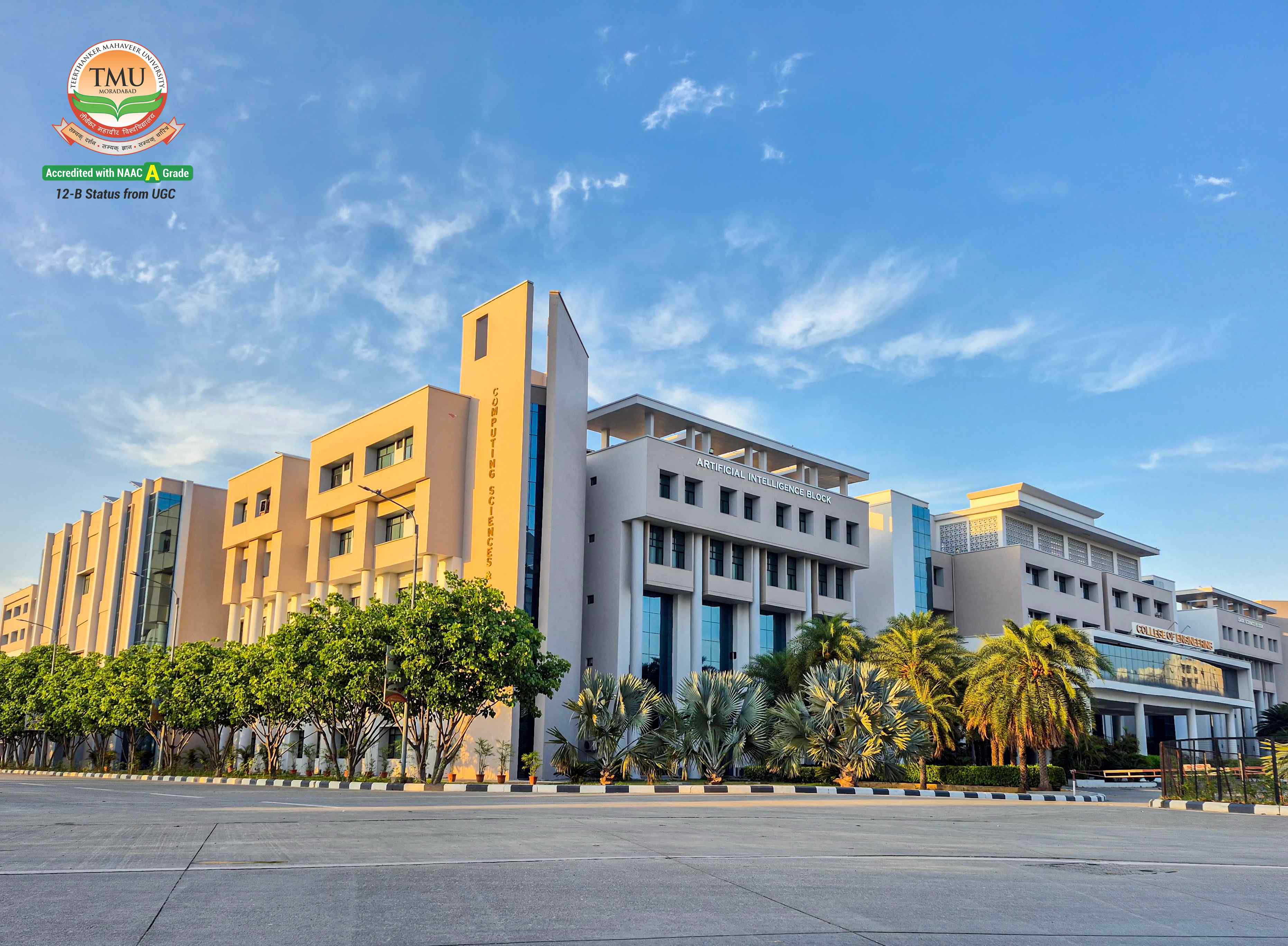
Teerthankar Mahaveer University stands out as the leading institution for agricultural education. The University provides an ideal combination of advanced technology and science. TMU’s College of Agriculture Sciences has been accredited by the Indian Council of Agricultural Research (ICAR).
The curriculum of the university provides students with the opportunity to look beyond becoming agricultural professionals. Here are some key reasons why TMU stands out as a top university for agricultural education:
Specialised Laboratories & Learning Environment
TMU equips its labs with the latest tools for a range of agricultural sciences. These include: Soil testing, Plant pathology, Seed analysis, Agricultural biotechnology, Crop science, Plant breeding and genetics. The University focuses on small classes and individual consideration to promote a nurturing learning experience.
On-Campus Experimental Farms
The university provides students with on-campus agriculture experiments. TMU has sprawling on-campus farms that serve as living laboratories where students can apply theoretical knowledge to practice. This includes managing the entire lifecycle of crops, from planting to harvesting and pest control.
Agritech Labs and Greenhouses
TMU also features Agritech Labs focusing on modern innovations like hydroponics, vertical farming, and smart irrigation systems. State-of-the-art greenhouse and polyhouse facilities allow for experiments in a controlled environment. TMU provides scholars with academic mentorship as well as a chance to practice their knowledge in the real world.
Course Fee Structure
| Fee Component | Reasonable/Typical Range (India, per year or total) |
| Tuition / Academic Fees (Private Univ.) | ₹ 100,000 – ₹ 300,000 per year |
| Tuition / Academic Fees (Government/State Agricultural Univ.) | ₹ 10,000 – ₹ 50,000 per year |
| Lab / Research / Misc. Academic Charges | ₹ 5,000 – ₹ 20,000 per year (depends on specialisation/lab usage) — typical in many universities |
| Hostel (if staying on campus) | ₹ 20,000 – ₹ 100,000 per year (varies widely by room type & amenities) |
| Living Expenses / Food / Misc (if hostel / shared accommodation) | ₹ 60,000 – ₹ 1,80,000 per year (food, transport, personal expenses) — rough estimate, depends on location & lifestyle |
| Total Annual Cost (Typical Private Univ.) | ₹ 1.5 – 3.5 Lakh per year (tuition + hostel + living + misc) |
| Total Annual Cost (Typical Government/SAU) | ₹ 0.8 – 1.2 Lakh per year (lower tuition, basic living costs) |
Course Structure
| Component | Details / Description |
| Duration | 3–5 Years (minimum 3 years, maximum 5 years, depending on research progress) |
| Coursework / Credits |
|
| Research Proposal | Submission and approval of a detailed research proposal in the chosen specialisation |
| Field / Laboratory Work | Practical experiments, field trials, greenhouse work, and lab-based research aligned with the topic |
| Seminars / Workshops | Participation in departmental seminars, workshops, and conferences to present research progress |
| Thesis / Dissertation | Original research work compiled into a thesis/dissertation under the guidance of a supervisor |
| Viva-Voce / Defense | Final presentation and defence of the thesis before a panel of experts |
| Evaluation | Continuous assessment through coursework, research progress reports, publications, and final thesis evaluation |
Conclusion
Doctoral programme in agriculture will enable scholars to have sufficient knowledge, practical research experiences and develop solutions that have a direct effect on farmers, industries and policymakers. It could be better crop genetics, soil health, taking up the latest technology of precision farming, or improving agri-business plans. It provides students interested in innovation, sustainability and scientific discovery with a variety of career opportunities.
FAQ
Q1. How many years is a PhD in Agriculture?
Ans. A PhD in Agriculture Sciences programme generally takes 3-6 years to complete.
Q2. Which subject is best for a PhD in Agriculture?
Ans. The best subjects for a PhD in Agriculture are soil science, Crop Physiology, Animal Nutrition and Agri-robotics.
Q3. What is the salary of a PhD in Agriculture?
Ans. A PhD in Agriculture graduate generally earns between 4.7 LPA on average to ₹6 LPA and ₹10 LPA for corporate roles.
Q4. Can I do a PhD in Agriculture?
Ans. Yes, you can do a PhD in Agriculture, and it is a research-based doctorate that focuses on specialised areas within agriculture.
This content gives an overview of the programme and is for educational purposes only. For updated admission guidelines and counselling support, please connect with our Counsellor Team.