



Child Health Nursing Laboratory
Overview of Laboratories
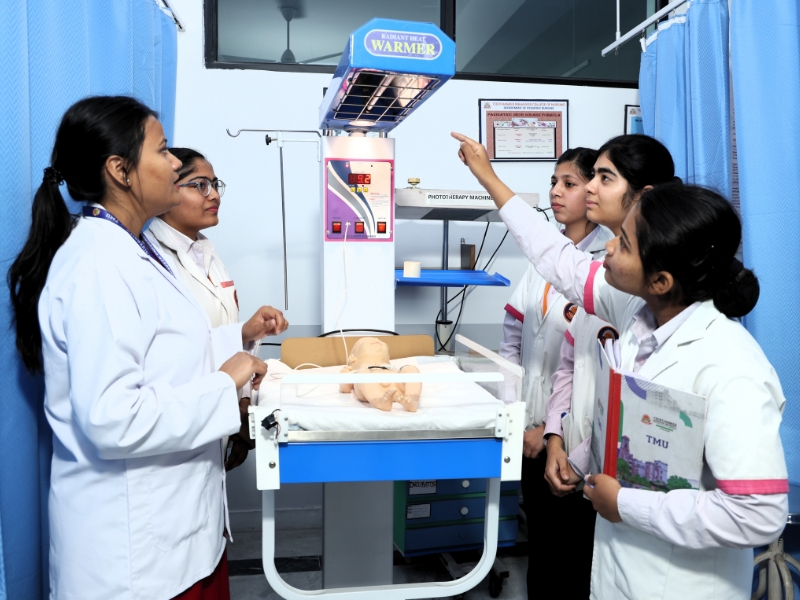
Child health nursing laboratories are specialized learning environments designed to simulate pediatric clinical settings. They bridge the gap between theoretical knowledge and real-world clinical practice, enabling nursing students to develop competencies in caring for neonates, infants, children, and adolescents in a safe and controlled environment. These labs are equipped to replicate hospital wards, neonatal intensive care units (NICUs), pediatric emergency bays, and community child health settings. Students practice assessment, intervention, and communication skills before encountering actual patients, thereby reducing clinical errors and building confidence.
The laboratory environment in child health nursing emphasizes age-appropriate care, developmental considerations, family-centered practice, and safety protocols unique to the pediatric population. Simulation-based learning in these labs supports competency development across all domains — cognitive, psychomotor, and affective — aligning with national and international nursing education standards.
Key Features and Equipment
Pediatric Simulation Mannequins
Child health nursing labs are equipped with high-, medium-, and low-fidelity mannequins representing various age groups — neonates, infants (0–12 months), toddlers (1–3 years), preschoolers (3–5 years), school-age children (6–12 years), and adolescents (13–18 years).
Neonatal Equipment
- Neonatal incubators (closed and open types) for thermoregulation practice
- Phototherapy units for managing neonatal jaundice
- Neonatal resuscitation tables with radiant warmers
- Apnea monitors and pulse oximeters
- Nasogastric feeding tubes (age-appropriate sizes)
- Umbilical cord care models
Pediatric Assessment Tools
- Pediatric stethoscopes (with smaller chest pieces)
- Otoscopes and ophthalmoscopes
- Pediatric blood pressure cuffs (infant, child, and adolescent sizes)
- Growth monitoring equipment: infantometers, stadiometers, weighing scales
- Developmental screening tools (Denver Developmental Screening Test — DDST)
- Pain assessment scales (FLACC, Wong-Baker FACES, NRS)
Medication Management
- Pediatric IV administration sets and microdrip chambers
- Syringe pumps and infusion pumps calibrated for pediatric doses
- Oral syringes in various sizes (1 ml, 2 ml, 5 ml)
- Age-appropriate medication cups
- Pediatric IV cannulas and butterfly needles (sizes 22–26G)
- Dummy medication vials, tablets, and oral suspensions for practice
Airway and Respiratory Equipment
- Pediatric bag-valve-mask (BVM) devices in various sizes
- Uncuffed and cuffed endotracheal tubes in pediatric sizes
- Pediatric oxygen masks, nasal prongs, and non-rebreather masks
- Nebulization equipment and spacer devices with pediatric masks
- Suction catheters (sizes 6–10 Fr) and suction machines
- Oxygen cylinders, flowmeters, and humidifiers
Fluid and Nutrition Management
- Models for nasogastric tube insertion and verification
- Gavage feeding demonstration boards
- Breastfeeding demonstration models
- Pediatric IV fluid bags with labeled concentrations
- Total parenteral nutrition (TPN) simulation setups
Isolation and Infection Control
- Sharps disposal containers
- Color-coded waste bins
- Hand hygiene stations with alcohol-based rubs
Documentation and Communication
- Pediatric growth charts (WHO and IAP standards)
- Immunization schedules (national program)
- Child health records and nursing care plan templates
- Reference charts for normal vital signs by age and milestones
Lab Functionality and Use
1. Skill Development and Psychomotor Training
The primary function of the child health nursing lab is to allow students to practice and master essential pediatric nursing skills through repetition in a zero-risk environment. Core skills practiced include:
- Vital sign assessment across age groups (temperature, pulse, respiration, blood pressure, oxygen saturation)
- Head-to-toe physical examination of infants and children
- Anthropometric measurements and growth chart plotting
- Nasogastric tube insertion, fixation, and feeding
- Pediatric IV cannulation and fluid infusion management
- Medication calculation and administration (oral, IV, IM, subcutaneous, rectal)
- Diaper changing, bathing, and cord care of neonates
- Phototherapy setup and eye care
- Basic life support (BLS) and pediatric advanced life support (PALS) scenarios
- Oxygen therapy administration
- Wound care and dressing in children
2. Simulation-Based Scenario Learning
High-fidelity simulation enables students to manage complex, realistic pediatric emergencies including febrile seizures, respiratory distress, anaphylaxis, severe dehydration, neonatal resuscitation, and septic shock. Scenarios follow a structured format: briefing, scenario execution, and structured debriefing. During debriefing, students critically reflect on clinical reasoning, teamwork, communication, and error recognition.
3. Demonstration and Return Demonstration
Faculty or clinical instructors first demonstrate a procedure on the mannequin or model, followed by students performing a return demonstration. This ensures procedural accuracy, technique validation, and immediate corrective feedback before students perform the skill on actual patients.
4. Integrated OSCE (Objective Structured Clinical Examination) Practice
The lab functions as an OSCE training and examination center. Students rotate through stations designed to test specific competencies — examination of a child, medication administration, resuscitation, or developmental assessment — under timed and observed conditions.
5. Family-Centered Care Training
Role-play exercises in the lab simulate interactions with child-patient-family units. Students practice therapeutic communication with children using age-appropriate language, play-based distraction techniques, obtaining informed assent/consent, educating caregivers on home care, and managing parental anxiety. Trained peers or standardized patients may act as parents or guardians.
6. Interprofessional Education (IPE) Activities
The lab may be used for joint simulation with medical, pharmacy, and allied health students, simulating pediatric team-based care scenarios such as code management, medication reconciliation, and handover communication using structured tools like SBAR (Situation, Background, Assessment, Recommendation).
7. Self-Directed Practice
Open lab hours allow students to practice skills independently or in small groups outside scheduled lab sessions, reinforcing procedural memory and building confidence prior to clinical postings.
Other Important Information for Child Health Nursing
- Safety Protocols and Lab Rules: All students must adhere to standard lab conduct policies including hand hygiene before and after every skill, use of appropriate PPE, safe handling of sharps, and proper disposal of simulated clinical waste. No real medications or biological materials are to be brought into the lab. Equipment must be cleaned, disassembled, and stored properly after use to maintain readiness for the next session.
- Developmental and Age-Specific Considerations: Students must understand that pediatric nursing is not a scaled-down version of adult nursing. Every lab activity reinforces that assessments, normal values, drug doses, equipment sizes, communication strategies, and psychosocial approaches must be individualized to the child's developmental stage. For instance, pain assessment tools differ between a two-year-old (FLACC scale) and a ten-year-old (numeric rating scale), and this understanding must be built through repeated lab exposure.
- Ethical and Legal Principles in Pediatric Practice: Lab training includes modules on informed assent (child's agreement) versus informed consent (parent/guardian's legal decision-making authority), mandatory reporting of suspected child abuse and neglect, confidentiality in pediatric settings, and the rights of the hospitalized child. Students are oriented to these principles through case discussions and scenario debriefs within the lab setting.
- Child Protection and Safeguarding Awareness: One critical area of child health nursing education is the recognition of signs of child abuse — physical, emotional, sexual, and neglect. Lab instruction includes case vignettes and documentation practice for reporting concerns through appropriate channels. Students are trained to respond professionally while maintaining a non-judgmental stance.
- Immunization Training: The lab provides hands-on practice in administering childhood vaccines using injection trainers and task trainers. Students learn vaccine site selection (vastus lateralis for infants, deltoid for older children), needle sizes, dosage volumes, cold chain principles, and documentation on immunization cards following the national immunization schedule.
- Neonatal and Infant Specific Competencies: Given the physiological vulnerability of neonates, dedicated lab sessions focus on thermoregulation, kangaroo mother care (KMC), breastfeeding support, newborn screening procedures, APGAR score assessment, and identification of danger signs in the newborn. Students practice these skills until competency benchmarks are achieved.
- Record Keeping and Documentation: Students are trained to complete pediatric nursing documentation accurately, including nursing care plans tailored to the child's age and condition, growth chart recordings, immunization records, intake/output charts, and incident reports. Documentation practice reinforces accountability and legal literacy.
- Lab Scheduling and Student Responsibilities: Students are expected to attend all scheduled lab sessions, arrive prepared with pre-lab reading completed, wear appropriate clinical attire (lab coat or scrubs and closed-toe shoes), and participate actively. Any damage to equipment must be reported immediately. Students who miss sessions must complete remedial lab hours before proceeding to clinical postings.
- Continuing Updates and Evidence-Based Practice: Lab curricula and equipment are periodically reviewed and updated in alignment with current evidence-based pediatric nursing guidelines from organizations such as the World Health Organization (WHO), Indian Academy of Pediatrics (IAP), American Academy of Pediatrics (AAP), and national nursing councils. Students are encouraged to consult current clinical practice guidelines alongside lab training to ensure their practice reflects the best available evidence.
Lab Equipments
| Sr. No. | Name of Equipments |
|---|---|
| 1 | Pediatric Dummy |
| 2 | Pediatric Multi Functioning Dummy |
| 3 | Child CPR Manikin |
| 4 | Infant Obstruction Model |
| 5 | Ambu Bag |
| 6 | Laryngoscope |
| 7 | Nebulizer Machine |
| 8 | Steam Inahalation Machine |
| 9 | Infantometer |
| 10 | Pediatric Cot |
| 11 | Adult Cot |
| 12 | Bowl (Small) |
| 13 | Bowl (Medium) |
| 14 | Bowl (Large) |
| 15 | B P Apparatus |
| 16 | Bandage Roll |
| 17 | Betadine |
| 18 | Cotton Roll |
| 19 | Dettol |
| 20 | Glucometer |
| 21 | Gloves |
| 22 | Gauze Roll |
| 23 | Hand Sanitizer |
| 24 | Inch Tape |
| 25 | Kidney Tray(Small) |
| 26 | Kidney Tray(Medium) |
| 27 | Kidney Tray(Large) |
| 28 | Micropore Adhesive |
| Sr. No. | Name of Equipments |
|---|---|
| 29 | Mackintosh |
| 30 | Syringe |
| 31 | Steel Drum(Medium) |
| 32 | Steel Tray with Lid (Small) |
| 33 | Steel Tray (Medium) |
| 34 | Steel Tray (Large) |
| 35 | Spirit |
| 36 | Scissors |
| 37 | Thermometer (Mercury) |
| 38 | Torch |
| 39 | Weighing Machine |
| 40 | Oxygen Mask |
| 41 | Nebulizer kit |
| 42 | Nail Cutter |
| 43 | Sethoscope |
| 44 | Bed Sheet(White) |
| 45 | Pediatric Mattress |
| 46 | Pillow Cover |
| 47 | Fetal Skull |
| 48 | Pencil Cell |
| 49 | Pediatric ET Tube |
| 50 | Nasal Prong |
| 51 | Urinary Foley's Catheter |
| 52 | Suction Catheter |
| 53 | IV Cannula |
| 54 | Bandage |
| 55 | Cord Clamp |