



OSCE LABORATORY
Introduction to OSCE Laboratories
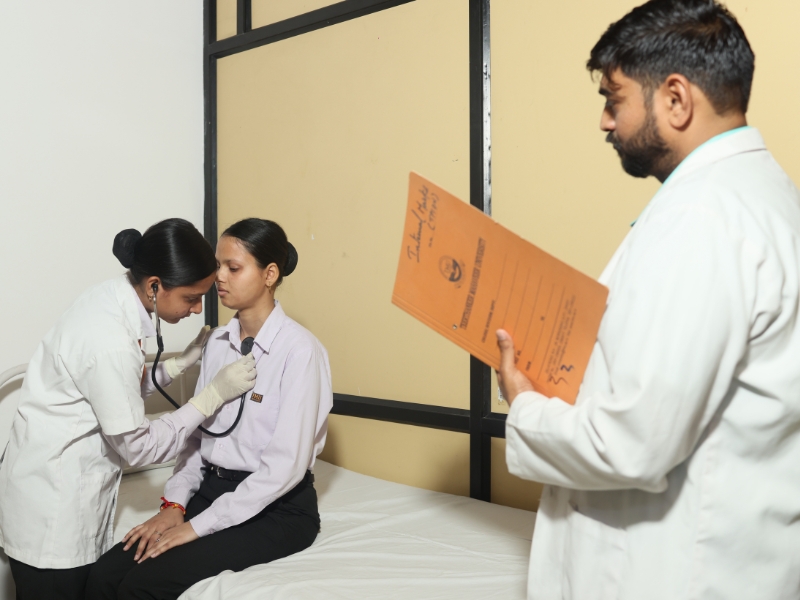
The Objective Structured Clinical Examination (OSCE) is a standardized method used to assess the clinical competence of nursing, medical, and allied health students. It evaluates students in a structured and objective manner through a series of stations where they demonstrate specific skills, decision-making, communication, and professional behaviors.
An OSCE Laboratory is a specially designed clinical skills environment that simulates real healthcare settings. It allows students to practice and be evaluated under controlled conditions before providing care to actual patients.
Key Features of OSCE Laboratories
Standardized Skill Stations
Each station focuses on one competency or procedure, such as hand hygiene, vital signs assessment, medication administration, intramuscular injection, catheterization, wound dressing, CPR, and patient education.
Time-Bound Assessment
Each station usually lasts 5–15 minutes. Students rotate through stations after a bell or timer.
Objective Evaluation
Performance is assessed using structured checklists and rating scales. Examiners evaluate specific actions and communication behaviors.
Standardized Patients or Manikins
Trained actors or high-fidelity manikins simulate clinical scenarios.
Realistic Clinical Environment
The lab resembles hospital wards, ICU, labor rooms, paediatric units, and community settings.
Immediate Feedback
Students may receive debriefing and constructive feedback after the OSCE.
Video Recording Facilities
Sessions can be recorded for review, moderation, and self-assessment.
Lab Functionality and Use
| Sl. No. | Functionality | Description |
|---|---|---|
| 01 | Skill Demonstration | Faculty demonstrate procedures before student practice. |
| 02 | Repeated Practice | Students can rehearse until competency is achieved. |
| 03 | Formative Assessment | Low-stakes assessments identify learning needs. |
| 04 | Summative Assessment | Formal OSCE exams contribute to academic evaluation. |
| 05 | Interprofessional Education | Students from nursing, medicine, and allied health collaborate. |
| 06 | Communication Skills Training | Students practice history taking, counselling, and therapeutic communication. |
| 07 | Emergency Preparedness | Simulations include code blue, trauma, and obstetric emergencies. |
Student Responsibilities
Students are expected to:
- Attend laboratory sessions regularly
- Wear proper clinical uniform and ID card
- Follow laboratory rules and instructions
- Handle articles carefully
- Maintain professional behavior during practical sessions
OSCE Lab Equipments
| Sr. No. | Name of Equipments |
|---|---|
| 1 | B.P Apparatus |
| 2 | Stethoscope |
| 3 | Nebulizer |
| 4 | Steam Inhaler |
| 5 | MANIKON |
| 6 | laryngoscope (Pediatric) |
| 7 | Colostomy bag |
| 8 | Steel Drum |
| 9 | Wall Clock |
| 10 | Mosquito Forceps |
| 11 | Needle Holder |
| 12 | Ice Cap |
| 13 | Suture Scissors |
| 14 | Enema Can |
| 15 | Tracheostomy tube Permanent |
| 16 | Tracheostomy tube Temporary |
| 17 | WHEEL CHAIR |
| 18 | STRECTER |
| 19 | BED SIDE LOCKER |
| 20 | Thermometer |
| 21 | Bowel - Big |
| 22 | Bowel - Medium |
| 23 | Tray - Medium |
| 24 | Kidney tray Medium |
| 25 | Cotton |
| 26 | Gauze Piece |
| 27 | Spirit |
| 28 | Betadine |
| 29 | Hand Rub |
| Sr. No. | Name of Equipments |
|---|---|
| 30 | Spirit lamp |
| 31 | IV cannula ( All Size) |
| 32 | Micropore Size 1,2,3 |
| 33 | Bucket |
| 34 | Mug |
| 35 | Syringes ( All Sizes) |
| 36 | IV set |
| 37 | Urinal |
| 38 | Bedpan |
| 39 | Mask |
| 40 | Nasogastric tube |
| 41 | Makintosh |
| 42 | Plastic Apron |
| 43 | Caps |
| 44 | Sterile Gloves |
| 45 | Venturi Mask |
| 46 | Plastic Tray |
| 47 | Long Sterile Tray |
| 48 | Cord Clamp |
| 49 | Airway |
| 50 | Suction Catheter |
| 51 | IV catheter |
| 52 | Folyes Catheter |
| 53 | Condom Catheter |
| 54 | Uro Bag |
| 55 | Normal Saline |
| 56 | DNS |
| 57 | RL |