




Community Health Nursing Laboratory
Overview of the Laboratory
The Community Health Nursing Laboratory plays an important role in helping nursing students translate classroom learning into real-world practice. It provides a supportive and simulated setting where students can understand how healthcare services are delivered at the community level. The lab focuses on building skills related to preventive, promotive, and rehabilitative care, which are essential for improving the health of individuals, families, and communities.
Through this laboratory, students gain exposure to key areas such as maternal and child health, family welfare, immunization, environmental hygiene, and control of communicable diseases. It prepares them to confidently work in diverse settings like rural villages, urban communities, and public health institutions.
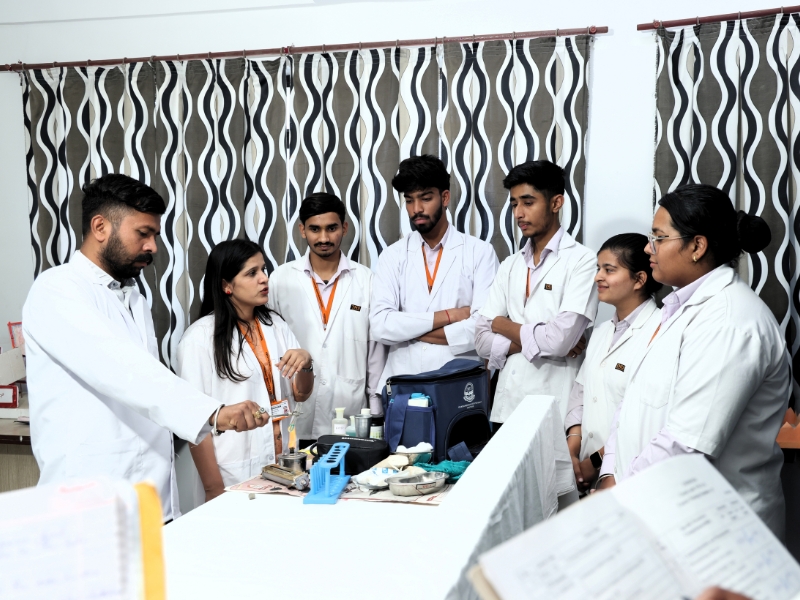
Key Features and Equipment
Models and Charts
A variety of models and charts that help explain topics like nutrition, family planning, and disease prevention in a simple way.
Audio-Visual Facilities
Audio-visual facilities such as projectors and digital resources that support interactive teaching.
Community Health Kits
Community health kits containing basic instruments like blood pressure apparatus, thermometers, weighing scales, and first aid supplies.
Simulation Aids
Mannequins and simulation aids that allow students to safely practice procedures like newborn care and antenatal check-ups.
Education Materials
Health education materials including posters, flipbooks, and pamphlets used for spreading awareness in communities.
Documentation Training
Sample records and registers that train students in maintaining proper documentation.
Environmental Tools
Tools for demonstrating environmental health practices, such as water testing and waste management, Community Bags.
Community Health Nursing Bags
Community Health Nursing Bags are essential tools used by nursing students and professionals during home visits and fieldwork. These bags are carefully prepared to carry all the basic equipment and supplies required to provide safe, efficient, and hygienic care in community settings. They help nurses deliver services directly at the doorstep of individuals and families, especially in rural and underserved areas.
The bag is organized in a systematic manner so that all items are easily accessible while maintaining cleanliness and preventing contamination. It also reflects the nurse’s preparedness and professionalism during community visits.
Contents of the Community Health Bag
A standard community health nursing bag typically includes:
- Basic assessment tools such as a blood pressure apparatus, thermometer, stethoscope, and weighing scale
- Personal protective items like gloves, masks, hand sanitizer, and soap
- Dressing materials including cotton, gauze, bandages, and antiseptic solutions
- Maternal and child health supplies for antenatal and postnatal care
- Immunization-related items (where applicable, for demonstration purposes)
- Health education materials such as pamphlets, flashcards, and flipbooks
- Waste disposal materials like disposal bags for safe handling of biomedical waste
Use and Importance
The community bag is used during home visits to assess health conditions, provide basic treatment, and educate families about health practices. It supports infection control by ensuring that clean and sterile items are used appropriately. Students are trained to follow the “bag technique,” which involves proper handling, placement, and use of items to maintain hygiene and prevent cross-infection. Overall, the Community Health Nursing Bag is not just a collection of tools—it is a symbol of organized, safe, and patient-centered care delivered in the community.
Lab Functionality and Use
This laboratory is actively used to build both practical and communication skills among students:
- Students learn how to conduct home visits and community assessments effectively.
- It provides opportunities to practice important activities such as immunization, health counselling, and nutrition guidance.
- Teachers demonstrate procedures, followed by hands-on practice by students to strengthen their confidence.
- Students are trained to deliver health education sessions, improving their ability to communicate with different groups.
- The lab prepares students before they are posted in field areas like primary health centers and community health settings.
- It also supports basic research skills, including data collection and report writing related to community health.
Other Important Information
The laboratory is maintained according to the standards set by the Indian Nursing Council. Cleanliness, safety, and infection control are given high priority to ensure a secure learning environment.
Regular updates and proper maintenance of equipment help keep the lab effective and relevant. The laboratory also encourages students to participate in community outreach activities and national health programs, helping them understand their role in improving public health.
Lab In-Charge and Lab Technician
The smooth functioning of the laboratory depends on a dedicated team:
| Sl. No. | Name | Designation | Description |
|---|---|---|---|
| 01 | Ms. Jyoti | Lab In-Charge | Qualified faculty member specializing in Community Health Nursing who plans and supervises all practical activities and ensures quality training. |
| 02 | Mr. Subham | Lab Technician | Skilled staff member responsible for arranging equipment, maintaining records, and assisting during practical sessions. |