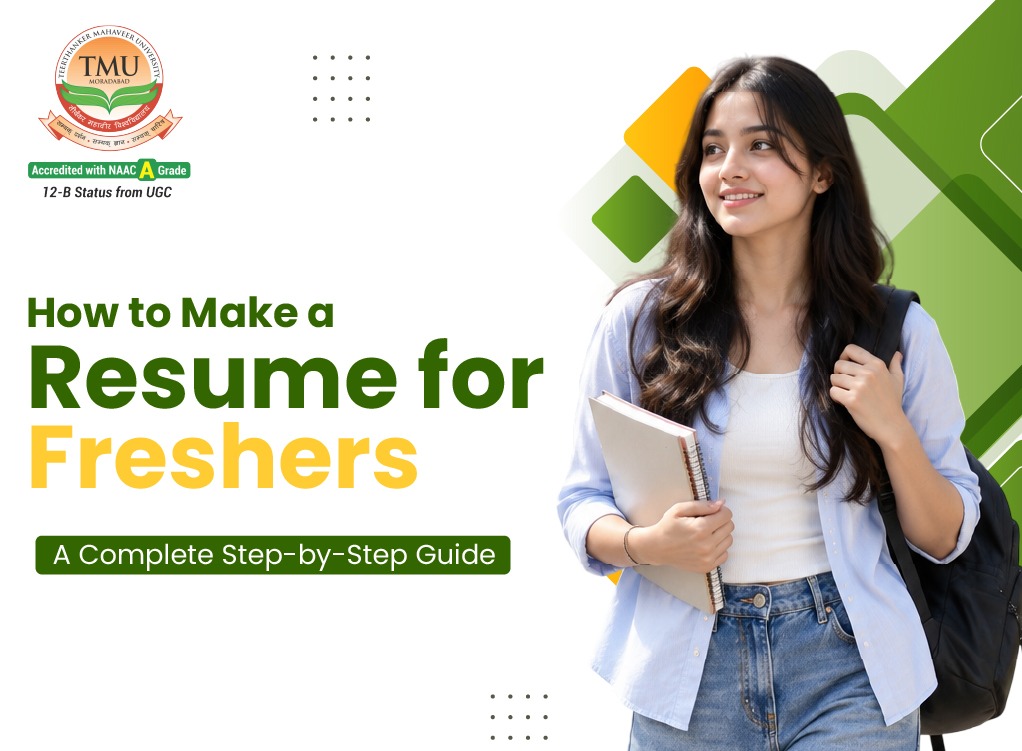




How to Make a Resume for Freshers: A Complete Step-by-Step Guide
Table of Contents
Moving out of the comfort zone of one's university, after all those years of hard work and self-discovery, is indeed an achievement of a lifetime. We graduate as better people, equipped with new skills and a stronger sense of self. At the same time, our professional journey, from now on, will be significantly different from what we have experienced so far.
For all of us who are trying to land that first-ever job, our resume is a true reflection of all the skills and knowledge that we have acquired so far.
Your resume serves as the critical first impression on your career path. By strategically presenting your qualifications and emphasising the practical impact of your academic and project work, you demonstrate to prospective employers that you are a well-prepared professional ready to deliver immediate value.
In today's AI-driven age, most companies have Applicant Tracking Systems (ATS) software that shortlists candidates based on a few predetermined criteria. To get past the ATS screening while, at the same time, making the resume stand out to real humans, one needs to create a resume that has all the relevant information included while also having a distinct narrative flair to it. Here's how one can pull that off.
1. A Resume's Basic Requirements
Recruiters like clarity. They want to know that the candidate is proficient in the relevant skills and is fit for the role.
- The One-Page Rule: Keep it to a single page and make this page count!
Legible Fonts: For better readability, use simple fonts like Calibri, Arial, or Garamond, preferably Times New Roman, in sizes 10-12 pt.
- PDF is the Preferred Format: Always, always send the resume as a PDF to prevent any last-minute mishaps with formatting
- Do not include photos, marital status, or address. Only state the current city and the country/state if they are relevant
Teerthanker Mahaveer University
Apply for Admission
Apply for Admission
2. How to craft the resume compellingly, section by section:
A. All the Necessary Contact Information:
To make it easier for recruiters to learn more about you and to connect with you, make sure to add all relevant contact information at the top.
This should ideally include the following:
-Full name
-Professional email id (firstname.lastname@domain.com)
-Phone number (+91)
-LinkedIn profile link
-Portfolio/projects link (if any)
-Current city/state
B. Professional Summary:
This is the hook/your elevator pitch. Keep it to a 3-4 line statement about who you are as a candidate. This blurb should include your educational background, your relevant skills, and your career aspirations. It should also highlight some distinct achievements if you have listed any under the "achievements and certifications" segment.
C. Educational Qualifications:
List out all the educational qualifications in reverse chronological order. Make sure to include the name of the course, the name of the institution, and the year of passing. You may also include the SGPA or percentage if it is a pertinent detail recruiters want to know.
D. Skills Sets:
Make sure that the skills are listed coherently. This will allow the reader to see at a glance what one is good at and what one is proficient in. Some relevant skills to include here could be technical skills that have been learned during the course of the degree, along with soft skills like leadership, public speaking, etc.
E. The Work Experience Segment:
This is where the candidate has to show how one has applied the theoretical knowledge that has been learned at the university. It is important to include any relevant work experience, including volunteer work if the candidate does not have any prior experience. Describe the duties and responsibilities performed in every job with strong action verbs (collaborated, organised, etc.)
F. Certifications and Achievements:
Any relevant achievements or even online certifications should be added here. This will show recruiters that one has gone out of one's way to gain additional skills that make one eligible for the recruitment process.
3. The Digital Etiquette
Since some companies now use automated scanners to sort out the relevant applications, it is best to make sure that the resume speaks the language that the machines understand. To do that:
One has to make sure that the keywords from the job description are included
The format is not complicated and uses standard headings (no fancy design and graphics)
Conclusion -
It is always a good idea to make sure that there are no typos or grammatical errors in the resume since those red flags could turn off a potential recruiter. Additionally, make sure that the formatting is consistent throughout.
A good resume helps in making a lasting first impression on the recruiter. By strategically adding all the relevant information while bringing out the impact that one's qualifications and experience could make on the company, a resume is bound to stand out while also managing to get past the ATS screening process. Take your time polishing each section, tailor it to the role you want, and step into the placement season with confidence!
Frequently Asked Questions (FAQs)
Q1. How do I make a resume as a fresher?
Ans. To make a resume as a fresher, include your contact details, professional summary, educational qualifications, skills, internships or projects, certifications, achievements, and relevant volunteer experience. Keep the resume clear, concise, and ideally limited to one page.
Q2. What should a fresher include in a resume?
Ans. A fresher should include their name and contact details, career summary, education, technical and soft skills, academic projects, internships, certifications, achievements, and other relevant experiences. The information should be tailored to the job being applied for.
Q3. Should a fresher's resume be one page?
Ans. Yes. For most freshers, a one-page resume is sufficient. It should focus on the most relevant education, skills, projects, internships, certifications, and achievements rather than including unnecessary information.
Q4. What skills should freshers mention on their resume?
Ans. Freshers can mention both technical and soft skills relevant to the job. Technical skills may include programming languages, data analysis, digital marketing, MS Office, or other job-specific tools. Soft skills can include communication, teamwork, problem-solving, leadership, and time management.
Q5. Is an internship important on a fresher's resume?
Ans. Yes. An internship can demonstrate practical experience and show employers how you have applied your academic knowledge. Mention the organisation, role, duration, key responsibilities, and measurable contributions where possible.
Q6. How can I make my fresher resume ATS-friendly?
Ans. Use standard section headings, simple formatting, readable fonts, and relevant keywords from the job description. Avoid excessive graphics, tables, text boxes, icons, and complicated layouts that may interfere with ATS parsing.
This content gives an overview of the programme and is for educational purposes only. For updated admission guidelines and counselling support, please connect with our Counsellor Team.