




3.2.1: Graduates in Health Professions
Teerthanker Mahaveer University (TMU), offers academic programmes in medicine, dentistry, nursing, physiotherapy, pharmacy, and paramedical sciences under medical discipline to prepare students for professional roles in the healthcare sector. These programmes equip graduates with the knowledge and practical skills required for patient care, disease prevention, rehabilitation, diagnostic services, pharmaceutical practice, and community health. The development of a skilled healthcare workforce is an important part of Sustainable Development Goal 3 (Good Health and Well-being).
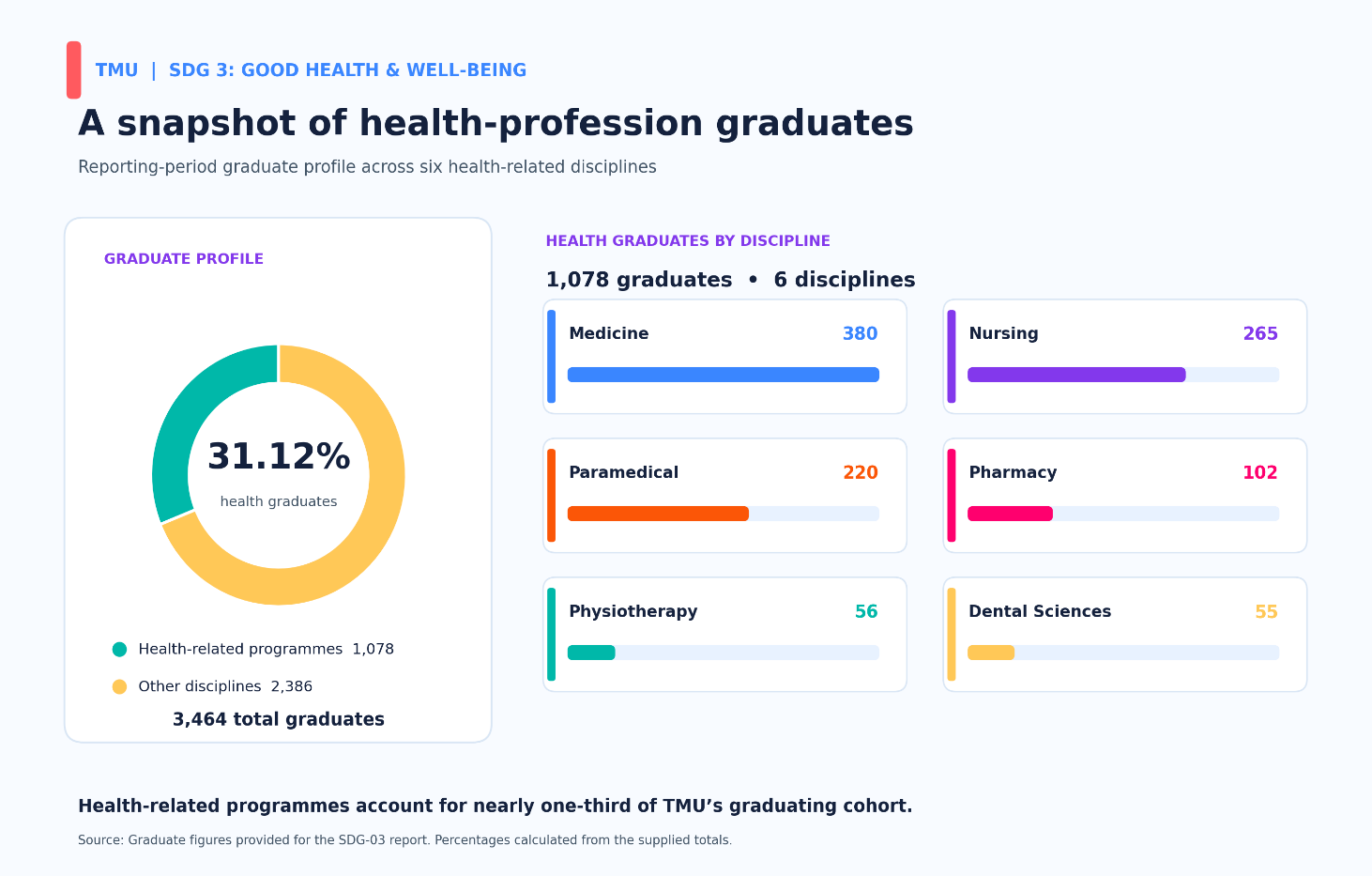
During this period, TMU awarded degrees to 3,464 graduates across all academic disciplines, of whom 1,078 completed programmes under medcial diciplines. Health graduates accounted for 31.12% of the total graduating cohort, while the remaining 2,386 graduates came from other disciplines. This distribution shows that health sciences form a substantial part of the University’s academic programmes.
Among the medical disciplines, Medicine recorded the highest number of graduates, with 380, followed by Nursing with 265 and Paramedical Sciences with 220. Pharmacy recorded 102 graduates, while Physiotherapy and Dental Sciences recorded 56 and 55 graduates, respectively. Together, these six disciplines prepare graduates for different responsibilities within the healthcare system.
Medical graduates are trained for the diagnosis and treatment of illnesses, while nursing graduates prepare for patient care, clinical support, and health education. Dental graduates focus on oral healthcare and preventive dentistry. Physiotherapy graduates work in rehabilitation and the restoration of physical function, while pharmacy graduates receive training in medicines and their appropriate use. Paramedical graduates develop skills relevant to diagnostic procedures and allied healthcare services. These professional roles are important for the delivery of coordinated and effective healthcare.
The number of graduates across these disciplines reflects the range of health-related education available at TMU. By preparing students for clinical practice, rehabilitation, diagnostics, medication-related services, and community health, the University helps meet the varied workforce requirements of the healthcare sector. This work is relevant to SDG 3, which seeks to improve health and well-being and strengthen the availability of trained health professionals. The figures presented below provide an overview of TMU’s graduating cohort and the distribution of graduates across its health-related programmes.