



Diploma in CT Scan Technician
Duration : 2 Years
Build Your Future with Diploma in CT Scan Technician
Apply Now
Diploma in CT Scan Technician
Duration : 2 Years
Build Your Future with Diploma in CT Scan Technician
Apply NowAbout Diploma in CT Scan Technician
Discover how the Diploma in CT Scan Technician programme at TMU can shape your future and empower you to make a meaningful impact in your chosen field.
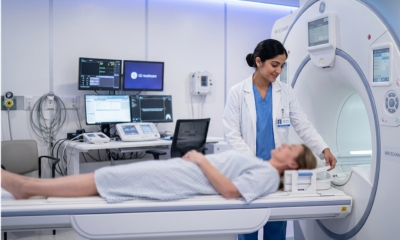
The Diploma in CT Scan Technician is a specialised paramedical programme designed to train students in computed tomography (CT) imaging and diagnostic procedures. This course equips learners with the technical knowledge and practical skills required to operate CT scan machines, assist radiologists, and produce accurate cross-sectional images for effective diagnosis and treatment planning.
The curriculum integrates theoretical learning with hands-on clinical training, covering key areas such as radiographic physics, cross-sectional anatomy, patient positioning, contrast imaging techniques, radiation safety, and image processing. Students also gain exposure to modern diagnostic equipment, real-time case studies, and clinical internships, ensuring a clear understanding of radiology practices in healthcare settings.
At Teerthanker Mahaveer University (TMU), the programme emphasises practical learning, advanced imaging infrastructure, and industry-oriented training. With experienced faculty, access to modern radiology labs, and strong placement support, TMU prepares students for career opportunities in hospitals, diagnostic centres, and radiology departments.


Apply For Admission
Diploma in CT Scan Technician FEES
A transparent breakdown of the investment in your future.
| S.No | Fee Details | Amount |
|---|---|---|
| 1 | Tuition Fee | Rs 27,000 /- ( per Semester ) |
| 2 | Examination Fee | As Applicable |
| 3 | Lab Charges | Rs 1,000 /- ( per Year ) |
| 4 | Enrolment Fee | Rs 1,000 /- ( One Time ) |
| 5 | Admission Regsitartion Fee | Rs 5,000 /- ( One Time ) |
| 6 | Admission Processing Fee | Rs 2,500 /- ( One Time ) |
| 7 | Application Fee | Rs 1,000 /- ( One Time ) |
Diploma in CT Scan Technician Eligibility & Selection
Your pathway to joining our esteemed program. Understand the criteria and process.

Have questions about the criteria or process? Our admissions team is here to help!
Contact AdmissionsOur Esteemed Recruiting Partners
Connecting talent with industry leaders to foster successful careers and drive innovation.
Our network of esteemed recruiters is continuously growing. Stay tuned for updates.
Programmme Curriculum Diploma in CT Scan Technician
Laying the groundwork with fundamental scientific principles and an introduction to pharmaceutical sciences.
Continuing the exploration of core pharmaceutical subjects and introductory biochemistry.
Advancing into complex organic chemistry, physical pharmaceutics, and microbiology.
YOUR CAREER PATHWAYS Career Opportunities After Diploma in CT Scan Technician

Here are several prominent career paths you can pursue after earning your Diploma in CT Scan Technician:
- Management Consultant
- Marketing Manager
- Operations Manager
- Financial Analyst
- Human Resources Manager
- Business Development Manager
- Product Manager
- Supply Chain Manager
- Chief Executive Officer (CEO)
- Entrepreneur / Founder
- Strategy Director
- Healthcare Administrator
Programme Overview
The Diploma in CT Scan Technician is a specialised paramedical programme focused on training students in computed tomography (CT) imaging, diagnostic procedures, and radiology support services. The course is designed to develop technical expertise in operating CT scan machines and assisting radiologists in accurate diagnosis and patient care.
The programme typically has a duration of 2 years, combining theoretical instruction with practical training. Students study core subjects such as radiographic physics, cross-sectional anatomy, patient positioning, contrast media usage, radiation protection, and image processing techniques. The course also includes clinical internships and hands-on training in hospitals and diagnostic centres, enabling students to gain real-time experience with advanced imaging equipment.
This diploma prepares graduates for roles in hospitals, diagnostic imaging centres, radiology departments, and healthcare facilities, where they assist in performing CT scans and ensuring high-quality diagnostic imaging. It also provides a strong foundation for further studies and specialisation in radiology and medical imaging technology.
The Diploma in CT Scan Technician is a specialised paramedical programme designed to train students in computed tomography imaging, radiology procedures, and diagnostic support services. The course focuses on developing technical expertise in operating CT scan machines, ensuring patient safety, and assisting in accurate medical diagnosis.
| Programme Detail | Information |
| Course Name | Diploma in CT Scan Technician |
| Course Level | Diploma (Paramedical) |
| Duration | 2 Years |
| Eligibility | 10+2 in the Science stream with PCB/M and a minimum 50% marks in aggregate |
| Admission Process | Merit-based or entrance-based |
| Course Focus | CT imaging, radiographic techniques, patient positioning, and radiation safety |
| Practical Training | Clinical training in hospitals and diagnostic imaging centres |
| Career Roles | CT Scan Technician, Radiology Technician, Imaging Assistant |
| Employment Areas | Hospitals, diagnostic centres, radiology departments, healthcare facilities |
This programme provides hands-on training, clinical exposure, and technical knowledge, preparing students for careers in diagnostic imaging and radiology services within the healthcare sector.
To pursue a Diploma in CT Scan Technician, candidates must meet the required academic qualifications to understand radiology concepts and diagnostic imaging procedures effectively.
The eligibility criteria include:
- Educational Qualification: Completion of 10+2 (Higher Secondary) from a recognised board
- Stream Requirement: Must have studied the Science stream with PCB/M (Physics, Chemistry, Biology/Mathematics)
- Minimum Marks:Minimum 50% aggregate marks in the qualifying examination
- Age Criteria: Candidates should fulfil the minimum age requirement as per university norms
- Basic Aptitude: Interest in medical imaging, radiology, and healthcare technology
Meeting these criteria allows students to enrol in the programme and build a strong foundation for a career in CT scan technology and diagnostic imaging.
To excel in diagnostic imaging, students pursuing a Diploma in CT Scan Technician must develop a blend of technical expertise, analytical ability, and patient-care skills. These competencies are essential for operating CT equipment, ensuring safety, and delivering accurate imaging results.
Key skills required include:
- Technical Proficiency: Ability to operate CT scanners, consoles, and imaging software efficiently
- Radiology Knowledge: Understanding of cross-sectional anatomy, imaging protocols, and contrast usage
- Attention to Detail: Ensuring precise image acquisition and recognising abnormalities
- Patient Handling Skills: Positioning and assisting patients comfortably during scanning procedures
- Radiation Safety Awareness: Knowledge of dose optimisation and safety protocols to minimise exposure
- Analytical Skills: Supporting radiologists by reviewing image quality and identifying issues
- Communication Skills: Coordinating effectively with doctors, radiologists, and patients
- Problem-Solving Ability: Managing technical glitches and responding to urgent situations
Developing these skills enables professionals to deliver accurate diagnostic imaging and contribute effectively to radiology and healthcare services.
Choosing the right institution is crucial for building a successful career in diagnostic imaging. Teerthanker Mahaveer University (TMU) offers a comprehensive and industry-focused learning environment for students pursuing a Diploma in CT Scan Technician, combining advanced infrastructure with real-time clinical exposure.
Key reasons to choose TMU include:
- Advanced Radiology Infrastructure: Access to state-of-the-art diagnostic equipment, including 128-slice CT scan, MRI, digital X-ray, and Doppler systems, enabling hands-on learning with modern imaging technologies
- Hands-on Clinical Training: Practical exposure at TMU Hospital, a 1000+ bed super-speciality teaching hospital, offering real-time experience in diagnostic imaging and patient care
- 24×7 Diagnostic & Emergency Exposure: Opportunity to work in a radiology department that provides round-the-clock imaging services, including CT, MRI, and emergency diagnostics
- Real-Time Case-Based Learning: Exposure to diverse clinical cases across multiple specialities, enhancing diagnostic accuracy and practical understanding
- Experienced Faculty & Clinical Guidance: Learn from skilled radiologists and healthcare professionals with strong academic and clinical expertise
- Industry-Oriented Curriculum: Updated syllabus aligned with current standards in radiology, imaging technology, and patient safety protocols
- Recognised & Accredited Institution:
- UGC Approved
- Recognised by the UP State Medical Faculty
- QCI Accreditation (Nursing & Paramedical)
- Quality Council of India (QCI) – A-Grade (Nursing/Paramedical)
- Strong Placement Support: Assistance in placements across hospitals, diagnostic centres, and radiology departments
With its focus on advanced imaging technology, clinical exposure, and career-oriented training, TMU provides an ideal platform for students to build a successful career as CT Scan Technicians in the healthcare sector.
Admissions are now open for the Diploma in CT Scan Technician for the 2026 academic session. This programme is designed to equip students with practical skills in diagnostic imaging, CT scan procedures, and radiology support, preparing them for careers in hospitals and diagnostic centres.
Start your journey in medical imaging with industry-focused training, modern labs, and strong clinical exposure.
Admission Process:
- Application Submission: Fill out the application form through the official university admission portal (online/offline mode available)
- Eligibility Check: Ensure you meet the required 10+2 in the Science stream with PCB/M and minimum 50% marks in aggregate
- Document Submission: Submit academic certificates, ID proof, and passport-sized photographs
- Merit-Based Selection: Admission is generally based on 12th marks or entrance criteria (if applicable)
- Admission Confirmation: Complete fee payment and enrolment to secure your seat
Admissions for paramedical diploma courses in India typically run between April and September, and early application is recommended due to limited seats.
Secure your admission now and take the first step towards a career in CT scan technology and diagnostic imaging, one of the fastest-growing domains in healthcare.
The scope after a Diploma in CT Scan Technician is expanding rapidly due to the increasing reliance on diagnostic imaging and advanced radiology services in modern healthcare. CT scans are essential for diagnosing a wide range of medical conditions, creating a strong demand for skilled technicians in hospitals and diagnostic centres.
Career Opportunities
- CT Scan Technician: Operates CT scan machines and captures high-quality diagnostic images
- Radiology Technician: Assists radiologists in imaging procedures and patient care
- Imaging Assistant: Supports imaging operations and maintains diagnostic records
- Diagnostic Lab Technician: Works in diagnostic centres, handling imaging-related procedures
- Hospital Radiology Assistant: Assists in hospital radiology departments
Employment Areas
- Multi-speciality hospitals
- Diagnostic imaging centres
- Radiology departments
- Private clinics and healthcare facilities
- Government hospitals and medical institutions
With experience and additional certifications, professionals can advance into specialised roles such as MRI technician, radiology technologist, or imaging specialist. Overall, this diploma offers strong career prospects with growing demand in India’s healthcare and diagnostic imaging sector.
The salary after a Diploma in CT Scan Technician in India varies based on experience, skills, and the type of healthcare organisation. Graduates typically begin their careers in entry-level roles and experience steady salary growth with practical exposure and specialisation.
Average Salary Structure
| Experience Level | Average Salary |
| Fresher (0–1 Year) | ₹10,000 – ₹20,000 per month |
| Entry-Level (1–3 Years) | ₹20,000 – ₹30,000 per month |
| Mid-Level (3–5 Years) | ₹30,000 – ₹45,000 per month |
| Experienced Professionals | ₹45,000+ per month |
According to industry data, the average monthly salary for CT technicians ranges from ₹19,000 to ₹40,000, depending on experience and location. On an annual basis, salaries typically fall between ₹1.2 lakh and ₹5.1 lakh per year.
Factors Affecting Salary
- Experience and hands-on clinical training
- Type of employer (government hospital, private hospital, diagnostic centre)
- Location and demand for radiology services
- Advanced certifications in CT, MRI, or radiology
With experience and additional certifications, professionals can advance into senior radiology roles, CT technologist positions, or imaging specialists, significantly increasing their earning potential in India’s growing diagnostic healthcare sector.
Q1: What is the qualification for a CT technician?
Ans: To become a CT technician, candidates must complete 10+2 in the Science stream with PCB/M and minimum 50% marks in aggregate, followed by a Diploma or degree in CT Scan Technology or Radiology. The course provides training in imaging techniques, patient positioning, and radiation safety. Practical clinical exposure in hospitals or diagnostic centres is essential for skill development. Some professionals also pursue advanced certifications in radiology to enhance career opportunities and specialise in diagnostic imaging.
Q2: How many years does it take to be a CT tech?
Ans: Becoming a CT (Computed Tomography) technician typically takes 1 to 3 years, depending on the educational path chosen. A Diploma in CT Scan Technology usually requires around 2 years, including both theoretical learning and clinical training. Some candidates first complete a general radiology or imaging course and then specialise in CT technology, which may extend the duration. Hands-on experience through internships is essential, as it helps develop practical skills required for operating CT machines and assisting in diagnostic imaging procedures.
Q3: What is a CT scan used for?
Ans: A CT scan (Computed Tomography scan) is used to create detailed cross-sectional images of the body to help diagnose and monitor various medical conditions. It is commonly used to detect tumours, internal injuries, infections, bone fractures, and bleeding. CT scans also assist in evaluating organs such as the brain, lungs, and abdomen, and guide procedures like biopsies and surgeries. Due to its accuracy and speed, it plays a crucial role in emergency diagnosis and treatment planning.
Q4: What is a CT scan vs. an MRI?
Ans: A CT scan (Computed Tomography) uses X-rays to create detailed cross-sectional images of the body, making it ideal for detecting injuries, fractures, and internal bleeding. In contrast, an MRI (Magnetic Resonance Imaging) uses strong magnetic fields and radio waves to produce highly detailed images of soft tissues, such as the brain, muscles, and organs. CT scans are faster and commonly used in emergencies, while MRIs provide greater detail for soft tissue evaluation without using ionising radiation.
Explore Related Programmes