



Admissions Open
Menu Icon
Instagram Icon
360 View
Call
Welcome To

Apply Now
2012 Year of Establishment
Books & Magazines Books – 678 • Magazines – 10
Jain Temple Teerthanker Mahaveer Jinalaya
E-Journals E-journals EBSCO & DELNET

Centre For Jain Studies

The Centre for Jain Studies has been established to emerge as a global centre of excellence, utilizing an interdisciplinary approach to foster holistic wellbeing, societal upgrade, and a sustainable world. Grounded in classical Jain wisdom, the Centre integrates traditional teachings with modern sciences and technology to create innovative courses that build professional competence. With an experience-based worldview of the universe as a reality, a rational theory of karma, and a reverence for all life, Jain philosophy promotes an ethical lifestyle that preserves ecosystems. Although ancient, this philosophy remains highly relevant to modern society by proposing solutions to contemporary global problems. Practitioners of Jainism respect diverse viewpoints and advance both personal and global peace. Indeed, the core principles of Jain philosophy—non-violence (Ahimsa), non-absolutism (Anekantavada), and non-possessiveness (Aparigraha)—may prove to be the foundation for world peace.

To achieve this, the Centre actively cultivates deep academic inquiry into Jain metaphysics, encouraging truth-seeking through textual scholarship and internal philosophical realization. The College offers Doctoral study programmes, alongside a multidisciplinary minor specialisation in Jain Studies for students of different streams. These programs design community projects and value-based leadership models that promote social harmony, inner transformation, and sustainable lifestyles. After successfully completing their courses, students are eligible for both government and non-government services.

Within the Jain Studies concentration, students analyze Jain philosophy, ethics, and living streams of religious experience based on non-harming. They will have the opportunity to explore the Jain culture’s primary texts, doctrines, and contemporary applications. Research topics may include diaspora Jainism, sacred and commentarial literature, pilgrimage, ritual, material culture, monastic traditions, lived Jainism, cultural exchange, Jainism and ecology, and Jainism and the natural sciences.

To support this robust academic environment, the Centre also publishes The Journal of Jain Studies, a peer-reviewed platform dedicated to advancing original research and critical discourse in the field. Furthermore, the Centre bridges Jain philosophy with non-humanities fields, providing students across other disciplines with the ethical framework and sustainable mindsets required to lead responsibly in their respective industries. Ultimately, the Jain tradition is studied in conversation with other Dharma traditions to deepen the understanding of their mutual illumination as well as the unique contributions of Jainism.

Read More

Vision

To emerge as a global centre of excellence in Jain Studies, utilizing an interdisciplinary approach to foster holistic wellbeing, societal upgrade, and a sustainable world.

Mission

  • Academic Integration & Interdisciplinary Approach: To blend classical Jain wisdom with modern sciences and technology to create innovative courses that build professional competence.

  • Research, Innovation & Learning: To cultivate deep academic inquiry into Jain metaphysics, encouraging truth-seeking through textual scholarship and internal philosophical realization.

  • Societal Upgrade & Sustainability: To design community programs and value-based leadership models that promote social harmony, inner transformation, and sustainable lifestyles.

  • Universal Skill Alignment & Ethical Excellence: To bridge Jain philosophy with non-humanities fields, providing students across other disciplines with the ethical framework and sustainable mindsets required to lead responsibly in their respective industries.

Curriculum

Multidisciplinary Minor Specialisation (Jain Studies)

Applicable w.e.f. Academic Session 2026-27 under NEP-2020 Guidelines

Minor Specialisation Course Evaluation & Structure Matrix
S.No. Semester Course Code Course Name L T P Credits CIA ESE Total Marks
1 First IDMJS260101 Jain Philosophy & Culture 4 0 0 4 40 60 100
2 Second IDMJS260201 Jain Metaphysics 4 0 0 4 40 60 100
3 Third IDMJS260301 Core principles of Jainism 4 0 0 4 40 60 100
4 Fourth IDMJS260401 Jain Ethics 4 0 0 4 40 60 100

Minor Specialisation Course: Detailed Unit-wise Curriculum

Semester I: Jain Philosophy & Culture (Course Code: IDMJS260101)

Course Configuration: L-4 | T-0 | P-0 | Credits-4

Course Outcomes (COs)

On completion of the course, the students will be:

  • CO1: Remembering basic terms, antiquity, and cosmic time cycle settings.
  • CO2: Understanding ancient lineage tracks and initial Tirthankara histories.
  • CO3: Understanding the structural setups of successive canonical orders and divisions.
  • CO4: Understanding critical literature classifications across diverse scriptural formats.
  • CO5: Applying knowledge of architectural structures, regional festivals, and global networks.
Course Content
Unit Content Details Hours
Unit-1 Jainism and its Antiquity: Religion and Philosophy, Namokar Mantra, Antiquity of Jainism, Kalchakra (The Time Cycle), Kulkara: A Social Administrator, Great Personalities (Shalaka Purush & Others). 8
Unit-2 Eternal Tradition of Jain Tirthankaras: Eternal Tirthankara Tradition, First Tirthankara Bhagwan Rishabhdev, Tirthankara Neminath, Tirthankara Parshvanath. 8
Unit-3 Bhagwan Mahavira and His Successive Tradition: Last Tirthankara Bhagwan Mahavira, Contemporary Religious Sects of Bhagwan Mahavira, Ganadharas and Prominent Acharyas, Bhagwan Mahavira in Digambara-Shvetambara Tradition. 8
Unit-4 Jain Literature: Jaingams (Canonical Texts), A Brief History of Jain Literature. 8
Unit-5 Jain Culture: Characteristics of Jain Culture, Jain Art and Archaeology, Jain Festivals (Parva), Prominent Jain Pilgrimage Centers (Tirthakshetra), Jainism Abroad. 8
Textbook

Pragyashramani Shri Chandanamati Ji Mataji. Jain Darshan aur Sanskriti ka Itihas. (Editor: Prof. Tikam Chand Jain; Under Guidance of: Ganini Pramukh Shri Gyanmati Mataji). Moradabad & Hastinapur: Teerthanker Mahaveer University (TMU) & Digambar Jain Trilok Shodh Sansthan, Jambudweep Hastinapur.

Download Textbook
Reference Books
  • Jain, Jyotiprasad. Religion and Culture of the Jains. New Delhi: Bharatiya Jnanpith.
  • Sangave, Vilas Adinath. Jain Religion and Community. Mumbai: Popular Prakashan.
  • Chatterjee, Asim Kumar. A Comprehensive History of Jainism. Calcutta: Firma KLM.
  • Shastri, Kailashchandra. Jain Dharma. Varanasi: Varni Granthmala.

Semester II: Jain Metaphysics (Course Code: IDMJS260201)

Course Configuration: L-4 | T-0 | P-0 | Credits-4

Course Outcomes (COs)

On completion of the course, the students will be:

  • CO1: Remembering classifications of soul.
  • CO2: Understanding structural traits across diverse non-living object forms.
  • CO3: Understanding the nature of reality.
  • CO4: Understanding systematic transition levels.
  • CO5: Applying analytical investigation pathways regarding cosmic existential dimensions.
Course Content
Unit Content Details Hours
Unit-1 Substance, Attribute, Mode, and Living Substance (Soul): Analysis of Substance, Attribute, and Mode (Dravya-Vivechan, Guna Paryaya ka Swaroop). 8
Unit-2 Living Substance and its Classifications: Classification based on Senses (Jiva Dravya, Indriyon ki Apeksha Bhed), Classification of Souls based on Realms of Existence (Gatiyon ki Apeksha va Anya Apeksha se Jivon ke Bhed). 8
Unit-3 Non-Living Substance and Existential Collections (Ajiva Dravya and Astikaya): Matter Substance (Pudgala Dravya), Medium of Motion (Dharma), Medium of Rest (Adharma), Space (Akasha), and Time (Kala) Substances, Existential Collections (Astikaya) Overview. 8
Unit-4 Nature, Types of Tattva, and Purpose of Metaphysical Contemplation: Nature and Classifications of Reality (Tattva ka Swaroop evam Bhed), Influx (Asrava) and Bondage (Bandha) Realities, Stoppage (Samvara) and Shedding (Nirjara) Realities, Liberation Reality (Moksha Tattva). 8
Unit-5 Gunasthana, Jiva Samas: Overview of Spiritual Stages (Gunasthana), Soul Groupings (Jiva-Samas) Overview. 8
Textbook

Pragyashramani Shri Chandanamati Ji Mataji. Jain Tattva Vidya. (Editor: Prof. Tikam Chand Jain; Under Guidance of: Ganini Pramukh Shri Gyanmati Mataji). Moradabad & Hastinapur: Teerthanker Mahaveer University (TMU) & Digambar Jain Trilok Shodh Sansthan, Jambudweep Hastinapur.

Download Textbook
Reference Books
  • Acharya Kundakunda. Panchastikayasara. New Delhi: Bharatiya Jnanpith.
  • Acharya Kundakunda. Pravachanasara. New Delhi: Bharatiya Jnanpith.
  • Acharya Umaswami. Tattvarthasutra. Varanasi: Varni Granthmala.
  • Acharya Nemichandra. Gommatsara Jivakanda. Lucknow: Central Jain Publishing House.

Semester III: Core Principles of Jainism (Course Code: IDMJS260301)

Course Configuration: L-4 | T-0 | P-0 | Credits-4

Course Outcomes (COs)

On completion of the course, the students will be:

  • CO1: Remembering the essential parameters of the liberation path and Three Jewels.
  • CO2: Understanding structural mechanism codes linked to karmic bondage processes.
  • CO3: Applying the laws of causality, instrumental causes, and human effort concepts.
  • CO4: Analyzing the complex system of viewpoints (Naya Vyavastha) in textual hermeneutics.
  • CO5: Evaluating models multi-sidedness (Anekant) and conditional assertion (Syadvada).
Course Content
Unit Content Details Hours
Unit-1 Samyak Darshan (The Right Faith): The Path of Liberation and Nature of Intrinsic and Extrinsic Right Faith (Mokshamarga evam Samyakdarshan ka Swaroop), True Nature of Deity, Scripture, and Spiritual Master (Sanche Dev, Shastra, Guru ka Swaroop), Twenty-five Defects and Eight Limbs of Right Faith (Samyakdarshan ke Pachis Dosha evam Aath Ang). 8
Unit-2 Samyak Gyan & Samayak Charitra (Right Knowledge & Conduct): Overview of Intrinsic and Extrinsic Right Knowledge (Samyakgyan) and Right Conduct (Samyakcharitra). 8
Unit-3 Doctrine of Karma (Karma Siddhant): Nature of Karma and the Process of Karmic Bondage (Karma ka Swaroop evam Karmabandha ki Prakriya), Classifications of Karma and the concept of God (Ishwar). 8
Unit-4 System of Viewpoints in Jain Philosophy (Jaindarshan mein Naya Vyavastha): Concept of Viewpoints in Jain Philosophy (Jaindarshan mein Naya Vyavastha), Pure and Impure Absolute Viewpoints (Shuddha-Ashuddha Naya). 8
Unit-5 Non-Absolutism and Conditional Assertion (Anekant aur Syadvada): Multi-sidedness (Anekant) Foundations, Conditional Assertion (Syadvada) Overview. 8
Textbook

Pragyashramani Shri Chandanamati Ji Mataji. Jain Darshan ke maulik siddhant. (Editor: Prof. Tikam Chand Jain; Under Guidance of: Ganini Pramukh Shri Gyanmati Mataji). Moradabad & Hastinapur: Teerthanker Mahaveer University (TMU) & Digambar Jain Trilok Shodh Sansthan, Jambudweep Hastinapur.

Download Textbook
Reference Books
  • Acharya Kundakunda. Samayasara. New Delhi: Bharatiya Jnanpith.
  • Acharya Nemichandra. Dravyasangraha. Delhi: Motilal Banarsidass.
  • Jaini, Padmanabh S. The Jain Path of Purification. Berkeley: University of California Press.

Semester IV: Jain Ethics (Course Code: IDMJS260401)

Course Configuration: L-4 | T-0 | P-0 | Credits-4

Course Outcomes (COs)

On completion of the course, the students will be:

  • CO1: Remembering preliminary rules, householder virtues, and daily essential duties.
  • CO2: Understanding the structural division of twelve householder vows and layman stages.
  • CO3: Applying Householder’s conduct protocols and rules governing food purity.
  • CO4: Analyzing advanced spiritual reflections, meditation techniques.
  • CO5: Evaluating the process of Sallekhana.
Course Content
Unit Content Details Hours
Unit-1 Initial Stage of Householder Ethics (Shravakachara ki Prarambhik Avastha): Eight Fundamental Virtues of a Layman (Ashta Moolguna), Six Daily Essential Duties of a Householder (Shravak ki Shat Avasthyak Kriyaen), Renunciation of Seven Addictions and Prohibited Food (Saat Vyasan Tyag evam Abhakshya Tyag). 8
Unit-2 Eleven Stages and Twelve Vows of a Householder (Shravak ki Gyarah Pratimaen evam Barah Vrata): Eleven Spiritual Stages of a Householder (Shravak ki Gyarah Pratimaen), Five Minor Vows (Panch Anuvrata), Three Multiplicative/Supplementary Vows (Teen Gunavrata), Four Disciplinary Vows (Char Shikshavrata). 8
Unit-3 Monastic Conduct (Shramanachara): Primary Virtues under Monastic Conduct (Shramanachara ke Antargat Moolguna), Attributes of Spiritual Leaders: Acharya, Upadhyaya, and Sadhu Parameshthi (Acharya, Upadhyaya evam Sadhu Parameshthi). 8
Unit-4 Contemplation (Anupreksha): Twelve Reflections/Contemplations (Barah Bhavna). 8
Unit-5 Meditation and Sallekhana: Meditation (Dhyan) Foundations, Process of Sallekhna. 8
Textbook

Pragyashramani Shri Chandanamati Ji Mataji. Jain Aachar Samhita. (Editor: Prof. Tikam Chand Jain; Under Guidance of: Ganini Pramukh Shri Gyanmati Mataji). Moradabad & Hastinapur: Teerthanker Mahaveer University (TMU) & Digambar Jain Trilok Shodh Sansthan, Jambudweep Hastinapur.

Download Textbook
Reference Books
  • Acharya Samantabhadra. Ratnakaranda Shravakachara. Bombay: Jain Mitra Mandal.
  • Acharya Amritchandra. Purusharthasiddhyupay. Agas: Shrimad Rajchandra Ashram.
  • Bhargava, Dayanand. Jain Ethics. Delhi: Motilal Banarsidass.
  • Williams, R. Jain Yoga: A Survey of the Mediaeval Sravakacharas. London: Oxford University Press.

Regulatory & Evaluation Schemes Overview

General Rules
  • Paper Configuration: Pure Theory Framework (L-4 | T-0 | P-0 | C-4) representing 40 teaching hours per course.
  • Attendance Norms: Minimum mandatory attendance threshold stands at 75% for evaluation eligibility.
  • Passing Threshold: Must secure a minimum of 45% marks in aggregate across the end-semester examination (ESE) and continuous internal evaluation (CIA) combined.
  • Unit-wise Weightage Allocation: Each syllabus unit is valued at exactly 12 Marks within the 60 Marks External Question Paper.
Continuous Internal Assessment (CIA) Break-up (40 Marks)
Class Test - 1 Class Test - 2 Assignment(s) Attendance & Participation Total Internal Marks
20 Marks 20 Marks 10 Marks 10 Marks 40 Marks

Note: Better mark performance out of the two Class Tests (CTs) will be considered for final score compilation.

Examination Structure Format

1. Internal Assessment Structure (Class Test Format)

  • Class Test - 1 (20 Marks / Duration: 1 Hour): Comprises Section A containing 6 MCQs (1 Mark each, mapped across Units 1 to 3) and Section B containing 2 descriptive short questions (4 Marks each) and 1 analytical application question (6 Marks).
  • Class Test - 2 (20 Marks / Duration: 1 Hour): Comprises Section A containing 5 MCQs (1 Mark each, covering Units 1 to 5), Section B containing 5 short conceptual definitions (2 Marks each), and Section C offering an option to solve 1 descriptive analysis question out of 2 choices (5 Marks).

2. External University Examination Structure (60 Marks / Duration: 3 Hours)

  • Section A (Multiple Choice Questions) — 5 × 1 = 5 Marks: Contains five objective type items covering one question from each of the 5 syllabus units.
  • Section B (Very Short Answer Questions) — 5 × 1 = 5 Marks: Contains five short conceptual items requiring mandatory responses under a 30-word limit per response.
  • Section C (Short Answer Questions) — 5 × 6 = 30 Marks: Comprises five structured questions where each question holds an internal statement choice. Maximum limit is 250 words per question.
  • Section D (Long Answer / Essay Questions) — 2 × 10 = 20 Marks: Contains three detailed descriptive questions spanning across Units 3, 4, and 5. Students must attempt any two choices. Maximum limit is 400 words per response.

Notices / Announcements

Call for Papers: The Journal of Jain Studies (Vol. 1, Issue 1)

Notice Date: Jul 28, 2026      Deadline: 30th September 2026

The Centre for Jain Studies, TMU, officially invites original research manuscripts for its inaugural December 2026 issue. Operating under a double blind peer-reviewed, open-access model, publication features Zero Article Processing Charges (Zero-APC).

Click here to see the details

The Journal of Jain Studies

Journal Specialisations

  • Operational Format: Bi-Annual Publication Track released in June and December.
  • Review Management System: External Double-Blind Peer Review executed via automated Open Journal Systems (OJS 3.x) dashboard configurations.
  • Zero-APC Mandate: Zero production fees or processing tariffs from authors.
  • Quality Control Screening: Plagiarism index scores exceeding a 10% similarity ceiling undergo desk rejection.
  • Email Id: samyaggyan@tmu.ac.in

Manuscript Guidelines

  • English & Hindi Papers Accepted
  • Full Paper in MS Word (.doc/.docx)
  • APA format Required
  • Plagiarism Below 10% (Turnitin)
  • High-Quality Images & Graphs (where applicable)
  • Word limit 4000-6000

Editorial Governance & Review Board

Patrons & Leadership
  • Chief Patrons: Shri Suresh Jain (Hon’ble Chancellor) | Shri Manish Jain (Hon’ble Group Vice Chairman) | Shri Akshat Jain (Hon’ble Executive Director)
  • Editor-in-Chief: Prof. Dr. V.K. Jain (Hon’ble Vice-Chancellor)
  • Executive Editor: Dr. Puneet Jain (Assistant Director, Centre for Jain Studies)
Advisory & Tech Coordination
  • Advisory Board Leaders: Prof. Phoolchand Jain (Emeritus Professor) | Prof. Rajmal Jain (Emeritus Professor) | Dr. Vipin Jain (Director, Centre for Jain Studies)
  • Technical Coordination Matrix: Mr. Rajesh Kumar (Head of Information Technology, TMU)
Editorial Committee Members
  • Dr. Shreyans Kumar Jain (Professor, JVBI)
  • Dr. Dharamchand Jain (Emeritus Professor, CJS)
  • Dr. Jitendra B. Shah (Professor, L.D. Institute of Indology)
  • Dr. Veersagar Jain (Professor, SLBSRSV)
  • Dr. Anekant Kumar Jain (Professor & Dean, School of Philosophy, SLBSRSV)

Administration Contact Matrix

Director Prof. Vipin Jain
Assistant Director Dr. Puneet Jain

Office Location

Centre for Jain Studies

Infront of Clock Tower,
Teerthanker Mahaveer University Campus,
N.H.-9, Delhi Road, Moradabad,
Uttar Pradesh, Pincode - 244001

Teerthanker Mahaveer University

Programme Details


Degree Nomenclature Doctor of Philosophy (Ph.D.) in Jainology
Minimum Entry Threshold Master's degree in any discipline with a minimum of 55% aggregate marks from a UGC-recognized university.

Admission Framework & Selection Protocols

1
TRAT Examination

Written test mapping Research Methodology (Part A) & Subject domains (Part B). Weightage: 70% written, 30% interview presentation.

2
Exemption Rules

UGC-NET, CSIR-NET (including JRF) or fellowship holders bypass the written exam and proceed directly to proposal defense.

3
Thesis Milestones

Requires completing coursework, Synopsis approval from CRC, and publishing research articles in peer-reviewed journals.

Admissions, Guidelines & Fee Structure

Program Fees
Fee Structure

Detailed tuition schedules, registration fees, security deposits, and examination charges.

Admissions
Admission Notice

Official circulars, seat intake details, exam schedules, and registration deadlines.

Registration
Application Form

Online and offline application guidelines, document checklist, and form submission portal.

Syllabus
Syllabi for Discipline Specific Courses

Discipline-specific coursework details, research methodologies, and syllabi guidelines for Ph.D. programs.

Process
Ph.D. Process

Step-by-step roadmap of the Ph.D. journey, from TRAT registration to final thesis submission and defense.

List of Approved Ph.D. Journals

S.No. Journal Details ISSN / eISSN Publisher & Place Contact Info Scope
1 The Journal of Jain Studies
To be considered after ISSN Allocation
Pending Allocation Centre for Jain Studies, Teerthanker Mahaveer University (TMU)
Moradabad, U.P., India
Core Jainology, Prakrit philology, ethics, comparative religion, and philosophical studies.
2 Shraman (श्रमण) 0972-1002 Parshvanath Vidyapeeth
Varanasi, Uttar Pradesh, India
Indological tracking, Śramaṇic culture, ancient heritage traditions, and historical research.
3 Tulsi Prajna / Tulsi Pragya (तुलसी प्रज्ञा) 0974-8857 Jain Wiśwa Bharati Institute (Deemed University)
Ladnun, Nagaur, Rajasthan - 341306, India
Humanities, non-violence, peace studies, structural linguistic analysis, and philosophy.
4 Anekant (अनेकांत) 0569-8588 Veer Seva Mandir
21 Daryaganj, New Delhi - 110002, India
Traditional Indology, canonical textual interpretations, and ancient Jain heritage archives.
5 Arhat Vacana / Arhat Vachan (अर्हत्वचन) 0971-9024 Kundakunda Jnanapitha
584, Tukoganj, M.G. Road, Indore, Madhya Pradesh - 452001, India
Scientific evaluations, historical timelines, and mathematical concepts in Jain literature.
6 Jinvani (जिनवाणी) 2249-2011 Samyak Gyan Pracharak Mandal
Jaipur, Rajasthan, India
Spiritual text analyses, vernacular records, and classical Indian philosophical studies.
7 Parshada (पर्षदा)
Accepted till July 2026
Institutional Print Track B.L. Institute of Indology
Delhi, India
Interdisciplinary research in Indology, manuscript tracking, and ancient historical records.
8 Prakrit Vidya (प्राकृत विद्या) 0971-796X Kundkund Bharti
New Delhi, India
Linguistic study, Middle Indo-Aryan structural transitions, and historical textual commentary.
9 Jain Journal 0021-4043 Jain Bhawan
P-25, Kalakar Street, Kolkata, West Bengal - 700007, India
Socio-religious interactions, visual and performing arts, cultural history, and ethics.
10 International Journal of Jain Studies 1748-1074 Centre of Jain Studies, SOAS University of London
Thornhaugh Street, Russell Square, London, WC1H 0XG, United Kingdom
Modern global evaluations of Jain philosophy, archaeology, diaspora, and ethical doctrines.
11 ISJS-Transactions 2456-1142 International School for Jain Studies
D-28, Panchsheel Enclave, New Delhi - 110017, India
Academic research bridging applied environmental ethics, peace studies, and conflict resolution.
12 Journal of Dharma Studies 2522-0063 | eISSN: 2522-0071 Springer Nature Journal Editorial Office
Van Godewijckstraat 30, 3311 GX Dordrecht, Netherlands
Multi-institutional platform focusing on phenomenology, ontology, and subcontinental values.
13 Ideal (आइिडयल)
Accepted till July 2026
2320-7078 Peer-Reviewed Dharma & Sramanic Values Track
Varanasi, Uttar Pradesh, India
Interdisciplinary research platform for ethical values, spiritual traditions, and subcontinental philosophy.
14 Divyatan (दिव्यतन)
Accepted till July 2026
E-ISSN -3048-4928 Lakulish Yoga University
. G. Highway, Chharodi, Ahmedabad – 382481, Gujarat, India
Focuses on standard spiritual text analyses, canonical interpretations, and ancient ascetic traditions.
15 Jain Vidya
Accepted till July 2026
Core Philosophy Index Track Shrut-Kevali Research Cell
Udaipur, Rajasthan, India
Authorized core platform for canonical and analytical Jain philosophy research.
16 Apabhransh Bharati 0971-4995 Apabhramsa Sahitya Academy & Jain Vidya Sansthan
Jaipur, Rajasthan, India
Dedicated to classical text editing, hermeneutics, and philological studies of Apabhransh literature.
17 Ahimsa Online Journal
Accepted till July 2026
Online Serial Index International Peace Foundation
Pune, Maharashtra, India
Peer-reviewed digital tracking for peace studies, conflict resolution, and applied environmental ethics.
18 Abhinav Gaveshna (अभिनव गवेषणा) 2394-4366 Super Prakashan / Peer-Reviewed Research Track
K-444, Shivram Kripa, World Bank, Barra, Kanpur - 208027, Uttar Pradesh, India
Strategic tracking of changes in social structures, culture, and heritage.
19 Research Highlights
Accepted till July 2026
2350-0611 (Quarterly Track) / 2232-2374 (University Track) Future Fact Society
C 4/270, Chetganj, Varanasi - 221010, Uttar Pradesh, India
Multidisciplinary academic evaluation bridging arts, humanities, and ethics.
20 Shodhkosh (शोधकोश)
Accepted till July 2026
2582-7472 Granthaalayah Publications
Indore, anvesaPradesh, India
Journal of Visual, Performing Arts, Cultural History, and Heritage.
21 Adhigam (अधिगम)
Accepted till July 2026
2394-773X State Institute of Education (SIE)
Allahabad (Prayagraj), Uttar Pradesh, India
Learning, educational philosophies, and pedagogical research in classical systems.
22 Madhya Bharti (मध्य भारती)
Accepted till July 2026
0974-0066 Dr. Harisingh Gour University (Sagar University), M.P., India
Gour Nagar, Sagar - 470003, Madhya Pradesh, India
Reputed Arts, Humanities, and Social Sciences Institutional Research Journal.
23 Shodh Prabha / Shodha Prabha (शोध प्रभा) 0974-8946 Shri Lal Bahadur Shastri National Sanskrit University
B-4, Qutub Institutional Area, New Delhi - 110016, India
UGC-CARE Listed Peer-Reviewed Quarterly Research Journal focused on Indology, Sanskrit lore, and ancient manuscript preservation.
24 Vidya: A Journal of Gujarat University (विद्या) 2583-3537 Gujarat University
Post Box No. 4010, Navrangpura, Ahmedabad, Gujarat - 380009, India
National, Peer-Reviewed Multilingual Scholarly Publication platform under university directives.
25 Journal of Indian Philosophy 0022-1791 | eISSN: 1573-0395 Springer Editorial Office
One New York Plaza, New York, NY 10004, USA
Canonical classical text analyses, structural translations, logic, and subcontinental philosophical systems.
26 Journal of Asian Studies 0021-9118 | eISSN: 1752-0401 Association for Asian Studies
825 Victors Way, Suite 310, Ann Arbor, MI 48108, USA
Multidisciplinary evaluate track bridging histories, socio-cultural interactions, and Asian literature.
27 Saraswati
Accepted till July 2026
2229-5224 Shri Saraswati Shodh Sansthan
Kurukshetra, Haryana, India
Classical Indological studies, textual commentary, and Vedic/Sramanic comparative analysis.
28 Jain
Accepted till July 2026
Subcontinental Studies Index National Center for Heritage Track
Bhopal, Madhya Pradesh, India
Dedicated research track investigating subcontinental heritage, archaeology, and historical text compilation.
29 Pali Prakrit Anushilan (पालि-प्राकृत-अनुशीलनम्) 2349-3097 Pali Studies Centre, Central Sanskrit University (Lucknow Campus)
Vishal Khand-4, Gomti Nagar, Lucknow - 226010, Uttar Pradesh, India
Linguistic study, tracking middle Indo-Aryan vernacular records, and structural translations.
30 Anusandhan (अनुसंधान) 2456-0510 Mahatma Gandhi Antarrashtriya Hindi Vishwavidyalaya (MGAHV)
Gandhi Hills, Wardha - 442001, Maharashtra, India
Multi-institutional platform focusing on contextual historical timelines and archeological records.
31 Bulletin of the School of Oriental and African Studies (BSOAS) 0041-977X | eISSN: 1474-0699 Cambridge University Press
University Printing House, Shaftesbury Road, Cambridge, CB2 8BS, United Kingdom
Reputed Oriental philological text critiques, manuscript preservation, and ancient scripts.
32 Indo-Iranian Journal 0019-7246 | eISSN: 1572-8536 Brill Publishers
Plantijncompagnie 2, 2321 JC Leiden, Netherlands
Comparative Indo-Aryan tracking, linguistic studies, and historical epic structural records.
33 International Journal of Hindu Studies 1022-4556 | eISSN: 1574-9282 Springer Editorial
233 Spring Street, New York, NY 10013, USA
Ontological discussions, social structure changes, and comparative subcontinental philosophies.
34 Journal of the American Oriental Society (JAOS) 0003-0279 | eISSN: 2169-2289 American Oriental Society
Hatcher Graduate Library, University of Michigan, Ann Arbor, MI 48109, USA
Classical Eastern languages lore, philological text critiques, and ancient structural records.
35 South Asian Studies 0266-6030 | eISSN: 2153-2699 Taylor & Francis Group
4 Park Square, Milton Park, Abingdon, OX14 4RN, United Kingdom
Strategic tracking of historical subcontinental artwork, heritage monuments, and archaeology.
36 Bhav Vigyan (भाव विज्ञान)
Accepted till July 2026
3048-9954 Aarjav Vani Sansthan (Aarjavvani)
Indore, Madhya Pradesh, India
Interdisciplinary review focusing on phenomenology, ontology, and philosophy of consciousness.
37 Indian Research Communication
Accepted till July 2026
0973-9661 National Center for Humanities & Social Sciences
New Delhi, India
National peer-reviewed open forum evaluating current trends in humanities and socio-religious interactions.
38 International Journal of Yoga Studies (IJOY) 2456-2963 Wolters Kluwer India Pvt Ltd
A-202, 2nd Floor, The Navagea Building, Mathuradas Mills Compound, Lower Parel, Mumbai, Maharashtra - 400013, India
Scientific and interdisciplinary analysis evaluating yoga consciousness, ontology, and wellness systems.
39 Anvesak 0378-4568 Sardar Patel Institute of Economic & Social Research (SPIESR)
Ahmedabad, India
Bi-annual, double-blind peer-reviewed journal indexed in UGC-CARE and EBSCO.
40 Shodha Samhita' - Journal of Fundamental and Comparative Research 2277-7067 Kavikulaguru Kalidas Sanskrit University (NAAC A+)
International Peer Reviewed & Referred and UGC CARE listed journal of interdisciplinary subjects.
41 NIU International Journal of Human Rights 2394-0298 Noida International University
Plot 1, Sector-17 A, Yamuna Expressway, Gautam Budh Nagar, Uttar Pradesh 203201
UGC CARE Listed Journal. Peer-reviewed annually published journal since 2014.
42 Advanced International Journal for Research (AIJFR)
Accepted till July 2026
E-ISSN: 3048-7641 Global Research Publication and Journals
Bhavnagar, Gujarat, India
Open Access Peer Reviewed Multidisciplinary Bi-monthly Scholarly International Journal.
43 International Journal for Multidisciplinary Research (IJFMR)
Accepted till July 2026
E-ISSN: 2582-2160 Sky Research Publication and Journals
Bhavnagar, Gujarat, India
Scholarly international journal dedicated to multidisciplinary research.

Course Category Undergraduate (UG) Multidisciplinary Minor Specialisation in Jain Studies
Session Implementation Matrix Effective from Academic Session 2026-27 under NEP-2020 Framework Guidelines.

Academic Rules & Evaluation

1
Paper Configuration

Pure Theory Framework (L-4 | T-0 | P-0 | C-4) representing exactly 40 semester instructional hours.

2
Mandatory Attendance

Minimum attendance threshold stands at 75% for semester evaluation and external exam eligibility.

3
Passing Rubric

Must secure a minimum score of 45% in aggregate across End-Semester (ESE) and Internal Assessment (CIA).


Memorandums of Understanding (MOUs)
From the Desk of Leaders

Assistant Director 01
Prof. (Dr.) Vipin Jain 02

The Goal of every Goal is Bliss.

Dear Scholars, Students, and Friends,
Welcome to the Centre for Jain Studies (CJS) at Teerthanker Mahaveer University. Guided by the timeless philosophies of Lord Mahaveer—Right Philosophy (Samyak Darshana), Right Knowledge (Samyak Gyana), and Right Conduct (Samyak Charitra)—our Centre serves as a dynamic bridge connecting classical subcontinental wisdom with the demands of contemporary research and ethical governance.
In strict alignment with the National Education Policy (NEP 2020), we have meticulously restructured our academic models into interdisciplinary tracks, offering both robust postgraduate research frameworks and comprehensive multidisciplinary undergraduate specialisations. Our goal is simple yet profound: to cultivate academic excellence while instilling a deeply rooted moral framework in our scholars, empowering them to drive sustainable, harmonious growth across their respective industries.
We firmly believe that true education must catalyze an inner revival, triggering a profound transformation of consciousness that shifts our mindsets toward mindful, sustainable lifestyles. By bridging classical philosophy with modern realities, the Centre designs value-based leadership models and community programs dedicated to social harmony and environmental stewardship. Through this intentional synthesis of ethics and practice, we aim to inspire a comprehensive societal upgrade—cultivating responsible global citizens equipped to address modern ecological and social challenges through non-violence, empathy, and holistic wellbeing.
I welcome you to explore our academic programs, engage with our research infrastructure, and become an active participant in our mission toward societal upgrade.


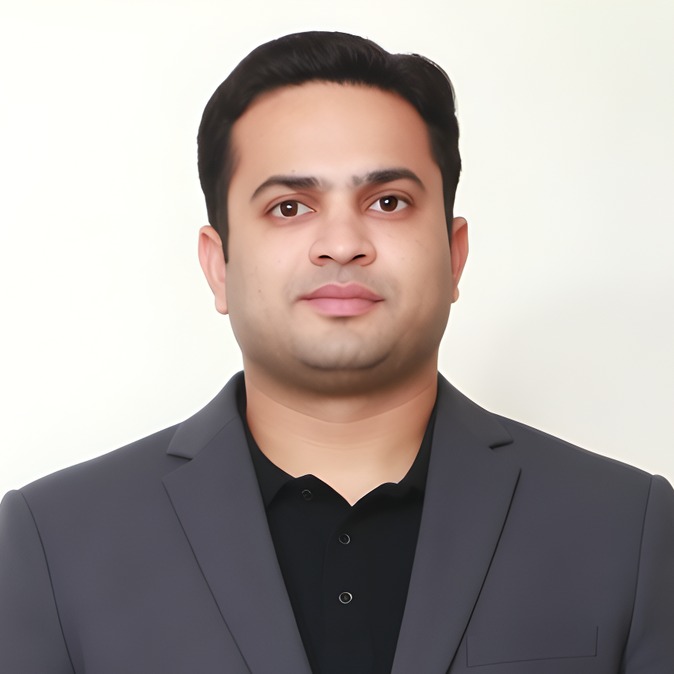
Dr. Puneet Jain

Assistant Director · Centre for Jain Studies, TMU

Learn to labor before you grow old, for knowledge is better than silver or gold. Silver or gold may perish away, but acquired knowledge will never decay.

Teerthanker Mahaveer University is imparting world class education by means of more than 100 different courses. Centre for Jain Studies was started to impart moral education, comparative studies of different philosophies, and facilitate research work. The core principles of Jain Philosophy—Non-Violence, Non-Absolutism, and Non-Possessiveness—may provide a solid foundation for world peace. Proper education is a key to prosperity. Although Jain philosophy is ancient, it remains highly relevant to modern society and offers solutions to many of the world's current problems. By following the principle of Non-Violence, global defense expenditures could be significantly reduced and redirected toward improving human welfare. Similarly, the principle of Non-Possessiveness will reduce economic disparity, and the principle of Non-Absolutism will foster harmony of thought among family members, society, and individuals with differing viewpoints. The principles of Right Faith, Right Knowledge, and Right Conduct, which are the ideal values of the university, form the foundation of world peace. Students are encouraged to enroll in the B.A. (Jainology) and M.A. (Jainology) programs to receive moral education, which will help them become good citizens of the country while also providing a means of livelihood.


Prof. (Dr.) Vipin Jain

Principal · Centre for Jain Studies, TMU