



How to Prepare for Management-Level Interviews
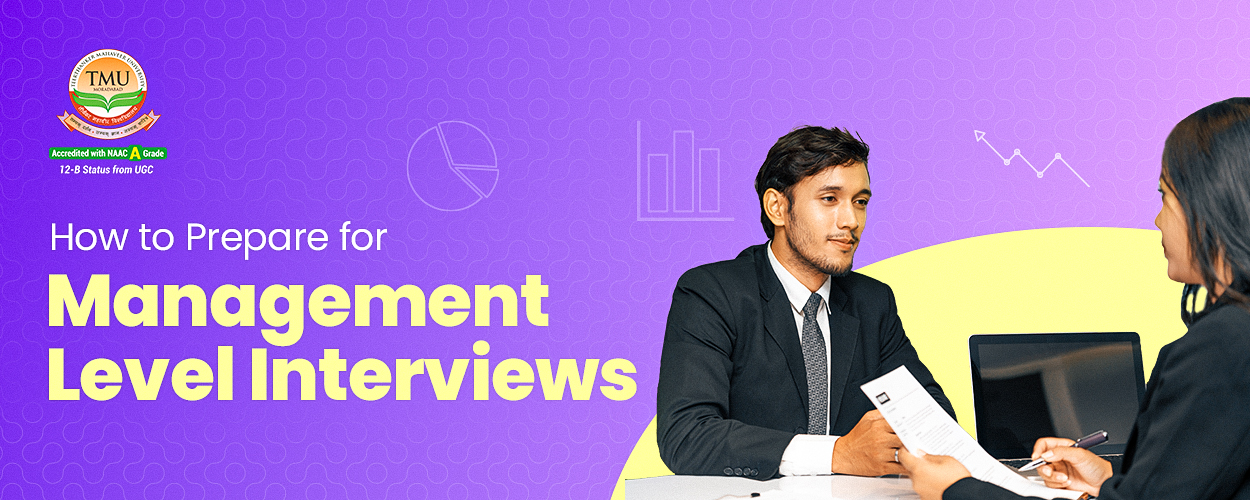
Table of Contents
Preparing for management-level interviews requires more than common interview questions. These interviews evaluate your leadership, strategic thinking, decision-making, and organisational growth capabilities. These management-level interviews are organised to assess your long-term vision, executive presence, and ability to manage teams and resource functions.
In the current competitive business world, the management-level roles require more than merely reporting successes and performances. Recruiters also evaluate your ability to deal with complicated tasks, resource management and provide quantifiable output. Hence, the preparation for management-level interviews should not involve only answering the questions but also a deep knowledge of the company’s vision, industry trends and leadership requirements.
Whether you want to join a managerial team or a senior-level role, this detailed guide will give you an idea of how to strategise and prepare with confidence.
Understanding Management Level Interviews
In a management-level interview, employers assess your leadership abilities, communication skills, decision-making, conflict resolution skills and overall business understanding. These interviews are not just about what you know; these are about how you think, how you lead and how you influence outcomes. These interviews are generally conducted for positions like managerial roles, head of departments, directors and other executive positions.
1. Research About the Organisation
One of the most important steps in preparing for the management level interviews is deep organisational research. Researching about the organisation prior to an interview helps you to understand:
- Company vision and mission
- Current business challenges
- Market position and value
- Product and services
- Culture and latest developments
Review the annual report and latest updates about the organisation. Understanding the organisation also boosts your confidence and creates a strong impression on interviewers.
2. Prepare your Leadership Story
Story-telling plays a major role in management-level interviews. Interviewers want practical instances of how you have managed leadership situations.
Structure your response with the STAR Method: Situation, Task, Action, Result
Prepare examples related to:
- Top-cross functional teams
- Dealing with crises or conflicts
- Meeting revenue goals and performance goals
- Dealing with underperforming employees
- Motivational organisational transformation
Your leadership philosophy must be clear. It should reflect confidence, adaptability and strategic awareness. An effective leadership narrative emphasises your skills in team management, problem-solving, decision-making and performance, which can be quantified.
3. Practise for Case-based Questions
Case-based questions are a part of many management-level interviews. These questions are designed to assess your analytical thinking, decision-making, and problem-solving ability in practical business situations.
Exam scenarios:
- The performance of a department is deteriorating. What steps will you take?
- Employee engagement is low. How will you improve morale?
- One of the major clients is threatening to quit. How will you retain them?
When responding:
- Clarify the problem.
- Identify root causes.
- Recommend systematic solutions.
- Explain expected outcomes.
Having a clear head, strategy and confidence to deal with complex situations is a sign that you can handle the responsibilities at a leadership level.
4. Showcase Emotional Intelligence
A leadership role requires more than technical skills. That’s why emotional intelligence plays a critical role in the management-level interviews. It reflects your ability to comprehend and control your feelings, as well as being able to detect and interact with the feelings of other people.
Demonstrate your ability to:
- Handle stress
- Manage diverse teams
- Communicate with empathy
- Conflict resolution is diplomatic
- Give constructive feedback
Emphasising emotional intelligence indicates you are able to build trust, foster a working environment that is healthy and encourages collaboration and promote organisational success.
5. Prepare for Behavioural and Situational Questions
Behavioural assessments are also a part of the most management-level interviews. These questions measure your emotional intelligence and behaviour as a leader.
Examples include:
- Explain a situation in which you diffused a conflict in your team.
- Describe one of your challenging decisions.
- What do you do to deal with resistance to change?
Use real-life examples and the STAR method. Your response should be mature, accountable and quantifiable. Providing particular and quantifiable examples is to demonstrate that you are quite experienced in the area of your work, a good leader, and can solve complicated tasks confidently and responsibly.
6. Showcase Executive Communication Skills
In a management-level interview, it is important to demonstrate executive communication skills, as senior positions demand clear, confident, and strategic communication. At the managerial level, communication should be:
- Clear
- Concise
- Structured
- Confident
Avoid over-explaining. Use data-backed statements. Keep good body posture, eye contact and constant tone. Show that you can interact with various stakeholders such as senior leadership, clients, and members of the team.
7. Prepare for Panel Interview
Management-level interviews can also involve multiple decision-makers such as HR heads, senior executives and directors. So, you also need to prepare for a panel interview. To succeed in a panel interview, you must:
- Answer all the panel members
- Maintain composure
- Listen carefully and speak carefully
- Avoid interrupting
Panel interviews are usually designed to evaluate your skills in confidence and stakeholder management. Being calm, confident, and composed will prove that you can cope with high-pressure stress and communicate with various stakeholders.
8. Prepare for 30-60-90 Day Plan
During most of the management-level interviews, candidates are asked about their action plan. A 30-60-90 day plan is what you want to achieve within the first three months, in case you are offered the position. Prepare an organised framework:
First 30 Days
- Understand team structure
- Evaluate performance metric
- Establish relationships with stakeholders
Next 60 days
- Identify improvements areas
- Align goals with leadership
- Start with a minor performance improvement
90 Days
- Use strategic initiatives
- Track measurable KPIs
- Present progress report
Having a clear and realistic 30-60-90 day plan reflects your leadership preparedness, responsibility and proactive attitude towards organisational success.
9. Build a Strong Personal Brand
It is important to have an online presence. Before management-level interviews:
- Update your LinkedIn profile
- Highlight your leadership achievements
- Publish leadership through an article (if possible)
- Request recommendations from senior leaders
A strong online presence clearly shows your expertise, achievements and core strength. It reflects your professional identity, leadership style and unique value proposition.
10. Prepare for Mock Interview
Mock interviews are one of the best methods to boost your confidence. A mock interview is like a real interview that allows you to practice your response to leadership, behavioural and case-based questions in a systematic way. Conduct mock interviews with:
- Industry mentors
- Senior colleagues
- Professional coaches
Record your interview to assess your tone, clarity and confidence. Being prepared improves your nervousness, builds your confidence and ensures you deliver clear, confident and strong answers.
11. Avoid Common Mistakes
It is important to avoid common mistakes in preparing for an interview at the management level. Avoid these common mistakes:
- Speak negatively about the past organisation and employees
- Excessive use of jargon without clarity
- Failure to measure achievements
- Ignoring culturing fit
- Overconfidence or arrogance
Weak body language, unarticulateness and overconfidence can make your impression even weaker. Avoiding these errors helps you present yourself as a confident, capable and mature leader.
12. Manage Stress and Mindset
Management-level interviews are all about confidence. Stress management and keeping the right mindset are the keys to a management-level interview performance. Before the interview:
- Get proper rest
- Dress professionally
- Arrive early
- Practice deep breathing
To remain calm, prepare, rehearse, practice breathing exercise and prepare a positive mindset. A positive, calm, and growth-oriented mindset enables you to think and act intelligently and present yourself as a stable, strong and confident leader who is capable of handling stressful situations.
Read More: Jobs After an Online MBA: Industries Hiring Online MBA Graduates
13. Prepare a Final Checklist
Preparing a final checklist before your management-level interviews helps ensure that you are completely prepared, confident and ready to do your best. Before attending the management-level interviews, ensure:
- Research completed
- Ready leadership stories
- Strategic plan structured
- Example of financial impact prepared
- Executive presence refined
- Prepared intelligent questions
Your checklist must cover reviewing the job description, researching the company, re-examine your major leadership accomplishments with quantifiable results. A final checklist will reduce your stress at the last minute and make you come out as a confident, strategic and detail-oriented leader.
Teerthanker Mahaveer University
Apply for Admission
Apply for Admission
How TMU Prepares Students for Management-Level Interviews?
At Teerthnakar Mahaveer University, management education goes beyond classroom learning. The university focuses on building leadership skills, strategic thinking and industry readiness to help candidates succeed in management-level interviews. The MBA programme at TMU focuses on:
- Real-life business simulations and case-based learning
- Leadership training programme
- Corporate leaders' interaction session with the industry
- Training on communication and personality development
- Mock interview preparation and placement preparation
TMU provides students with exposure to management-level interviews and leadership roles in the industries through structured mentoring sessions, exposure to internships and practical business projects.
Conclusion
The key to succeeding in management-level interviews lies in preparation, thinking strategically, telling leadership stories and executive presence. These management-level interviews are organised to assess your previous performance and potential for growth in the future.
FAQ
Q1. What questions are asked in management-level interviews?
Ans. During the management-level interviews, the hiring manager may ask these questions:
- What is your conflict management method in your team?
- How do you manage your stakeholders?
- What are your team's goals as per the vision of the company?
- How do you plan to handle the first 90 days in this position?
- Describe a situation when you had to make a difficult decision.
Q2. What is a management-level interview?
Ans. A management-level interview is conducted for candidates who are applying for a leadership or managerial position. It focuses on evaluating the skills of a candidate in handling a team, conflict, making stretgic deciosion, running operations and promoting business development as a whole.
Q3. What are the 4 P’s in preparing for an interview?
Ans. The 4 P’s in preparation for an interview are preparation, practice, presentation and punctuality.
Q4. What are the five basic managerial skills?
Ans. The five basic management skills are:
- Leadership skills
- Communication skills
- Decision-making skills
- Problem-solving skills
- Time and resource management skills
Q5. What are the five common interview mistakes?
Ans. The five most common interview mistakes are:
- Lack of preparation
- Giving vague answers
- Lack of effective communication skills
- Negative commentary on former employees
- Ignoring body language and professionalism
This content gives an overview of the programme and is for educational purposes only. For updated admission guidelines and counselling support, please connect with our Counsellor Team.