



TMU Organises Five-Day FDP on Artificial Intelligence and Generative AI
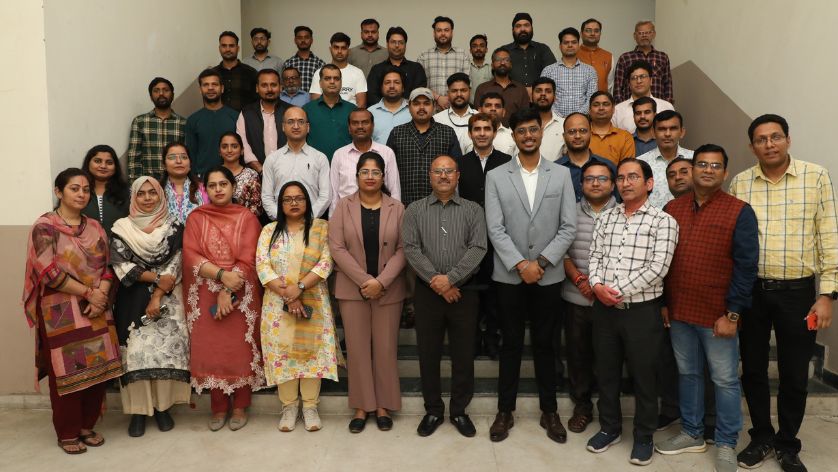
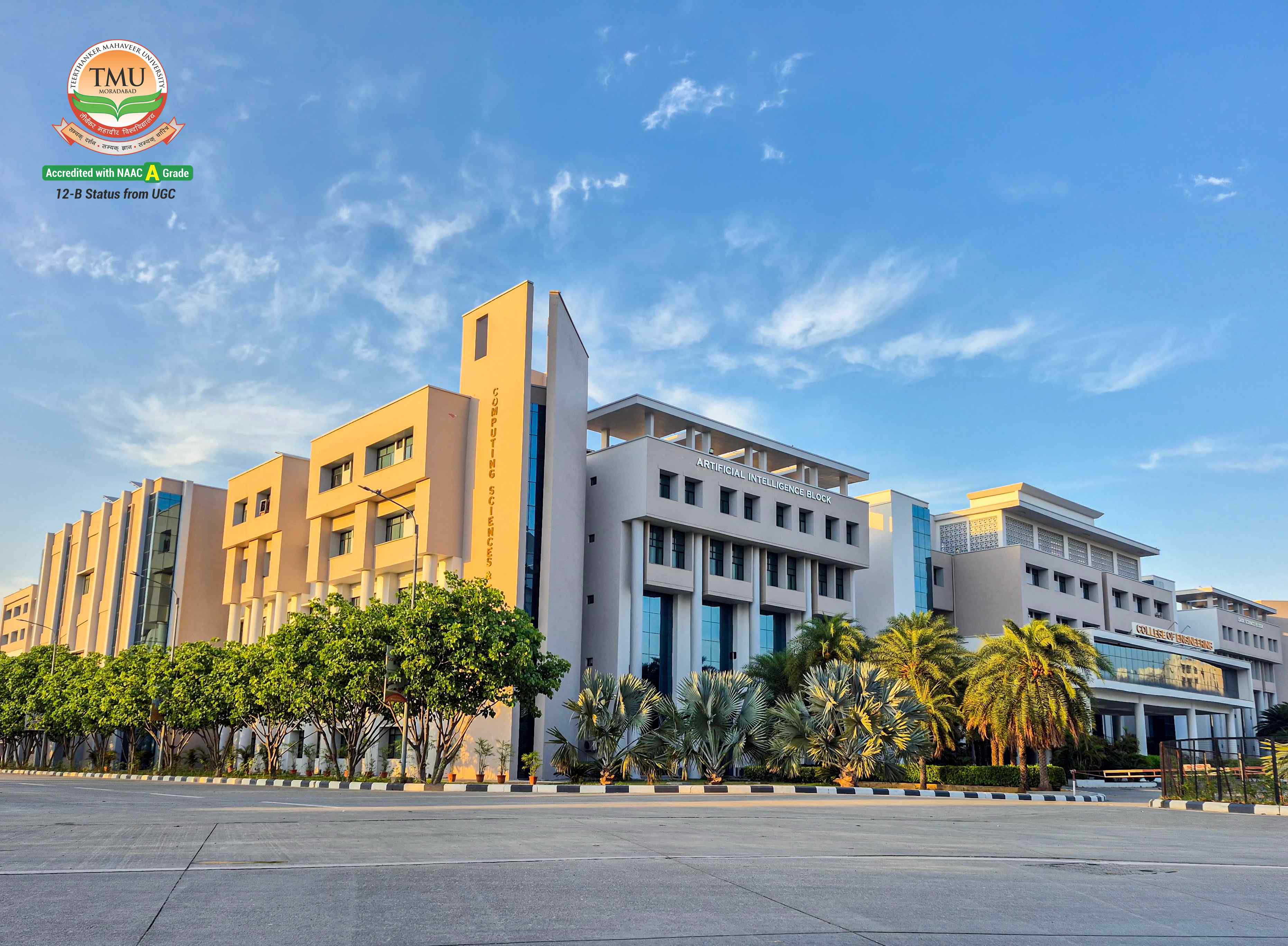
Teerthanker Mahaveer University (TMU) successfully organised a Five-Day Faculty Development Programme on Artificial Intelligence and Generative AI from 2 March to 7 March 2026 at the College of Computing Sciences and Information Technology. The objective of this Faculty Development Programme was to equip faculty members with advanced technological knowledge and hands-on experience in emerging AI tools and platforms.
The sessions were conducted by industry experts Mr Aman Srivastava and Ms Drishti Chakravarti, Master Trainers from Edunet Foundation, Gurugram. Their expertise and practical insights made the Faculty Development Programme on Artificial Intelligence and Generative AI highly informative and interactive for the participants.
Focus on Microsoft Certifications and AI Tools
The Faculty Development Programme was designed around five certification courses available on the Microsoft Learn Platform. These courses included Microsoft Azure, Power BI, Microsoft Copilot, Artificial Intelligence and Machine Learning, and Cloud Administration and Engineering.
This initiative was organised in alignment with the university’s commitment to technological advancement and faculty upskilling, ensuring that educators remain updated with the latest developments in Artificial Intelligence and Generative AI.
Day-Wise Highlights of the FDP
Day 1: Introduction to Cloud and Deployment Tools
The first day of the Faculty Development Programme focused on practical learning. Participants explored Azure Deployment of Static Web Apps and learned how to create Jupyter Notebooks on IBM Cloud. The hands-on sessions helped faculty members understand cloud-based development environments and their practical applications.
Day 2: Machine Learning and AI Agents
The second day introduced participants to Machine Learning concepts, including AutoAI on IBM Cloud and AutoAI with Web Apps. Trainers also discussed Large Language Models (LLMs) and AI Agents, explaining how these technologies power modern AI systems.
Additionally, participants explored practical tools such as Copilot Email Agent, Copilot in Excel, and GitHub Copilot, which demonstrated how AI can enhance productivity in everyday academic and professional tasks.
Day 3: Advanced AI Applications
On the third day, the Faculty Development Programme covered advanced concepts such as Retrieval-Augmented Generation (RAG) and Langflow. Faculty members learned how these technologies can be used to develop intelligent applications capable of processing and generating contextual information efficiently.
Day 4: Emerging AI Technologies
Day four focused on Agentic AI, Computer Vision, and Image Augmentation. Trainers explained how these technologies are transforming industries by enabling machines to interpret images, automate tasks, and support decision-making processes.
Day 5: Orchestration and Valedictory Session
The final day of the Faculty Development Programme included sessions on orchestration using Twilio and Microsoft Foundry. These discussions highlighted how multiple AI tools and services can be integrated to build powerful and scalable digital solutions.
The programme concluded with a valedictory session, where participants shared their experiences and appreciated the trainers for their insightful sessions and extensive guidance throughout the programme.
Conclusion
The Faculty Development Programme at TMU proved to be a highly enriching learning experience for faculty members. Through expert-led sessions, hands-on practice, and exposure to modern AI technologies, participants gained valuable skills that will help them integrate Artificial Intelligence and Generative AI into teaching, research, and innovation.
Such initiatives reaffirm TMU’s commitment to promoting technology-driven education and continuous professional development, ensuring that educators remain prepared for the rapidly evolving digital landscape.