



TMU Agriculture Students Visit IARI to Learn Agricultural Extension
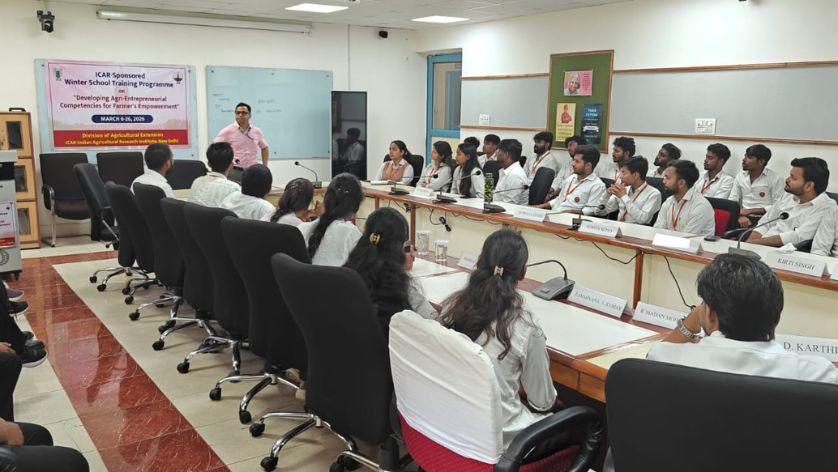
The students of B.Sc. (Hons) Agriculture from Teerthanker Mahaveer College of Agriculture, TMU, Moradabad, visited the Indian Agricultural Research Institute, New Delhi, on 24 March 2026. The main focus of this educational visit was to understand agricultural extension and how it connects scientific research with real farming practices.
Understanding Agricultural Extension in Practice
During the visit, students got practical exposure to agricultural extension systems. They learned how innovations developed in laboratories are transferred to farmers through proper channels. The concept of “Lab to Land” was clearly explained, showing how new crop varieties, better fertilisers, and pest control methods reach farmers.
Students also understood important topics like technology transfer models, frontline demonstrations, and farmer training programmes. The role of Krishi Vigyan Kendras (KVKs) in promoting rural development was also discussed in detail. This helped students see how agricultural extension plays a key role in improving farming practices.
Learning Extension Methods and Tools
The visit also included demonstrations of different agricultural extension methods. Students observed method demonstrations such as improved sowing techniques and seed treatment. They also saw results of demonstrations where better crop yields were compared with traditional methods.
Modern tools like mobile-based advisories and digital platforms were introduced. Students learned how ICT tools are helping farmers get real-time information. They also witnessed farmer–scientist interactions and field day activities, which are very important in effective agricultural extension.
Interaction with Experts and Scientists
One of the most valuable parts of the visit was the interaction with scientists and extension experts at the institute. Students gained insights into challenges faced in adopting new technologies in farming. They learned how socio-economic factors affect farmers’ decisions.
Read More: Agriculture College Celebrates Navrang 2026 with Cultural Grandeur and Youthful Energy
Experts also discussed climate-smart agriculture and how agricultural extension helps in spreading such sustainable practices. Innovative methods like farmer field schools, participatory rural appraisal (PRA), and community-based learning were also explained. These sessions helped students understand the real challenges and solutions in the field of agricultural extension.
Key Learning Outcomes for Students
This visit gave students a clear understanding of the importance of agricultural extension in agricultural development. They learned how research, education, and fieldwork are connected. Students also became aware of the real-life problems faced by farmers and the role of extension workers in solving them.
The visit also opened up career opportunities in agricultural extension, motivating students to work in rural development and advisory services.
Conclusion
The educational visit to the Indian Agricultural Research Institute, New Delhi, was highly informative and practical for TMU students. It strengthened their knowledge of Agricultural Extension and its role in bridging the gap between research and farmers. Such experiences help students gain real-world exposure and prepare them for future roles in the agricultural sector.