



Cancer Awareness Campaign at TMU Hospital Highlighted Importance of Early Detection
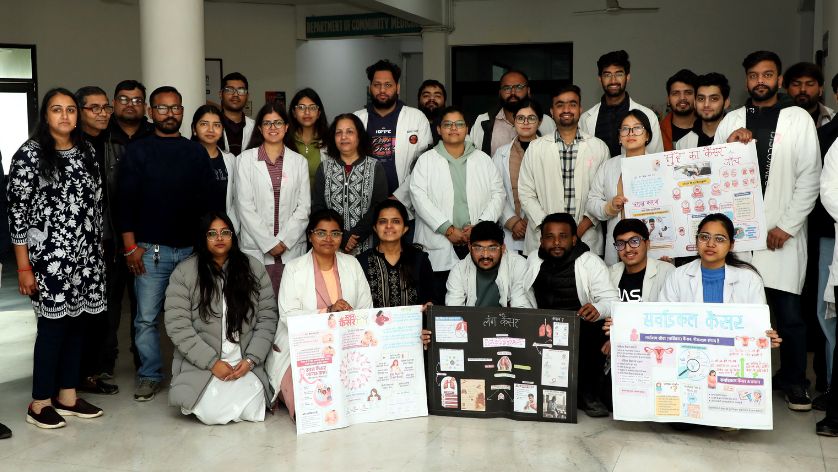
On the occasion of World Cancer Day 2026, a Cancer Awareness Campaign at TMU Hospital was successfully organised by the Department of Community Medicine, Medical College and Research Centre at Teerthanker Mahaveer University. The campaign witnessed active participation from patients, their attendants, nursing and paramedical staff, along with faculty members and MBBS interns.
The programme aimed to educate the public about the increasing risks of cancer and the importance of early detection and timely treatment. The initiative focused on spreading awareness in simple and easy-to-understand language so that people from all backgrounds could benefit.
Focus on Common Cancers and Prevention
During the campaign, special emphasis was placed on common cancers such as oral, cervical, lung, breast, and gastrointestinal cancers. Medical experts explained early symptoms, possible causes, preventive measures, and the importance of regular screenings. The Cancer Awareness Campaign at TMU Hospital encouraged individuals to be more aware of their health and to seek medical advice without delay.
The programme was led by Principal Dr N.K. Singh, along with Community Medicine Head Dr Sadhana Singh, Associate Professor Dr Shilpa Reddy, Dr Rishi Sharma, and the MBBS intern batch. Their combined efforts ensured that the awareness drive remained informative and impactful.
Awareness Activities and Public Engagement
To enhance understanding, the team used posters, models, and interactive presentations. These methods helped simplify complex information and made it easier for attendees to grasp key concepts related to cancer prevention and care. The Cancer Awareness Campaign at TMU Hospital also highlighted the importance of adopting a healthy lifestyle, including proper nutrition, avoiding tobacco, and undergoing regular health check-ups.
Conclusion
The Cancer Awareness Campaign at TMU Hospital successfully raised awareness about cancer prevention and early detection among the public. It served as a meaningful initiative in promoting healthier lifestyles and encouraging timely medical consultation. Such efforts played a vital role in reducing cancer risks and building a more informed and health-conscious community.