



TMU Organised Hospital Staff Training Programme at Jigyasa Hospital
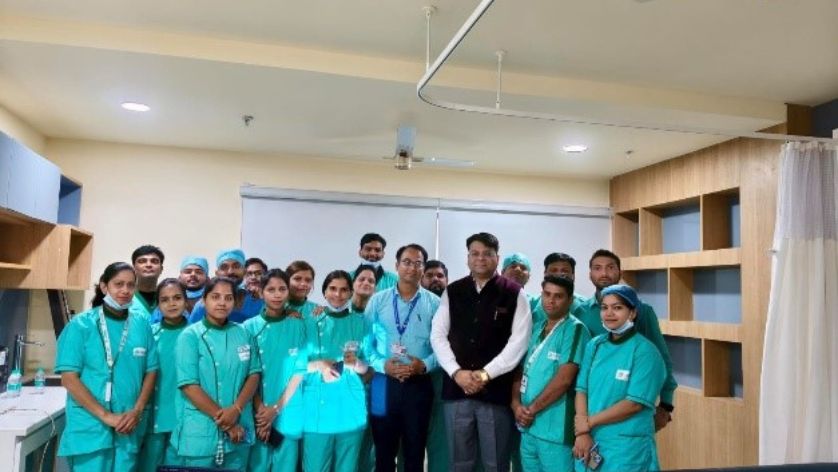
The Centre for Teaching, Learning & Development (CTLD) at TMU organised a Hospital Staff Training Programme at Jigyasa Hospital, Moradabad, on 21 July 2026. The programme was conducted as part of CTLD’s Hospital Outreach Initiative and focused on improving professional communication among nursing professionals.
The training session was based on the theme “Professional Communication in Healthcare.” It aimed to help nursing staff communicate more effectively with patients, attendants, and other healthcare professionals. The programme also focused on building empathy, teamwork, professionalism, and better patient care.
Objectives of the Training Programme
The Hospital Staff Training Programme was organised with the objective of strengthening the communication skills of healthcare staff. The session focused on both verbal and non-verbal communication in patient care.
The key objectives included improving professional communication, promoting empathetic and patient-centred behaviour, and strengthening interpersonal communication and teamwork within the hospital. These skills were considered important for creating a positive patient experience and improving service quality.
Session Highlights
The training session was delivered by Prof. (Dr.) Pankaj Kumar Singh, Director, CTLD. He highlighted the importance of effective communication in providing quality healthcare services.
A total of 21 nursing professionals participated in the programme. The participants actively took part in discussions and practical activities throughout the session.
The training covered important topics such as effective verbal and non-verbal communication, empathetic listening, professional etiquette, communication during difficult situations, and teamwork for coordinated patient care.
Real-life healthcare situations, interactive discussions, and practical examples were also used during the session. These activities helped participants connect the learning with their daily responsibilities.
Participant Feedback and Engagement
The participants actively shared their workplace experiences and communication challenges during the session. Their involvement reflected the practical value of the training.
A feedback survey conducted after the session showed a high level of satisfaction. The programme received an average rating of 4.9/5 for being engaging and interactive. It received 5.0/5 for knowledge and skill enhancement, showing that the participants found the session useful for their professional development.
Participants also gave a 4.9/5 rating for applying the learning in their daily work and for its potential to improve patient care and service quality. Several participants recommended conducting similar training programmes every month.
Valedictory Session
The programme concluded with a Vote of Thanks delivered by Dr. C. P. Singh, Chairperson, Jigyasa Hospital and President, Indian Medical Association (IMA), Moradabad Chapter. He appreciated the practical relevance of the training.
The programme was efficiently coordinated by Mr. Ritu Rajan, who ensured the smooth conduct of the session.
Outcomes of the Programme
The training helped improve awareness of effective communication practices among nursing professionals. It also strengthened their understanding of patient-centred communication and increased their confidence in handling professional interactions.
The programme further supported teamwork and highlighted the importance of communication in improving healthcare service quality.
Conclusion
The Hospital Staff Training Programme served as a pilot initiative to assess the feasibility and acceptance of structured capacity-building programmes for hospital staff. The active participation and positive feedback from the nursing professionals showed the value of such training initiatives. Through this programme, CTLD, TMU further strengthened its Hospital Outreach Initiative and continued its efforts to support professional development in healthcare settings.